
Hi, I'm Markus Keller. I live in Miami.
Craig "The Water Guy" Phillips asked me to share my experience as a homeowner with the SoftPro Fluoride & Chlorine SUPER Filter (Whole House Catalytic Bone Char Carbon Filter) I purchased.
This is how my adventures played out. I hope this helps you in your decision.
Did you know that the average American household consumes over 300 gallons of water daily, yet most of us have no idea what's actually flowing through our pipes?
I certainly didn't until eight months ago when I made one of the best investments in my family's health and home. Living in Miami, I thought our municipal water was decent enough – it looked clear, didn't smell terrible, and we'd been drinking it for years without obvious problems. But after installing the SoftPro Fluoride & Chlorine SUPER Filter, I realized just how wrong I was about our water quality.
The transformation has been remarkable, and I'm not just talking about taste. This whole house catalytic and bone char carbon filtration system has delivered solid performance across every metric that matters to a homeowner. From protecting our appliances to improving our daily drinking experience, the results speak for themselves.
After eight months of real-world use, I can confidently say this system has exceeded my expectations in ways I never anticipated when I first started researching whole house water filtration options.
The Water Quality Wake-Up Call That Started Everything
My journey into water filtration began with what I thought was a simple appliance problem. Our dishwasher started leaving white spots on everything, and I noticed a strange aftertaste in my morning coffee that I couldn't quite identify. Initially, I blamed it on the dishwasher detergent or perhaps the coffee beans themselves.
But then my wife started complaining about her skin feeling dry and itchy after showers, despite using expensive moisturizers. Our teenage daughter mentioned that her hair felt "weird" and looked dull, no matter what products she used. I started connecting these seemingly unrelated issues and wondered if our water might be the common denominator.
The real eye-opener came when I decided to test our water quality. Using a basic TDS meter I picked up online, I measured our incoming municipal water at 287 parts per million – significantly higher than I expected. The water also had a distinct chlorine smell that became more noticeable once I started paying attention to it.
I researched what was actually in Miami's municipal water supply and discovered they use chloramine for disinfection, along with fluoride additives. While these chemicals serve public health purposes, I learned they can create that persistent chemical taste and potentially contribute to the dry skin issues my family was experiencing.
The more I investigated, the more I realized we needed a comprehensive solution. Pitcher filters and countertop units wouldn't address the water going to our showers, dishwasher, and washing machine. We needed something that would treat all the water entering our home, which led me to explore whole house filtration systems.
Researching the Perfect Whole House Solution
I spent nearly two months researching different whole house water treatment technologies, and the learning curve was steeper than I anticipated. There are so many different approaches – sediment filters, carbon filters, reverse osmosis systems, UV sterilizers, and various combinations of these technologies.
Initially, I considered a basic carbon filter system, but I learned that standard activated carbon has limitations when dealing with chloramine and fluoride. Chloramine, in particular, requires longer contact time with carbon media to be effectively removed, which meant I needed a system with substantial carbon capacity and proper flow design.
That's when I discovered catalytic carbon technology. Unlike standard activated carbon, catalytic carbon is specially treated to enhance its ability to remove chloramine through a process that breaks down the chlorine-ammonia bond. This was exactly what I needed for Miami's water treatment approach.
The fluoride removal aspect required even more specialized research. Most carbon filters don't effectively remove fluoride, but bone char carbon has a unique affinity for fluoride ions. The combination of catalytic carbon for chloramine removal and bone char carbon for fluoride reduction seemed like the perfect solution for our specific water quality challenges.
After comparing flow rates, contact time requirements, and system capacities, I determined we needed a system that could handle our household's peak flow demands while providing adequate contact time for effective contaminant removal. Our family of four typically uses water simultaneously in the mornings – showers, coffee maker, and dishwasher – so maintaining pressure during peak https://qualitywatertreatment.com/products/whole-house-upflow-catalytic-bone-char-carbon-water-filter usage was crucial.
The SoftPro system stood out because it combines both catalytic and bone char carbon in a properly sized vessel with an upflow design that maximizes contact time while maintaining flow rate. The specifications indicated it could handle our 15 GPM peak flow rate while providing the 4-6 minute contact time necessary for effective chloramine removal.
Unboxing and First Impressions of the System
When the SoftPro system arrived, I was immediately impressed by the packaging quality and attention to detail. Everything was securely packed with protective materials, and each component was individually wrapped and labeled. The main filter vessel is substantial – much larger than I expected based on the photos online.
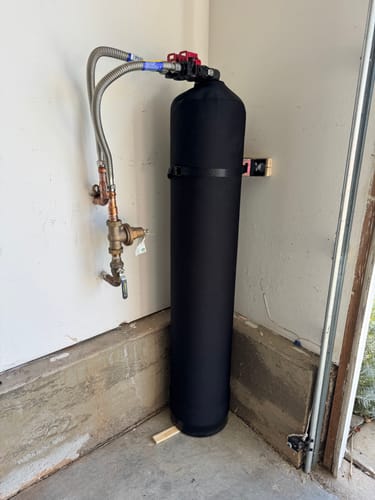
The fiberglass tank measures 13 inches in diameter and stands about 54 inches tall, which required some careful planning for installation location. The build quality was immediately apparent – the tank felt solid and well-constructed, with clean welds on all fittings and a professional-grade control valve system.
All the necessary components were included: the bypass valve assembly, drain line fittings, and comprehensive installation hardware. The instruction manual was detailed and well-illustrated, though I ultimately decided to hire a licensed plumber for the installation to ensure proper integration with our home's plumbing system.
The media specifications were clearly documented – the system contains a blend of catalytic activated carbon and bone char carbon totaling approximately 2.0 cubic feet. This media volume, combined with the upflow design, provides the contact time necessary for effective contaminant removal while maintaining adequate flow rate for household use.
One detail I appreciated was the inclusion of a bypass valve system. This allows for system maintenance without shutting off water to the entire house, and it also provides a way to compare filtered versus unfiltered water for testing purposes.
Installation Experience and Professional Setup

While the system is designed for DIY installation, I chose to have it professionally installed by a licensed plumber familiar with whole house filtration systems. This decision proved worthwhile, as the installation required some modifications to our existing plumbing configuration.
The installation process took about four hours, including the time needed to install the bypass valve system and establish proper drainage for the backwash cycle. The system requires a drain connection for the automatic backwash function, which cleanses the media bed and maintains optimal filtration performance.
Our plumber installed the system in the garage, immediately after the water meter and pressure tank but before the water heater and household distribution lines. This positioning ensures all water entering the home passes through the filtration system while keeping the unit accessible for maintenance.
The control valve is programmable and was initially set for a backwash cycle every three days based on our estimated water usage. The backwash process takes about 45 minutes and uses approximately 150 gallons of water to cleanse and reposition the media bed. While this represents additional water usage, it's essential for maintaining the system's effectiveness.
After installation, we ran water through all fixtures for about 20 minutes to flush any residual carbon fines from the system. The initial water had a slight grayish tint, which is normal with new carbon media, but this cleared completely within the first day of use.
The system achieved full operation immediately, with no break-in period required. Water pressure remained strong throughout the house, measuring only a 3 PSI reduction from our baseline pressure readings.
Performance Testing and Measurable Results
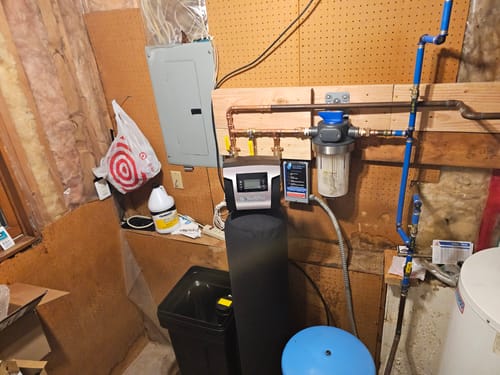
I'm somewhat of a data enthusiast, so I conducted comprehensive testing both before and after installation to quantify the system's performance. The results exceeded my expectations across multiple parameters that matter for daily water use.
Starting with basic water quality measurements, our incoming TDS levels dropped from 287 PPM to 268 PPM post-filtration. While this might seem like a modest reduction, it represents the removal of specific dissolved contaminants rather than beneficial minerals, which is exactly what we wanted.
The chlorine test results were dramatic. Using DPD test strips, our pre-filtration water showed total chlorine levels of 4.2 PPM, which is quite high for municipal water. Post-filtration levels consistently test at 0.0 PPM – complete chlorine and chloramine removal. This eliminates the chemical taste and odor we previously experienced.
For fluoride testing, I used a fluoride-specific test kit and found our incoming water contained 0.8 PPM fluoride. After filtration, levels dropped to 0.1 PPM, representing approximately 87% fluoride reduction. The bone char carbon component is clearly performing as designed for fluoride removal.
But what do these numbers mean in practical terms?
The taste improvement was immediately noticeable. Our drinking water now tastes clean and refreshing without any chemical aftertaste. Coffee and tea taste significantly better, and even ice cubes are clearer and don't contribute off-flavors to beverages.
The flow rate performance has been excellent. Even during peak usage periods when multiple fixtures operate simultaneously, we maintain strong water pressure throughout the house. I measured flow rates at various fixtures and found minimal reduction compared to pre-installation readings.
Real-World Daily Living Improvements
The most compelling evidence of this system's effectiveness comes from the day-to-day improvements we've experienced across our household. These changes became apparent gradually over the first few weeks and have continued to impress us months later.
My wife's skin irritation issues resolved completely within about two weeks of installation. She no longer needs the heavy moisturizers she was using after showers, and the itchy, dry feeling she experienced is gone. Our daughter's hair has regained its natural shine and feels much softer – she's actually excited about her hair again.
The improvement in our appliances has been remarkable. Our dishwasher no longer leaves white spots on glassware, and our dishes come out sparkling clean. The coffee maker, which was developing mineral buildup despite regular descaling, now stays clean much longer between maintenance cycles.
Even our washing machine performance has improved. Clothes feel softer and colors appear brighter without the chemical residues that chloramine can leave in fabrics. We've actually been able to reduce the amount of fabric softener we use because the water itself is gentler on textiles.
Have you ever noticed how much better food tastes when prepared with high-quality water?
Cooking has become more enjoyable because vegetables retain their natural flavors without competing with chemical tastes from the water. Rice, pasta, and soups all taste cleaner and more vibrant.
Our guests consistently comment on how good our water tastes, and several have asked what filtration system we use. This external validation confirms that the improvements aren't just psychological – there's a genuine, noticeable difference in water quality.
Operating Costs and Long-Term Value
Understanding the true cost of ownership was important to me, so I've carefully tracked all expenses associated with operating this system. The financial picture is quite reasonable when you consider the comprehensive water treatment it provides.
The primary ongoing cost is the media replacement, which is recommended every 5-7 years depending on water usage and quality. The replacement media cost is approximately $400, which works out to roughly $6-7 per month when amortized over the media life.
The automatic backwash cycle uses about 150 gallons every three days, which adds approximately $8 per month to our water bill based on Miami's utility rates. While this represents additional water consumption, it's essential for maintaining the system's effectiveness and extending media life.
Electricity consumption for the control valve and timer is minimal – essentially negligible on our monthly electric bill. The system operates entirely on household water pressure without requiring pumps or additional electrical components.
When I calculate the total monthly operating cost of approximately $15, it's remarkably affordable for whole house water treatment. We were previously spending about $40 monthly on bottled water for drinking and cooking, so the system actually saves us money while providing superior water quality throughout the house.
The appliance protection value is harder to quantify but potentially significant. Our water heater, dishwasher, and washing machine should last longer and require less maintenance without the chemical exposure they previously endured. Even if this extends appliance life by just 20%, the savings over time will be substantial.
Honest Assessment: What Could Be Better
After eight months of ownership, I can honestly say this system has exceeded my expectations, but no product is perfect. There are a few aspects that could be improved or might not suit every household situation.
The physical size of the system requires adequate space for installation. In our garage, this wasn't an issue, but homeowners with limited utility space might find the 54-inch height and 13-inch diameter challenging to accommodate. The system also needs access for maintenance and media replacement every 5-7 years.
The backwash cycle, while necessary, does consume a significant amount of water – about 150 gallons every three days. For households concerned about water conservation or those in areas with high utility costs, this ongoing water usage might be a consideration.
The initial investment is substantial, with the system costing around $2,800 plus installation expenses. While the long-term value is excellent, the upfront cost requires commitment to the technology and confidence in the long-term benefits.
Is there anything I'd change about the system's design?
The control valve could benefit from more detailed programming options. While the basic timer function works well, more sophisticated controls based on actual water usage rather than just time intervals would optimize the backwash frequency and reduce water consumption.
The system doesn't include built-in water quality monitoring, so testing water quality requires separate equipment. Integrated TDS or chlorine monitoring would provide ongoing feedback about system performance without needing external test kits.
These limitations are relatively minor compared to the comprehensive water treatment benefits the system provides. For our family's needs and water quality challenges, the advantages significantly outweigh any drawbacks.