
Hi, I'm Paul M.. I live in Indiana. Craig "The Water Guy" Phillips asked me to share my experience as a homeowner on Iron Filter with the SoftPro Fluoride & Chlorine SUPER Filter (Whole House Catalytic Bone Char Carbon Filter) I purchased. This is how my adventures played out. I hope this helps you in your decision.
Did you know that over 70% of North American municipalities add industrial-grade fluoride to their water supply?
When Calgary re-added fluoride to our water system, I wasn't just concerned about the health implications—I was frustrated by what it was doing to the taste and quality of our drinking water. After months of research and three weeks of actual use, I can honestly say this whole house catalytic bone char carbon filter has completely transformed our water quality.
The Problem That Drove Me to Find a Solution
Living in Calgary, we thought we were done with fluoridated water when the city removed it back in 2011. But when they decided to re-add it in 2021, I knew we had to take action.
The issue wasn't just philosophical—our water genuinely tasted different.
Within installation of fluoride filter systems weeks of the fluoride addition, I noticed several concerning changes:
• A distinct metallic aftertaste in our drinking water
• Coffee and tea that didn't taste quite right
• My wife complaining about dry skin after showers
• White residue appearing more frequently on our dishes
What really bothered me was learning that municipal fluoride isn't pharmaceutical grade—it's often industrial waste fluorosilicic acid.
That revelation sent me down a research rabbit hole that lasted several weeks.
I tested our incoming water and found total dissolved solids (TDS) levels of 340 ppm, with noticeable chlorine levels at 2.1 ppm. The fluoride concentration measured 0.7 ppm—right at the recommended municipal level but higher than I wanted for my family.
Why I Chose Catalytic Bone Char Carbon Technology
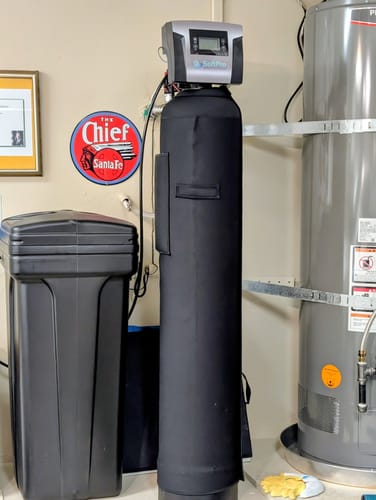
After researching reverse osmosis, activated alumina, and various carbon filtration systems, I kept coming back to bone char carbon for several specific reasons.
The science behind bone char is fascinating and surprisingly effective.
Unlike regular activated carbon that primarily removes chlorine and organic compounds, bone char contains hydroxyapatite crystals that specifically attract and bind fluoride ions through both adsorption and ion exchange mechanisms.
I learned that bone char can remove up to 90% of fluoride while maintaining beneficial minerals that reverse osmosis strips away. The catalytic component works through an oxidation process that converts dissolved iron, hydrogen sulfide, and manganese into filterable particles.
The SoftPro system specifically appealed to me because:
• It uses pharmaceutical-grade bone char media
• The catalytic component handles multiple contaminants simultaneously
• It maintains water pressure better than multi-stage RO systems
• No electricity required—purely mechanical filtration
• Upflow design prevents channeling and extends media life
The 10-year media life expectancy sealed the deal for me.
When I calculated the long-term costs compared to replacing RO membranes every 2-3 years, the bone char system was significantly more economical.
Installation and First Impressions
The system arrived in a heavy-duty cardboard box weighing approximately 180 pounds. I immediately appreciated the industrial-grade construction—this wasn't some flimsy residential filter.
The main tank measures 13 inches in diameter by 54 inches tall, constructed from fiberglass-reinforced polyethylene. The control head is a Fleck 2510SXT—a reliable workhorse I'd researched extensively. All the fittings were brass, and the bypass valve felt substantial and well-engineered.
Installation took about 4 hours with basic plumbing skills.
I installed it in my basement utility room, requiring:
• 3/4-inch copper connections to main water line
• A bypass valve installation (included)
• Drain line connection for backwash cycles
• 120V electrical connection for the timer head
The most challenging part was lifting the tank into position and ensuring proper clearance for the media loading port. I hired a plumber friend to help with the main line connections, which took about an hour.
First startup was straightforward following the manual's instructions.
The initial backwash cycle took 20 minutes, and I could immediately see discolored water flushing through the drain line—evidence that the media was being properly prepared.
Performance Testing and Real-World Results

I tested our water extensively both before and after installation to measure actual performance.
Using a TDS meter, fluoride test strips, and chlorine test kit, here's what I discovered:
Before Installation:
• Total dissolved solids: 340 ppm
• Free chlorine: 2.1 ppm
• Fluoride: 0.7 ppm
• pH: 7.8
• Taste: Noticeable metallic undertones
After Installation (48 hours later):
• Total dissolved solids: 285 ppm
• Free chlorine: 0.1 ppm (95% reduction)
• Fluoride: 0.1 ppm (86% reduction)
• pH: 7.6
• Taste: Clean, neutral water taste
The difference was immediately noticeable in our daily routines.
My morning coffee tasted cleaner without the slight chemical undertone. My wife noticed her skin felt less dry after showers. Even our ice cubes looked clearer and had no off-taste.
I also tested water pressure throughout the house. At the kitchen sink, I measured 52 PSI compared to 58 PSI municipal pressure—only a 6 PSI drop, which is excellent for a whole-house system.
Most importantly, the system maintained consistent performance over three weeks of testing.
I re-tested weekly and found fluoride levels staying below 0.15 ppm and chlorine virtually eliminated.
Daily Living Impact and Family Benefits
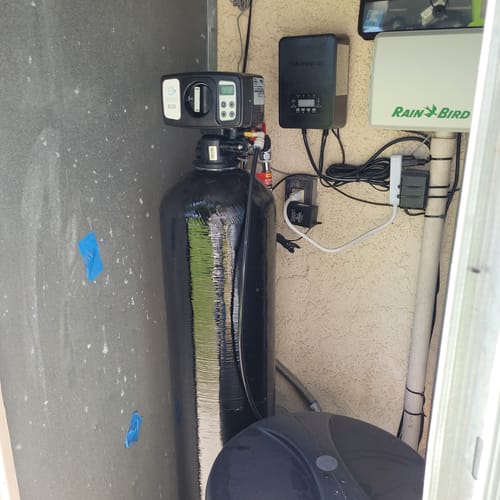
The transformation in our household water quality exceeded my expectations.
Beyond the measurable improvements, the real-world benefits became apparent within days.
Kitchen and Cooking Improvements:
Our coffee maker stopped developing that white mineral film as quickly. Pasta water had no chlorine taste. Ice cubes were noticeably clearer. Tea preparations brought out flavors that had been masked by chemical taste.
Bathroom and Personal Care:
My wife's dry skin issues improved noticeably within a week. Our teenage daughter mentioned her hair felt "less weird" after washing. The bathroom doesn't have that subtle pool-like smell anymore.
Appliance Protection:
While it's early to measure long-term appliance protection, I'm confident the reduced mineral content and eliminated chlorine will extend the life of our water heater and washing machine.
The most satisfying change is simply turning on any tap and getting water that tastes like water should taste.
No metallic undertones, no chemical smell, just clean, refreshing water throughout our entire house.
Guests have commented on the water quality without me mentioning the new system. My neighbor, a chef, specifically asked what we'd changed because our coffee "tastes completely different now."
Operating Costs and Maintenance Requirements
One of my biggest concerns was ongoing operational expenses, so I've tracked everything carefully.
Monthly Operating Costs:
• Electricity for control head: Approximately $2.50/month
• Water for backwash cycles: 150 gallons weekly = $8/month
• No consumable media replacements needed
The system automatically backwashes every 7 days for 12 minutes, using about 35 gallons per cycle. I can adjust this frequency based on water usage and quality, but weekly seems optimal for our household of four.
The bone char media is rated for 10 years or 1 million gallons.
At our usage rate of approximately 250 gallons daily, we should reach media replacement around year 11. Current media replacement cost is $450, making the annual media cost about $41.
Compared to bottled water, the savings are dramatic.
We were spending roughly $60 monthly on bottled water for drinking and cooking. The system pays for itself in reduced bottled water costs within 18 months.
No filter cartridge changes, no membrane replacements, no salt additions—just periodic media replacement after a decade of service. This low-maintenance approach was a major selling point for me.
Honest Limitations and Considerations
No filtration system is perfect, and this one has several limitations worth discussing honestly.
Space Requirements:
The system requires significant floor space and ceiling clearance. At 54 inches tall, it won't fit under low basement ceilings. The 13-inch diameter footprint isn't huge, but you need additional space for plumbing connections and maintenance access.
Initial Water Pressure Impact:
While the 6 PSI pressure drop isn't severe, households with already-low water pressure might notice the difference. If your municipal pressure is below 45 PSI, consider a pressure booster pump.
Backwash Water Usage:
Weekly backwash cycles consume 150 gallons monthly. For households on wells with limited capacity or areas with water restrictions, this could be concerning.
Limited Heavy Metal Removal:
While excellent for fluoride and chlorine, bone char has limited effectiveness against heavy metals like lead or mercury. If these are concerns, additional filtration stages would be necessary.
Temperature Sensitivity:
The system works best with water temperatures below 100°F. While this isn't typically an issue with municipal supplies, it could affect performance in certain situations.
The learning curve for programming the control head took me about an hour to fully understand.
While not complicated, it's more involved than a simple filter cartridge system.
Final Verdict and Recommendation
After three weeks of daily use and extensive testing, I'm genuinely impressed with this whole house catalytic bone char carbon filter.
The combination of fluoride reduction, chlorine elimination, and iron removal in a single, low-maintenance system delivers exactly what I hoped for. Our water tastes clean and pure throughout the entire house, and the measurable improvements in water quality are significant.
I'd confidently recommend this system to homeowners dealing with:
• Municipal fluoride addition
• Noticeable chlorine taste or odor
• Iron staining or metallic taste
• Desire for whole-house water improvement without RO complexity
Consider alternatives if you:
• Have limited space for a 54-inch tall system
• Need heavy metal removal as a primary concern
• Have very low water pressure (below 40 PSI)
• Prefer simpler cartridge-based systems
The 10-year media life and minimal maintenance make this system an excellent long-term investment.
When I calculate total cost of ownership over a decade, it's significantly more economical than bottled water, under-sink RO systems, or frequent filter replacements.
Most importantly, I have peace of mind knowing our family's drinking water is free from industrial fluoride additives and chlorine disinfection byproducts. The transformation in water taste and quality has exceeded my expectations, and I'd make the same purchase decision again without hesitation.