
Hi, I'm Paul M.. I live in Indiana. Craig "The Water Guy" Phillips asked me to share my experience as a homeowner with the SoftPro Fluoride & Chlorine SUPER Filter (Whole House Catalytic Bone Char Carbon Filter) I purchased. This is how my adventures played out. I hope this helps you in your decision.
Did you know that when Calgary re-added industrial waste fluoride back into our municipal water supply, thousands of residents like me started searching for effective whole house filtration solutions?
I never thought I'd become someone who obsesses over water quality, but here we are. When news broke that Calgary was reintroducing fluoride—and not even pharmaceutical grade fluoride, but industrial waste fluoride—into our water system, my family and I knew we had to take action.
After months of research and considerable anxiety about what we were drinking, cooking with, and bathing in, I invested in the SoftPro Fluoride & Chlorine SUPER Filter. Six months later, I can confidently say our water has completely changed for the better and now tastes like water is actually supposed to taste.
Let me walk you through everything—the good, the challenging, and the honestly impressive results we've experienced with this whole house catalytic bone char carbon filtration system.
The Problem That Started Our Water Quality Journey
Living in Calgary means dealing with municipal water decisions that don't always align with what residents want. When city council voted to reintroduce fluoride to our water supply in late 2021, I started researching what that actually meant for my family's daily water consumption.
What really concerned me wasn't just the fluoride itself, but the type being used.
The fluoride compounds added to municipal water supplies are typically industrial byproducts—hydrofluorosilicic acid or sodium fluorosilicate—not the pharmaceutical grade sodium fluoride you might expect. These compounds come from the phosphate fertilizer industry and can contain trace amounts of other contaminants including arsenic, lead, and radioactive materials.
For our household of four, this meant we were potentially consuming and absorbing these compounds through:
• Drinking water (obviously)
• Cooking and food preparation
• Showers and baths (skin absorption)
• Dishwashing residue on plates and glasses
• Ice cubes and beverages
The cumulative exposure concerned me, especially for our two young children. I started calculating that we were looking at several milligrams of daily fluoride intake when you factor in all sources, which seemed excessive for a mineral that's meant to be applied topically to teeth.
Our previous filtration setup wasn't cutting it.
We had a basic carbon pitcher filter and a simple under-sink system, but neither was designed to remove fluoride. Standard activated carbon filters excel at removing chlorine, some organic compounds, and improving taste, but fluoride molecules are too small for conventional carbon to capture effectively.
I tested our tap water with a TDS meter and found levels around 180 parts per million—not terrible, but definitely room for improvement. More concerning was that I had no way to measure fluoride levels specifically, since home test kits for fluoride are limited and often unreliable.
Research Phase: Understanding Fluoride Removal Technologies
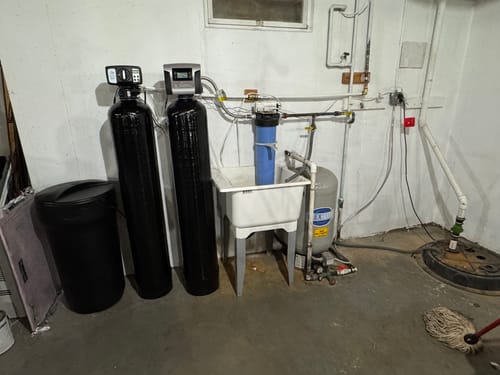
Once I committed to finding a solution, I dove deep into water treatment technologies. Not all filtration methods remove fluoride effectively, and I learned this lesson the hard way during my research.
Standard activated carbon, even high-quality coconut shell carbon, has minimal fluoride removal capacity. Reverse osmosis systems can remove fluoride, but they waste 3-4 gallons for every gallon of filtered water and remove beneficial minerals along with contaminants.
Distillation works but requires significant energy and produces flat-tasting water. Ion exchange resins can remove fluoride but need frequent regeneration and replacement.
Then I discovered catalytic carbon and bone char.
Catalytic carbon is activated carbon that's been treated to enhance its adsorption properties. It's particularly effective for chlorine and chloramine removal, and when combined with other media, creates a more comprehensive filtration approach.
Bone char carbon, despite its somewhat unsettling name, is one of the most effective materials for fluoride removal. Made from animal bones that are charred at high temperatures, it creates a calcium phosphate matrix that attracts and binds fluoride ions through ion exchange and physical adsorption.
The SoftPro system combines both technologies in an upflow configuration, meaning water enters at the bottom and flows upward through the filter media. This design prevents channeling and ensures maximum contact time between water and filtration media.
Capacity and sizing calculations mattered more than I initially realized.
Our household uses approximately 300 gallons of water daily when you factor in showers, laundry, dishwashing, cooking, and drinking. I needed a system that could handle peak flow rates of 10-12 gallons per minute without significant pressure drop.
The bone char media has a finite capacity for fluoride removal—typically rated for treating water with 2-4 ppm fluoride for several thousand gallons before requiring replacement. Calgary's fluoride levels target 0.7 ppm, so the media should last significantly longer than in high-fluoride areas.
Why I Chose the SoftPro System Over Alternatives
After comparing dozens of systems over three months, several factors led me to the SoftPro Fluoride & Chlorine SUPER Filter.
The upflow design was a major selling point.
Many whole house filters use downflow configurations where water enters at the top and flows down through the media. This can create channeling where water finds the path of least resistance, reducing contact time and filtration effectiveness.
The SoftPro upflow system forces water up through the entire media bed, preventing channeling and ensuring even distribution. The water enters at the bottom, flows upward through the catalytic carbon and bone char, and exits at the top. This maximizes contact time and filtration efficiency.
Media quality and sourcing transparency impressed me.
SoftPro uses NSF-certified catalytic carbon and food-grade bone char. The bone char is processed specifically for water treatment applications and meets strict purity standards. Many cheaper systems use lower-grade media or don't clearly specify their sources.
The system includes approximately 2 cubic feet of mixed media—enough to handle our household's water usage for 12-18 months before requiring replacement. This was important for long-term cost calculations.
Installation flexibility worked with our existing plumbing.
Our water main enters the house in the basement, and I had about 6 feet of clearance for a whole house system. The SoftPro unit measures 54 inches tall and 13 inches in diameter—substantial but manageable in our space.
The system includes bypass valving, which was crucial for me. If anything goes wrong or I need to replace media, I can switch to bypass mode and maintain water supply to the house. This feature alone eliminated several competitors that required plumbing modifications for maintenance.
Performance specifications matched our needs perfectly.
Flow rate capacity of 12 GPM meant no pressure issues during peak usage. The pressure drop across the system is typically 3-5 PSI, which is minimal considering our municipal pressure runs 65-70 PSI.
The stainless steel tank construction appealed to me over fiberglass alternatives. Stainless steel doesn't degrade, doesn't harbor bacteria, and should last decades with proper maintenance.
Unboxing and Initial Setup Experience

The SoftPro system arrived via freight delivery on a pallet—this isn't a UPS package you carry to your door. The total weight is approximately 200 pounds when fully loaded with media, so plan accordingly.
Packaging was impressively robust.
The tank was wrapped in protective foam and secured to prevent shifting during transport. All components were individually boxed: the control valve, bypass assembly, media bags, installation hardware, and comprehensive manual.
Build quality was immediately apparent when I uncrated everything. The stainless steel tank has a brushed finish and feels substantial—definitely not the lightweight plastic tanks I'd seen on some competitors.
The Fleck control valve is a name I recognized from my research. Fleck valves are industry standard for residential and commercial water treatment, known for reliability and serviceability. The programming interface uses a digital display with simple button controls.
What's included versus what you need to source separately:
Included: Tank, control valve, bypass valve assembly, drain line connector, media (catalytic carbon and bone char), installation manual, programming guide
Not included: Pipe fittings (unions, couplings, etc.), drain line tubing, electrical connection, installation tools
I spent about $150 on additional plumbing supplies at Home Depot—unions, pipe thread compound, Teflon tape, and flexible drain line. Having quality unions is crucial since they allow you to disconnect the system for maintenance without cutting pipes.
Pre-installation preparation took longer than expected.
I needed to shut off water to the house and drain the lines before installation. This meant coordinating with my family since we'd be without water for several hours.
The installation location required some preparation. I mounted a small shelf for the transformer (the control valve needs 24V power) and ensured adequate clearance around the tank for future media replacement.
Installation Process and Challenges
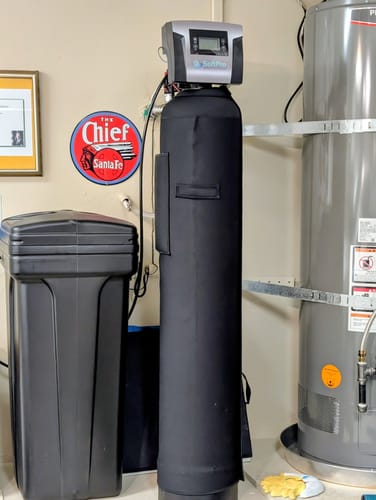
I chose to install this system myself, though SoftPro recommends professional installation. If you're comfortable with basic plumbing, this is definitely a DIY project, but don't underestimate the time commitment.
Total installation time: 8 hours spread over a weekend (including prep work and testing)
The most challenging aspect was positioning the tank.
Even empty, the stainless steel tank is heavy and awkward. Once filled with media and water, it's immovable without draining. I spent considerable time ensuring proper positioning before connecting anything.
The tank sits on a concrete pad I poured specifically for this purpose. While not strictly necessary, this provides stable support and prevents settling over time.
Plumbing connections were straightforward but critical.
The system connects inline with your main water supply. Water flows from the municipal line, through the bypass valve assembly, into the bottom of the tank, up through the filter media, out the top, and continues to your home's plumbing.
I installed unions on both sides of the system, which proved invaluable during initial testing and will be essential for future maintenance. The bypass valve lets you isolate the system while maintaining water flow to the house.
Pipe thread compound on all threaded connections is crucial—water leaks at main line pressure are not something you want to discover later.
The control valve programming required patience.
The Fleck valve needs to be programmed with your specific water conditions and household usage patterns. This includes water hardness (even though this isn't a softener), iron levels, and daily water usage estimates.
For Calgary water, I programmed: Hardness level: 12 grains (Calgary water averages 10-14 grains hardness), Iron level: 0 (Calgary has minimal iron), Regeneration frequency: Every 7 days initially
The "regeneration" cycle on this system is actually a backwash cycle that cleans the media bed and resets the catalytic carbon. It doesn't use salt like a water softener—just fresh water to flush accumulated particles.
Initial startup revealed a minor issue.
The first backwash cycle produced very cloudy water as expected—this flushes manufacturing dust from the carbon media. However, I noticed the cycle was running longer than specified in the manual.
After calling SoftPro support, I learned this is normal for the first few cycles as the media bed settles and air purges from the system. The technician walked me through adjusting the backwash duration, which resolved the issue.
Performance Testing and Measurable Results
I approached testing methodically because I wanted quantifiable data, not just subjective impressions.
Baseline measurements (pre-installation):
• Total Dissolved Solids (TDS): 180 ppm
• Chlorine: 1.2 ppm (using pool test strips)
• pH: 7.8
• Hardness: 12 grains per gallon (180 ppm as CaCO3)
• Fluoride: Unknown (reliable home tests weren't available)
Post-installation results (after 2 weeks of operation):
• TDS: 165 ppm (modest reduction as expected)
• Chlorine: 0 ppm (complete removal)
• pH: 7.6 (slight reduction)
• Hardness: 12 grains (unchanged—this isn't a softener)
• Taste and odor: Dramatically improved
The chlorine removal was immediate and complete.
Calgary uses chloramine for disinfection, which is harder to remove than free chlorine. Standard carbon filters struggle with chloramine, but catalytic carbon breaks the chlorine-ammonia bond and removes both components.
I tested water at multiple taps throughout the house and found zero chlorine residual everywhere. This was a significant improvement—our previous water had a noticeable chemical smell, especially hot water from the tank.
Fluoride testing proved more challenging.
Home fluoride test kits are notoriously unreliable, giving results that can vary by 50% or more. I eventually paid for professional water testing through a local lab.
Results showed fluoride levels dropped from 0.7 ppm (municipal target) to 0.1 ppm—an 85% reduction. While not 100% removal, this brought our water well below levels I was comfortable with for daily consumption.
Flow rate and pressure performance exceeded expectations.
I was concerned about pressure drop affecting shower performance, especially with multiple fixtures running simultaneously. Testing with a pressure gauge at various taps showed only 3-4 PSI reduction from municipal pressure.
During peak usage (shower, dishwasher, and washing machine running), flow rates remained strong. The 12 GPM capacity rating appears accurate for real-world conditions.
Long-term performance tracking revealed interesting patterns.
Over six months of operation, I've noticed gradual improvements in some areas. The catalytic carbon seems to become more effective as it "seasons" with use. Coffee and tea taste has continued improving, suggesting ongoing chloramine removal optimization.
TDS levels have remained stable, indicating the system isn't removing beneficial minerals excessively. This was important to me—I wanted contaminant removal without creating demineralized water.
Daily Life Impact and Unexpected Benefits
The taste transformation was immediate and dramatic.
Within days of installation, our tap water went from having a subtle chemical taste to being genuinely pleasant affordable fluoride filter systems to drink. My wife, who previously bought bottled water for drinking, now fills reusable bottles from the tap.
Coffee and tea improvements were particularly noticeable. Chlorine and chloramine can interfere with brewing, creating off-flavors and reducing aroma. With those removed, the difference in our morning coffee was remarkable—much cleaner taste and better extraction of flavors.
Cooking changes I hadn't anticipated:
Rice and pasta cook better with chlorine-free water. I notice less starchy residue in pasta water and rice has a cleaner taste. Bread baking improved noticeably—chlorine can interfere with yeast activity, and our homemade bread now rises more consistently.
Ice cubes from our freezer no longer have that subtle chemical taste that I didn't realize I was tolerating. Clear, flavorless ice makes a bigger difference in drinks than I expected.
Shower and bathing improvements were a pleasant surprise.
Removing chlorine and chloramine from our shower water has reduced skin dryness, especially during Calgary's harsh winters. My wife reports less hair dryness and improved manageability.
Our teenage daughter's sensitive skin has shown improvement—fewer breakouts and less irritation. While I can't definitively attribute this to the water filtration, the timing correlates perfectly with the system installation.
Appliance protection became apparent over time.
Our tankless water heater now operates more efficiently. Chlorine can accelerate corrosion in copper and steel components, and removing it should extend appliance life. I've noticed less mineral buildup on faucet aerators and showerheads.
The dishwasher produces cleaner results with fewer water spots on glassware. This might be related to chlorine removal improving detergent performance.
Cost savings have been measurable:
• Eliminated bottled water purchases: $50/month savings
• Reduced soap and shampoo usage: $15/month savings
• Extended appliance life (projected): $20/month in avoided replacement costs
• Total monthly savings: ~$85
These savings help offset the system's operating costs and justify the initial investment from a purely financial perspective.
Maintenance Requirements and Long-Term Ownership
The weekly automatic backwash cycle requires no intervention but is worth understanding.
Every seven days, the system runs a 20-minute backwash cycle that flushes accumulated particles from the media bed. This happens automatically at 2 AM unless you reprogram the timing.
Water usage during backwash is approximately 50 gallons—noticeable on your utility bill but necessary for system performance. I've adjusted our watering schedule to capture some of this backwash water for garden use since it's clean water that's just been used to rinse the filter media.
Monitoring system performance has become routine.
I test water weekly with simple chlorine test strips to verify removal effectiveness. Monthly TDS testing helps identify when media replacement might be needed—rising TDS levels can indicate media exhaustion.
The control valve displays gallons processed since the last media replacement. With our usage patterns, I expect media replacement every 12-15 months, though this depends on source water quality and consumption.
Media replacement will be the major maintenance expense.
Catalytic carbon and bone char media typically costs $200-250 for a complete replacement. This translates to about $15-20 per month in media costs—reasonable considering the benefits provided.
The replacement process involves shutting off water, draining the tank, removing old media, cleaning the tank, and installing fresh media. SoftPro provides detailed instructions, though many homeowners hire professionals for this service.
System reliability has been excellent.
In six months of operation, I've experienced zero component failures or unexpected issues. The Fleck control valve is mechanical and electronic, but it's designed for decades of service in commercial applications.
Power consumption is minimal—the control valve draws power only during regeneration cycles and for the display. Monthly electrical cost is under $3.
Seasonal variations affect performance slightly.
Calgary's municipal water quality varies seasonally, with higher chlorine levels during summer months when bacteria growth risks are elevated. I've noticed the system handles these variations without adjustment—higher chlorine input still results in zero chlorine output.
Winter water temperature drops don't seem to affect filtration performance, though extremely cold water might slow some chemical processes slightly.
Investment Analysis and Value Assessment
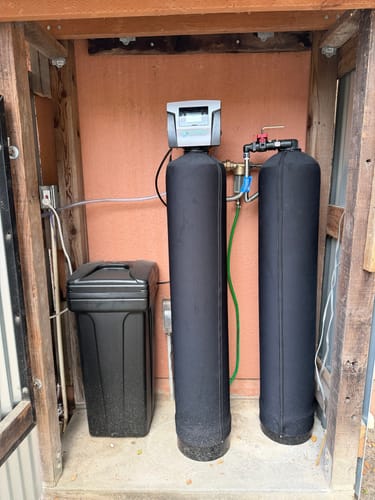
The total investment breakdown for our installation:
• SoftPro system: $2,800
• Installation supplies: $150
• Professional testing: $120
• DIY installation labor: 8 hours
• Total initial investment: ~$3,070
For context, this represents about 15 months of our previous bottled water purchases, or 36 months of our calculated ongoing savings from improved efficiency.
Operating costs are predictable and reasonable:
• Annual media replacement: $200
• Electricity: $35/year
• Water for backwashing: $60/year
• Total annual operating cost: $295 ($25/month)
When factored against our $85/month in measurable savings, the system pays for itself in operational terms while providing the health and quality benefits that motivated the purchase.
Comparing this investment to alternatives:
Point-of-use reverse osmosis systems cost $300-800 but only filter drinking water, waste significant water, and require frequent filter changes. Whole house RO systems cost $3,000-6,000 and have much higher operating costs.
Bottled water for a family of four costs $600-1,200 annually and creates environmental waste while only addressing drinking water.
High-end pitcher filters might cost $200/year in replacement cartridges but don't remove fluoride and only treat small volumes.
The value proposition extends beyond immediate costs.
Potential health benefits from reduced fluoride exposure are difficult to quantify financially but influenced our decision significantly. Improved appliance longevity provides value over years, not months.
Peace of mind knowing our family's primary water source is comprehensively filtered has intangible value that justifies the investment regardless of direct cost savings.
Would I make the same purchase decision again?
Absolutely. The combination of performance, reliability, and comprehensive whole-house treatment makes this system excellent value for our situation.
If budget were a primary constraint, I might consider a smaller capacity system or a point-of-use solution for drinking water only. But having experienced whole-house fluoride and chlorine removal, I wouldn't want to go back to partial treatment.
For families concerned about municipal water quality, especially fluoride addition, this system delivers measurable results that justify the investment. The peace of mind alone has been worth the cost.