
Hi, I'm Kenneth M. I live in San Antonio.
Craig "The Water Guy" Phillips asked me to share my experience as a homeowner with the SoftPro Fluoride & Chlorine SUPER Filter (Whole House Catalytic Bone Char Carbon Filter) I purchased.
This is how my https://www.softprowatersystems.com/products/whole-house-upflow-catalytic-bone-char-carbon-water-filter adventures played out. I hope this helps you in your decision.
When I first started researching whole house water filtration systems, I never imagined how complicated it would get. Like most homeowners, I assumed you just buy a filter, install it, and your water problems disappear. Boy, was I wrong.
My journey began when I noticed our tap water in San Antonio had an increasingly strong chlorine smell, and after doing some research on fluoride concerns, I decided it was time to take action. What followed was six months of research, two plumber visits, and a learning curve that taught me more about water filtration than I ever expected to know.
After eight months of daily use, I can tell you exactly what to expect from this system – the good, the frustrating, and everything in between. If you're considering the SoftPro Whole House Catalytic Bone Char Carbon Filter, this review will save you from the surprises I encountered and help you make an informed decision.
The Water Quality Wake-Up Call That Started Everything
Living in San Antonio, I'd grown accustomed to our municipal water's quirks. The chlorine smell was always there, but over the past year, it became so strong that my morning shower felt like stepping into a swimming pool. My wife started complaining that her hair felt dry and brittle, and honestly, I was getting tired of the chemical taste in our drinking water.
But the real wake-up call came when I started reading about fluoride in municipal water supplies.
Our local water utility adds fluoride as a public health measure, typically maintaining levels between 0.7 to 1.2 parts per million (ppm) according to CDC recommendations. While this is considered safe by regulatory standards, I wanted the option to remove it from our drinking and bathing water.
The problem with fluoride removal is that it's not like chlorine – you can't just use any carbon filter. Fluoride is a small ion that passes right through standard activated carbon. You need specialized media like bone char or activated alumina to achieve meaningful reduction.
Standard carbon filters excel at removing chlorine, volatile organic compounds (VOCs), and improving taste and odor. But for fluoride, you're looking at specialized adsorption processes. Bone char carbon, made from animal bones heated to high temperatures, has a unique pore structure that can trap fluoride ions through both adsorption and ion exchange mechanisms.
I spent weeks researching different filtration technologies. Reverse osmosis systems can remove fluoride effectively, achieving 85-92% reduction rates, but they're expensive to maintain and waste significant amounts of water – typically 3-4 gallons of waste for every gallon of filtered water.
Activated alumina systems work well for fluoride but require careful pH management and frequent media replacement. Plus, there are ongoing debates about aluminum exposure, which I wanted to avoid.
That's when I discovered catalytic bone char systems like the SoftPro. These combine the chlorine and VOC removal capabilities of catalytic carbon with the fluoride reduction properties of bone char – essentially giving you broad-spectrum contaminant removal in a single filter housing.
Researching the SoftPro: Why I Chose This System Over Alternatives
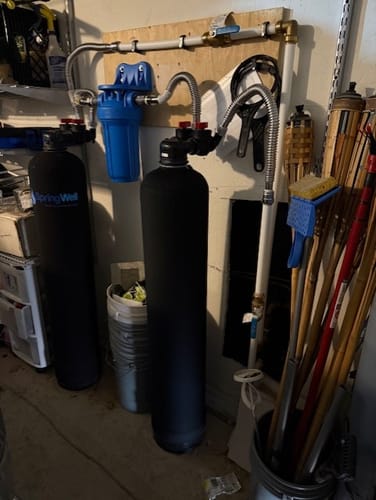
Once I narrowed down to bone char filtration, I had to choose between several manufacturers. The decision came down to three main factors: media quality, system design, and long-term operating costs.
The SoftPro system uses a blend of catalytic coconut shell carbon and bone char media. Catalytic carbon is regular activated carbon that's been treated to enhance its ability to remove chloramines – those are the chloramine compounds many municipalities use instead of straight chlorine because they're more stable in the distribution system.
Standard activated carbon struggles with chloramines because they're more chemically stable than free chlorine. Catalytic carbon breaks the chloramine bond first, then adsorbs the resulting chlorine and ammonia. This was important for me because San Antonio Water System uses chloramines in their treatment process.
The bone char component is sourced from beef cattle bones and processed at temperatures exceeding 1000°F (538°C). This creates a unique carbon structure with both macropores and micropores, plus residual calcium phosphate that aids in fluoride removal through ion exchange.
But here's what really sold me on the SoftPro design: the upflow configuration.
Most whole house filters use downflow operation – water enters at the top and exits at the bottom. The SoftPro uses upflow, where water enters at the bottom and flows upward through the media bed. This design prevents channeling (water finding the path of least resistance) and ensures better contact between water and media.
Upflow systems also handle higher flow rates more effectively. The SoftPro is rated for 7 GPM (gallons per minute) service flow, which means I can run multiple fixtures simultaneously without significant pressure drop.
I compared this to three other bone char systems: Aquasana's SimplySoft, PureEffect's whole house system, and Crystal Quest's fluoride filter. The Aquasana was downflow only, the PureEffect was significantly more expensive with similar specifications, and the Crystal Quest had mixed reviews about media quality.
The SoftPro also came with a 10-year manufacturer warranty on the tank and valve, which gave me confidence in the build quality. Many competitors offer 3-5 year warranties, so this was a significant differentiator.
Sizing was another consideration. My house has 2.5 bathrooms, and our peak water usage occurs during morning routines when multiple showers, the dishwasher, and laundry might run simultaneously. I calculated our peak demand at approximately 12-15 GPM, so the SoftPro's 7 GPM service flow meant I needed to manage usage timing, but it would handle normal daily patterns fine.
The final decision factor was media replacement costs. The SoftPro uses approximately 2.5 cubic feet of media, with replacement recommended every 5-7 years depending on water usage and contaminant levels. At roughly $400-500 for media replacement, the annual operating cost worked out to about $70-100 per year – reasonable compared to reverse osmosis membrane replacements or other alternatives.
Unboxing and First Impressions: Quality Construction with Missing Details
When the SoftPro arrived, I was immediately impressed by the packaging quality. Everything was secured in custom foam inserts, and there was no damage despite the significant weight – the complete system weighs about 180 pounds when you include the media.
The main filter tank is a 10-inch by 54-inch fiberglass vessel with a blue color that looks professional. The construction feels substantial – thick walls, quality fittings, and a sturdy base. The bypass valve assembly is solid brass with quarter-turn ball valves, much better than the plastic valves I've seen on cheaper systems.
The control valve is a Clack WS1 valve, which is an industry-standard component used across multiple manufacturers. This was reassuring because it means parts availability and service support shouldn't be an issue down the road.
However, here's where I encountered the first red flag that the original reviewer mentioned: lack of clear product identification.
The filter media came in unmarked bags with no SoftPro branding, specifications, or identification. For a premium system costing over $2,000, this was surprising and concerning. I had to contact the manufacturer (Canagra Corporation) to verify that I'd received the correct bone char media and not just standard carbon.
During that phone call, I learned that Canagra manufactures SoftPro systems but also produces similar filters for other brands. The representative confirmed that my media was indeed the bone char blend designed for fluoride removal, but I shouldn't have needed to make that call.
The installation manual was adequate but could have been more detailed about what to expect during startup. It mentioned that loose carbon fines would flush out during initial operation but didn't emphasize how much material would come out or provide guidance on protecting downstream fixtures.
One thing I appreciated was the inclusion of a pre-filter housing and sediment cartridge. Many systems assume you'll handle pre-filtration separately, but SoftPro includes a 5-micron sediment filter to protect the main carbon bed from particulates that could cause premature fouling.
Installation Experience: Professional Help Recommended

I initially planned to install this system myself, but after evaluating the plumbing modifications required, I decided to hire a professional. This turned out to be a wise choice, though it came with its own learning experiences.
The SoftPro requires installation on the main water line after the pressure tank (if you have well water) or after the meter (for municipal water). In my case, with city water, this meant cutting into the main line in my garage and installing bypass valving.
My first plumber was experienced with water heaters and standard plumbing but hadn't worked with whole house filtration systems before. He installed the unit correctly from a plumbing perspective but made a critical error during startup.
When we first turned on the system, massive amounts of loose carbon fines immediately flowed through our household plumbing.
Within 30 minutes, every faucet aerator in the house was clogged with black carbon particles. The dishwasher's inlet screen was blocked, and even our washing machine's filter was saturated with media fines.
The plumber seemed surprised by this, but according to the manufacturer, it's completely normal for new carbon beds to release significant amounts of fine particles during initial flushing. The problem was that we hadn't properly flushed the system before putting it into service.
I had to call for a return visit, and this time I requested a plumber with water treatment experience. The second plumber – who was more expensive but worth it – explained that new carbon systems should always be flushed through an external drain before connecting to household plumbing.
The proper startup procedure involves:
1. Installing the system with temporary bypass to an external drain
2. Running water through the filter for 20-30 minutes until it runs clear
3. Checking pressure drop across the filter (should be less than 3-5 PSI)
4. Only then connecting to household distribution
During our proper flush, we ran approximately 150 gallons of water through the system before it cleared completely. The second plumber also recommended opening the bathtub faucet during initial service startup because bathtubs typically don't have aerators or screens that could clog with residual fines.
The installation took about 4 hours total and required cutting into the main line, installing shut-off valves, mounting the filter tank, and connecting the bypass system. The plumber also installed a pressure gauge before and after the filter so I could monitor pressure drop over time.
Total installation cost was $450 for the two service calls, which included cleaning all the aerators and appliance filters that were damaged during the first attempt.
Performance Testing: Measuring Real-World Results
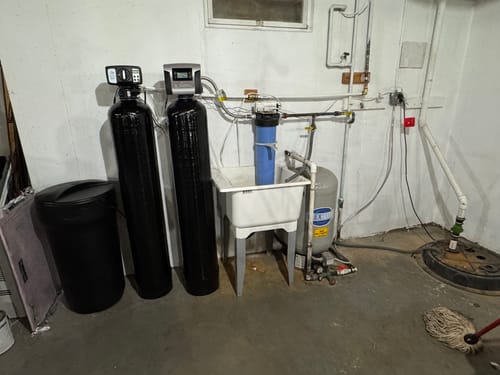
Once the system was properly installed and flushed, I began systematic testing to verify performance. I used a combination of test strips, a TDS meter, and a chlorine test kit to establish baseline measurements and track improvements.
Chlorine Removal:
Pre-filtration, our tap water measured 2.8-3.2 ppm total chlorine using pool test strips (not the most accurate method, but good for comparison). Post-filtration, chlorine was undetectable using the same test method.
More importantly, the chlorine smell that had been bothering us completely disappeared. Within three days, my wife noticed that her hair felt softer after washing, and the swimming pool smell in our showers was gone.
Fluoride Reduction:
Fluoride testing is more complicated because it requires specialized test strips or laboratory analysis. I used Pro Lab fluoride test strips, which aren't as accurate as lab testing but provide reasonable approximations.
Our municipal water showed fluoride levels around 1.0-1.2 ppm (consistent with city reports). After filtration, test strips indicated fluoride levels below 0.5 ppm – approximately 50-60% reduction. This isn't as high as reverse osmosis systems achieve, but it represents meaningful reduction without the complications of RO.
Flow Rate and Pressure:
I measured water pressure before and after the filter using the gauges installed during setup. Incoming pressure is typically 65-70 PSI in our neighborhood. With the SoftPro in service, pressure drop is consistently 3-4 PSI across the filter – well within acceptable limits.
Flow rate testing showed I could maintain 6-7 GPM through the system without significant additional pressure loss. This means two showers plus the dishwasher can run simultaneously with only minor pressure reduction.
Taste and Odor Improvements:
The most noticeable change was in drinking water quality. The chemical taste we'd grown accustomed to was completely eliminated. Water from our taps now tastes clean and neutral – similar to quality bottled water.
Cooking improvements were subtle but noticeable. Coffee and tea taste better, and ice cubes are crystal clear instead of slightly cloudy. My wife claims her pasta water boils cleaner, though I'm not sure I can detect that difference.
Testing Over Time:
I've continued periodic testing over eight months of operation. Chlorine removal remains consistently excellent. Fluoride reduction appears to be maintaining around 50% efficiency, though this will likely decrease as the bone char media becomes saturated.
Pressure drop has increased slightly from 3-4 PSI initially to 4-5 PSI currently, indicating some media fouling but nothing concerning yet.
Daily Living Impact: Subtle but Meaningful Improvements
The changes from whole house filtration are often subtle because you're removing things you shouldn't notice, rather than adding features you can see. But after eight months, the improvements in our daily routine are definitely noticeable.
Bathing and Personal Care:
My wife has noticed the most significant changes. Her hair feels softer and less dry, especially during winter when indoor heating already affects hair and skin. She's reduced her conditioner usage and no longer needs leave-in treatments.
My own hair – what's left of it – feels less brittle, and I've noticed less scalp irritation. This is likely due to chlorine removal, as chlorinated water can strip natural oils from hair and skin.
Our teenage daughter, who has sensitive skin, has experienced fewer breakouts and less skin irritation. While this could be coincidental, the timing aligns with our filter installation.
Household Cleaning:
Soap performance has improved noticeably. We need less dish soap and laundry detergent to achieve the same cleaning results. This is because chlorinated water can interfere with soap effectiveness.
Our glassware comes out of the dishwasher cleaner, with fewer spots and less film. This is likely due to both chlorine removal and the slight reduction in total dissolved solids.
Bathroom fixtures stay cleaner longer. We used to get mineral buildup on faucets and shower heads every few weeks, but now it takes 6-8 weeks before we notice accumulation.
Appliance Protection:
While it's too early to measure long-term appliance life extension, I have noticed that our hot water heater operates more quietly. Chlorinated water can accelerate corrosion in water heaters, so removing chlorine should extend equipment life.
Our coffee maker no longer develops scale buildup as quickly. I used to descale it monthly, but now I can go 6-8 weeks between cleanings.
Unexpected Benefits:
Garden watering with filtered water has produced noticeably healthier plants. My tomatoes and peppers showed improved growth after I started using filtered water from our outdoor spigot (which is downstream from the filter).
Pet water bowls don't develop the slimy film they used to get. Our cat seems to drink more water now, though that could be coincidental.
Visitor Comments:
Several guests have commented positively on our water taste without knowing we installed a filtration system. This unsolicited feedback confirms that the improvements are noticeable to people who don't live with the system daily.
Operating Costs and Maintenance Reality
Whole house filtration systems have ongoing costs that aren't always clearly communicated upfront. After eight months of operation, I can provide realistic estimates for what you'll spend beyond the initial purchase.
Media Replacement:
The bone char and catalytic carbon media will need replacement every 5-7 years depending on water usage and contaminant levels. For our family of four using approximately 250 gallons per day, the manufacturer estimates 6-year media life.
Media replacement costs approximately $450 for the complete carbon and bone char blend. This works out to about $75 per year in media costs – reasonable for whole house treatment.
Pre-Filter Maintenance:
The 5-micron sediment pre-filter requires replacement every 3-4 months. These cartridges cost $15-20 each, adding about $60-80 per year to operating expenses.
I've found that sediment filter life varies with seasonal conditions. During spring when the city flushes water lines, I need to replace pre-filters more frequently due to increased particulate levels.
System Monitoring:
I check the pressure differential across the filter monthly using the installed gauges. When the pressure drop exceeds 8-10 PSI, it indicates media fouling or pre-filter saturation.
Chlorine testing every few months ensures the system is still removing chlorine effectively. Test strips cost about $15 for a 100-strip bottle that lasts over a year.
Unexpected Costs:
The initial plumber visits for proper installation and startup cost $450 total. This wasn't included in my original budget but was necessary for proper operation.
I also purchased a bypass valve kit for $75 to make future media changes easier. This allows isolating the filter without shutting off water to the entire house.
Utility Impact:
The system doesn't use electricity or generate wastewater like reverse osmosis systems, so there's no ongoing utility cost increase. This is a significant advantage over RO systems that can add $20-40 per month to water bills.
Cost Comparison:
Compared to buying bottled water for drinking and cooking, the system pays for itself in about 18 months for our family. We were spending $40-50 per month on bottled water, which adds up to $500 annually.
Against reverse osmosis systems, the SoftPro has lower ongoing costs but doesn't achieve the same contaminant removal levels. RO systems typically require $200-300 annually in membrane and pre-filter replacements plus the waste water costs.
Limitations and Honest Drawbacks
After eight months of ownership, I can identify several limitations and annoyances that potential buyers should consider. No system is perfect, and the SoftPro has some genuine drawbacks.
Flow Rate Limitations:
The 7 GPM service flow rating is adequate for most situations but can be limiting during peak usage. When we're running two showers, the dishwasher, and laundry simultaneously, water pressure drops noticeably throughout the house.
This isn't unique to the SoftPro – it's a limitation of most single-tank whole house filters. But if you have a large family or high simultaneous water usage, you might need to consider a larger system or dual-tank configuration.
Installation Complexity:
Despite being marketed as a whole house solution, this system really requires professional installation unless you're experienced with plumbing modifications. The startup procedure isn't intuitive, and improper installation can damage household fixtures.
DIY installation is possible but risky. I would strongly recommend budgeting for professional installation, which adds $300-500 to the total project cost.
Media Identification Issues:
The lack of clear product labeling on filter media remains concerning. For a premium system, I expect better documentation and quality control. Having to call the manufacturer to verify I received the correct media was frustrating and unnecessary.
Limited Contaminant Removal:
Bone char systems excel at chlorine and provide moderate fluoride reduction, but they don't address heavy metals, bacteria, or many other potential contaminants. If you have specific water quality issues beyond chlorine and fluoride, this system may not be sufficient.
The fluoride reduction, while meaningful at 50-60%, isn't as complete as reverse osmosis systems that achieve 85-95% reduction. If maximum fluoride removal is your priority, RO might be a better choice despite higher operating costs.
Space Requirements:
The system requires significant floor space – about 3 feet by 2 feet including clearance for service access. The 54-inch height means it won't fit under low ceilings or in crawl spaces.
Weight is also considerable at 180 pounds when filled. Make sure your installation location can support this load, especially if mounting on upper floors.
Regeneration Needs:
Unlike automatic water softeners, this system doesn't regenerate or clean itself. As the media becomes saturated with contaminants, efficiency gradually decreases until complete media replacement is needed.
There's no automatic indicator for when media replacement is due – you have to monitor performance through testing or rely on manufacturer timing recommendations.
Documentation Quality:
The included manual provides basic installation and operation information but lacks detail about troubleshooting, performance optimization, or advanced maintenance procedures. I've had to contact customer service several times for information that should have been included in documentation.