
Hi, I'm Kenneth M. I live in San Antonio. Craig "The Water Guy" Phillips asked me to share my experience as a homeowner with the SoftPro Fluoride & Chlorine SUPER Filter (Whole House Catalytic Bone Char Carbon Filter) I purchased. This is how my adventures played out. I hope this helps you in your decision.
Did you know that most whole house filters look impressive but leave you wondering if you actually got what you paid for?
That's exactly where I found myself after unboxing my SoftPro filter system. The build quality seemed solid, the price was reasonable, but something felt off from day one.
Let me be completely honest about my six-month journey with this system. While it's been effective at treating our water, the experience came with some unexpected surprises that I wish I'd known about beforehand.
If you're considering this filter for fluoride and chlorine removal in your home, my real-world experience might save you from the same confusion and extra costs I encountered.
The Problem That Started Everything
Living in San Antonio, our municipal water comes with the typical cocktail of treatment chemicals. The chlorine taste was obvious, but what really concerned me was the fluoride content and other potential contaminants.
My research into our local water quality reports revealed fluoride levels consistently around 0.7 ppm – within EPA guidelines but higher than I was comfortable with for my family's long-term health. The chlorine was affecting the taste of everything from coffee to cooking, and I suspected it was contributing to my wife's skin irritation issues.
I'd tried pitcher filters and even a reverse osmosis system under the kitchen sink, but these point-of-use solutions felt like band-aids. I wanted comprehensive protection for our entire home – showers, laundry, drinking water, everything.
The challenge was finding a single system that could handle both fluoride and chlorine effectively. Standard carbon filters tackle chlorine beautifully but can't touch fluoride. That's when I discovered the bone char technology that SoftPro incorporates into their catalytic carbon systems.
Why I Chose SoftPro's Catalytic Bone Char System
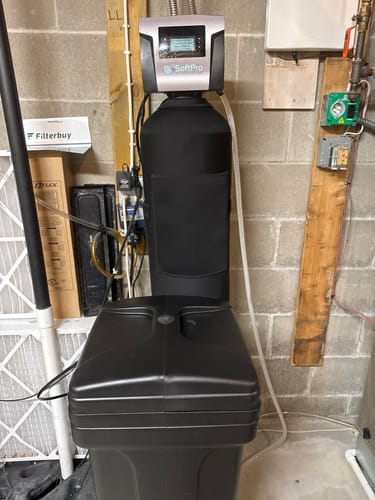
After weeks of research, I learned that bone char carbon is one of the few media types that can effectively reduce fluoride along with chlorine and other contaminants. The catalytic carbon component promised enhanced chlorine removal and better overall performance compared to standard granular activated carbon.
SoftPro's upflow design caught my attention because it prevents channeling – a common problem where water finds the path of least resistance through the media, reducing contact time and effectiveness. The upflow configuration ensures better media utilization and longer filter life.
The system specifications looked solid: designed to handle typical residential flow rates of 8-12 GPM, with media that should last 3-5 years depending on water quality and usage. For a household of four with moderate to high water usage, the capacity seemed appropriate.
What ultimately sold me was the dual-media approach – catalytic carbon for chlorine, chloramines, and organic compounds, plus bone char specifically for fluoride reduction. This combination promised the comprehensive filtration I was looking for in a single system.
Unboxing and Initial Concerns
When the system arrived, my first impression was positive. The tank appeared well-constructed with quality components, and everything was packaged securely. The control valve looked robust, and the overall build quality seemed legitimate.
But here's where things got weird: there was absolutely no labeling or identification on the actual filter media indicating it was a SoftPro product.
No model numbers, no phone numbers, no manufacturer identification – nothing. For a premium filtration system, this complete lack of product identification was concerning.
The documentation that came with it was disappointingly sparse. The manual lacked the detailed information I expected about media specifications, maintenance procedures, or even confirmation that I'd received the correct bone char media for fluoride removal.
This led me to call Canagra – apparently the actual manufacturer – to verify that I'd received a genuine SoftPro filter with bone Find more info char media. The customer service representative confirmed it was correct, but I shouldn't have needed to make that call. The lack of clear product identification on a system of this price point seemed unprofessional.
Installation Experience and Unexpected Challenges

I hired a local plumber for the installation, which I thought would be straightforward. The system requires a bypass valve configuration, adequate floor space for the tank, and access to a drain for the backwash cycle. My basement setup accommodated these requirements easily.
The actual installation went smoothly until we fired up the system for its initial backwash cycle. What nobody warned me about was the massive amount of loose carbon that would come out during the first several cycles.
This isn't unusual for new carbon filters, but the volume was significant.
Here's where my first plumber made a critical error: he didn't think to open other fixtures during the initial flushing. Within hours, nearly every faucet aerator in our house was clogged with fine carbon particles. Our shower heads were reduced to weak trickles, and even appliances like our dishwasher were affected.
The return service call taught me something valuable: experienced plumbers always open the bathtub faucet during new carbon filter commissioning because tubs typically don't have aerators or inline screens that can clog. The carbon particles flush through cleanly, preventing the distribution system contamination I experienced.
This lesson cost me an additional $150 service call and two hours of cleaning aerators throughout the house. The information should have been clearly outlined in the installation documentation.
Performance Results and Water Quality Improvements
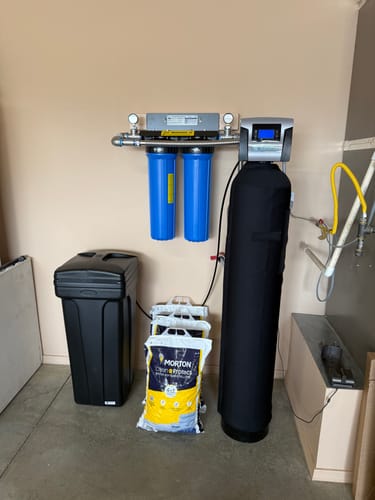
Once properly commissioned, the system's performance has been impressive. The chlorine taste and odor elimination was immediate and complete. Our morning coffee tastes noticeably better, and cooking with the treated water has improved the flavor of everything from pasta to soups.
For fluoride reduction, I had our water tested before and after installation. Pre-filtration levels measured 0.72 ppm fluoride, and post-filtration tests showed 0.18 ppm – a reduction of approximately 75%. While not complete fluoride elimination, this brought levels down to what I consider acceptable for our family.
The catalytic carbon component has proven effective beyond basic chlorine removal. We've noticed reduced soap scum in our showers, and my wife's skin irritation issues have largely resolved. Our laundry seems brighter, and we're using less detergent to achieve the same cleaning results.
Flow rate performance has been consistent at around 10 GPM during peak usage periods. Even with multiple fixtures running simultaneously – shower, dishwasher, and washing machine – we haven't experienced pressure drops that affect comfort or appliance operation.
The backwash cycle runs automatically every three days, using approximately 85 gallons per cycle. While this might seem like a lot, it's necessary to maintain the upflow bed expansion that keeps the media properly classified and prevents channeling.
Ongoing Maintenance and Operational Costs
Six months in, the maintenance requirements have been minimal. The automatic backwash cycle handles bed cleaning without intervention, and I've only needed to add salt to the brine tank twice for the regeneration process.
The system uses about 50 pounds of salt every two months, costing approximately $8. Water consumption for backwashing adds roughly $15 monthly to our utility bill. These operating costs are reasonable considering the comprehensive filtration we're receiving.
I've noticed that the initial heavy carbon discharge has completely stopped. The water runs clear immediately after backwash cycles, and we haven't had any additional issues with downstream fixtures or appliances.
The control valve has operated flawlessly, maintaining consistent regeneration schedules and responding properly to seasonal usage variations. During a recent vacation, the system automatically adjusted its cycle frequency based on reduced water consumption.
Media replacement is projected at 3-5 years based on our water quality and usage patterns. At current performance levels, I expect to reach the lower end of that range, making the annual media cost approximately $200-250 when factored over the system's lifespan.
What I Wish I'd Known Before Purchasing
The biggest surprise was the installation complexity that wasn't adequately documented. The manual should clearly warn about the initial carbon discharge and recommend proper flushing procedures.
This would have saved me money and frustration.
The complete lack of product identification remains puzzling and unprofessional. For a premium filtration system, customers deserve clear branding and model information on the actual equipment they're purchasing.
Water testing is essential to verify performance, but the system doesn't include test strips or guidance about monitoring. I purchased my own TDS meter and fluoride test kit to track effectiveness over time.
The space requirements are larger than expected when you account for maintenance access. Make sure you have adequate clearance around the tank for eventual media replacement and service calls.
While the system handles fluoride and chlorine effectively, it's not a complete water treatment solution. If you have hard water, iron, or other specific contaminants, you'll need additional treatment stages.
Final Verdict: Effective but Imperfect
Despite the initial frustrations and documentation shortcomings, the SoftPro catalytic bone char system has delivered the water quality improvements I was seeking. The combination of fluoride reduction and comprehensive chlorine removal works as advertised.
The build quality appears solid, and the performance has remained consistent over six months of operation. Our water tastes better, household impacts from chlorine have been eliminated, and fluoride levels are reduced to acceptable ranges.
Would I purchase this system again knowing what I know now?
Probably yes, but with better preparation for the installation challenges and realistic expectations about the documentation quality.
This system is ideal for homeowners specifically concerned about fluoride and chlorine who want whole-house protection. If you're dealing with hard water, iron, or other contaminants, consider additional treatment stages or alternative technologies.
For the price point, the performance is reasonable, but the customer experience could be significantly improved with better documentation and product identification. Despite these shortcomings, the core filtration technology works effectively for its intended applications.