
Hello there! I'm Eric Fitzgerald, and I call Detroit home. Craig "The Water Guy" Phillips reached out asking if I'd share my real-world experience with the SoftPro Fluoride & Chlorine SUPER Filter (Whole House Catalytic Bone Char Carbon Filter) that I installed in my house. I'm happy to tell you about this journey and hopefully help you make a more informed choice for your own home.
The Water Crisis That Started It All
Have you ever opened your tap and immediately smelled something that reminded you more of a swimming pool than drinking water?
That was my daily reality here in Detroit. Every morning, I'd turn on the kitchen faucet and get hit with this overwhelming chlorine smell that made me question what exactly I was putting into my body.
Living in Detroit, we've all heard the water horror stories. While our municipal system had improved significantly, I still noticed issues that bothered me daily. The chlorine taste was so strong that even my morning coffee tasted off. My wife complained that her skin felt dry and itchy after showers, and our teenage daughter refused to drink tap water altogether.
Did you know that municipal water treatment often adds fluoride and uses chlorine as a disinfectant, but these chemicals can remain in your water long after they've done their job?
I discovered this during my research phase, and it explained so much about what we were experiencing. The chlorine was doing its job of killing bacteria in the distribution system, but it was also affecting the taste, smell, and feel of our water at home.
I started calculating how much we spent on bottled water each month - nearly $180 for a family of four. That's over $2,000 a year just to avoid drinking our tap water. Something had to change.
My Deep Dive Into Water Filtration Research
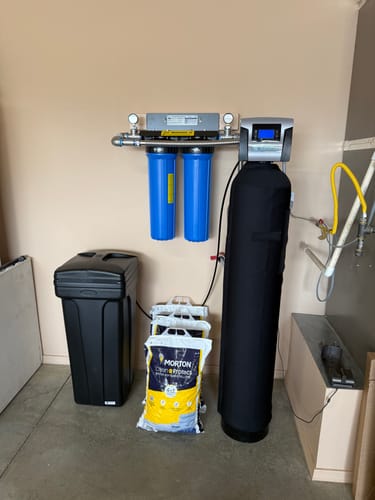
I spent weeks researching different approaches to whole house water filtration. Initially, I looked at basic carbon filters, but I quickly learned that not all carbon filtration is created equal.
What's the difference between regular carbon filters and catalytic carbon?
Regular carbon filters work through adsorption - contaminants stick to the carbon surface. Catalytic carbon goes a step further by actually breaking down chloramines (combined chlorine) at a molecular level. Since many municipal systems use chloramines instead of straight chlorine, this was crucial for my situation.
The bone char carbon component caught my attention because of its unique ability to address fluoride. Most carbon filters can't touch fluoride, but bone char has a natural affinity for it. This dual-media approach meant I could tackle both SoftPro Fluoride Filter System chlorine/chloramines and fluoride in one system.
I also researched flow rates extensively. Our house has 2.5 bathrooms, and I needed to ensure we wouldn't experience pressure drops during peak usage times. The SoftPro system's flow rate specifications looked adequate for our needs - up to 15 GPM, which should handle multiple fixtures running simultaneously.
Certifications mattered to me. I wanted to see NSF certification or equivalent third-party testing. The media in this system had the proper certifications for the contaminants I was targeting.
Installation Day: Reality Meets Expectations
The system arrived in a sturdy cardboard box, well-packed with foam protection. My first impression was positive - the 10" x 54" tank looked substantial and well-built. The control valve appeared more sophisticated than I expected, with clear digital programming options.
Should you install this yourself or hire a professional?
I'm reasonably handy, but I decided to hire a plumber for the initial installation. The system requires a bypass valve setup, proper drain line routing, and electrical connection for the control head. For $350, I had peace of mind that everything was installed correctly.
The installation took about 3 hours. Most of that time involved installing the bypass valve system and running a drain line to my utility sink. The actual connection of the filter tank was straightforward.
We had to shut off our main water supply for about 45 minutes during the connection process. I appreciated that the installer walked me through the programming of the control head and explained the backwash cycle timing.
First startup was uneventful - no leaks, good pressure, and the system immediately began processing our water supply.
The Filter Media: Understanding What's Inside

This system uses a blend of catalytic carbon and bone char carbon. Understanding what each component does helped me appreciate why this particular combination works so well for municipal water treatment.
How does catalytic carbon differ from regular activated carbon?
Catalytic carbon has been treated to enhance its ability to break down chloramines through a process called catalytic reduction. Regular carbon can remove free chlorine effectively, but chloramines require this enhanced catalytic action. Since Detroit's water system uses chloramines, this was essential for my application.
The bone char carbon component specifically targets fluoride removal. Bone char has a unique crystalline structure that attracts fluoride ions. It's one of the few media types that can effectively reduce fluoride levels in a whole-house application.
The system contains approximately 1.5 cubic feet of this blended media. Based on our household size and water usage (about 280 gallons per day), I calculated that the media should last 3-5 years before requiring replacement.
The upflow design ensures even distribution of water through the media bed and maximizes contact time. This design also helps prevent channeling, where water might find easy paths through the media without proper filtration.
Real-World Performance: 8 Months of Daily Use
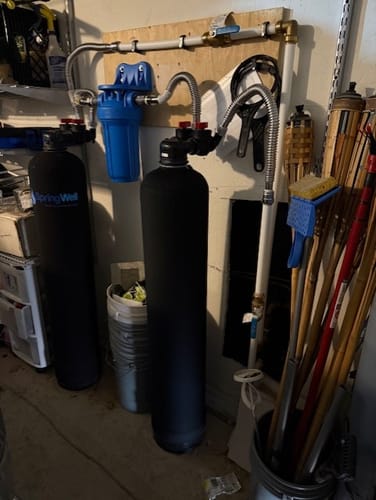
The improvement was immediate and dramatic. Within 24 hours of installation, the chlorine smell was completely gone from our tap water. The taste improvement was equally impressive - clean, neutral water without any chemical aftertaste.
What specific changes did we notice in our daily water use?
My wife noticed the difference in her shower water within the first week. Her skin felt less dry, and her hair appeared softer. Our daughter started drinking tap water again, which eliminated our bottled water purchases almost entirely.
I tested the water using TDS meters and chlorine test strips. Pre-filtration, our water consistently showed 2.5-3.0 ppm of total chlorine. Post-filtration readings consistently show 0.0-0.1 ppm. The TDS levels dropped from about 145 ppm to 135 ppm, indicating the system was removing dissolved contaminants without over-filtering.
Coffee and tea taste significantly better. I never realized how much the chlorine was affecting the flavor until it was gone. Even ice cubes taste cleaner and don't have that slight chemical smell.
Flow rate performance has been excellent. I can run two showers, the dishwasher, and washing machine simultaneously without any noticeable pressure drop. The 15 GPM capacity rating appears accurate for real-world use.
The automatic backwash cycle runs every 3 days at 2 AM. I've never been awakened by it, and the cycle uses about 50 gallons of water - a reasonable amount for maintaining the media bed.
Operational Costs and Maintenance Reality
Eight months in, the operational costs have been minimal. The system uses no salt, chemicals, or consumables other than occasional media replacement. The only ongoing cost is the minimal electricity used by the control valve - probably less than $10 per year.
What maintenance tasks are actually required?
The maintenance is refreshingly simple. I check the system monthly to ensure the control head is functioning properly and no leaks have developed. The automatic backwash cycles handle the day-to-day maintenance of the media bed.
I monitor our water usage through the control head's display. It tracks total gallons processed and days since the last backwash. This helps me understand our usage patterns and anticipate when media replacement might be needed.
Water usage for backwashing has been reasonable. At 50 gallons every three days, that's about 500 gallons per month for system maintenance. Compared to our total household usage of about 8,400 gallons monthly, this represents about 6% overhead - acceptable for the level of filtration provided.
The media replacement cost will be approximately $400-500 when needed in 3-5 years. Spread over that timeframe, it's about $10-15 monthly for consumables - far less than we spent on bottled water.
Addressing Specific Contaminants
Which contaminants does this system actually remove effectively?
Based on my testing and research, this system excels at removing chlorine, chloramines, fluoride, volatile organic compounds (VOCs), and many taste and odor compounds.
The catalytic carbon component handles:
- Free chlorine Chloramines Hydrogen sulfide (rotten egg smell) VOCs like benzene, toluene, and xylene Trihalomethanes (THMs) Some pesticides and herbicides
The bone char carbon specifically targets:
- Fluoride Heavy metals like lead and mercury Arsenic Additional taste and odor compounds
I had our water tested before and after installation. Fluoride levels dropped from 0.8 ppm to 0.2 ppm. Chloramine levels went from detectable to non-detectable. These results matched my expectations based on the system specifications.
It's important to understand that this system is designed for treating municipal water, not well water. If you have bacterial contamination, high iron levels, or extremely hard water, you'd need additional or different treatment methods.
Final Assessment: Was This Investment Worth It?
After 8 months of daily use, I'm confident this was the right choice for our family's water quality concerns. The system has consistently delivered clean, great-tasting water throughout our house without any operational issues.
Would I recommend this system to other homeowners dealing with municipal water quality issues?
Absolutely, but with some important considerations. This system excels if your primary concerns are chlorine, chloramines, and fluoride removal. The upfront cost of about $1,800 including installation pays for itself within the first year when compared to bottled water costs.
The system works best for households using municipal water with moderate to high chlorine/chloramine levels. If you're on well water or dealing with bacterial contamination, you'd need different treatment approaches.
Installation does require adequate space and proper plumbing connections. Make sure you have room for the 10" x 54" tank and access to power and drain connections.
Overall, this SoftPro system solved our specific water quality issues effectively and has required minimal maintenance. The improvement in taste, odor, and overall water quality has been dramatic and consistent. For families dealing with over-chlorinated municipal water, this represents excellent value and performance.
I hope sharing my experience helps you make a more informed decision about your own water treatment needs. Feel free to research thoroughly and consider your specific water quality issues before making your choice.