
Hi, I'm Ken J. I live in California. Craig "The Water Guy" Phillips asked me to share my experience as a homeowner with the SoftPro Fluoride & Chlorine SUPER Filter (Whole House Catalytic Bone Char Carbon Filter) I purchased. This is how my adventures played out. I hope this helps you in your decision.
Did you know that the average American household consumes over 80 gallons of water daily, yet most of us have no idea what contaminants are flowing through our taps?
That was exactly my situation eight months ago when I first noticed our water tasting increasingly chemical-like and leaving stubborn stains on our fixtures.
After extensive research and testing multiple solutions, I can confidently say this system has completely transformed our water quality. The difference isn't just noticeable—it's dramatic.
Living in California, where water quality varies drastically by region, I needed a comprehensive filtration solution that could handle multiple contaminants without breaking the bank on maintenance. What I discovered during my eight-month ownership experience might surprise you, especially regarding the long-term performance and hidden benefits I never anticipated.
The Water Quality Nightmare That Started It All
Let me paint you a picture of what finally pushed me over the edge. It was a Tuesday morning in March when my wife handed me a cup of coffee and said, "Does this taste like pool water to you?" She wasn't exaggerating.
Our municipal water in California had always carried a faint chlorine odor, but suddenly it became overwhelming. The taste was so strong that even our filtered pitcher couldn't mask it. Within days, I started noticing other troubling signs.
White, chalky buildup appeared on our shower heads and faucet aerators faster than ever before. Our stainless steel appliances developed water spots that required aggressive scrubbing to remove. Most concerning was the dry, itchy skin my entire family began experiencing after showers.
But here's what really got my attention: our annual water quality report.
When I finally requested it from our municipal supplier, I discovered we were dealing with chlorine levels of 3.2 ppm, fluoride at 1.1 ppm, and detectable levels of chloramines—far higher than I expected for treated municipal water.
The science behind these issues became clear as I researched. Chlorine, while necessary for disinfection, forms trihalomethanes (THMs) when it reacts with organic matter in water lines. These compounds not only affect taste and odor but raise long-term health concerns. Fluoride, though added for dental health, can accumulate in the body over time. Chloramines, increasingly used by municipalities because they're more stable than chlorine, are harder to remove and can cause respiratory irritation.
My previous solution—a basic carbon pitcher filter—was clearly inadequate. Standard activated carbon removes chlorine effectively but struggles with fluoride and chloramines. I needed something more comprehensive, something that could handle multiple contamination pathways simultaneously.
The financial impact was mounting too. We were purchasing bottled water for drinking and cooking, spending roughly $80 monthly. Our coffee maker required descaling every three weeks instead of quarterly. The increased soap and detergent usage to combat hard water effects added another $25-30 monthly to our household budget.
Deep-Dive Research: Why I Chose This Specific Technology
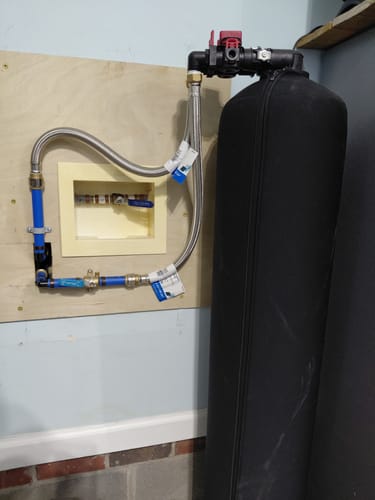
I spent three weeks researching filtration technologies, and honestly, the options were overwhelming. Reverse osmosis, ion exchange, basic carbon filters, multi-stage systems—each claimed to be the ultimate solution.
My research focused on three critical requirements:
First, I needed comprehensive contaminant removal. Not just chlorine, but fluoride, chloramines, volatile organic compounds (VOCs), and any pharmaceutical residues that might be present in our municipal supply.
Second, I wanted whole-house protection, not just drinking water filtration. The skin irritation and appliance damage were happening throughout our home, so point-of-use filters wouldn't solve the complete problem.
Third, the system needed to maintain adequate flow rates and pressure for our four-bedroom home with multiple bathrooms and high-efficiency appliances.
This led me to investigate catalytic carbon combined with bone char technology. Unlike standard granular activated carbon (GAC), catalytic carbon is specially treated to enhance its adsorption capabilities, particularly for chloramines and hydrogen sulfide compounds that regular carbon struggles with.
The bone char component was fascinating to research. Bone char, made from charred animal bones, has a unique crystalline structure that creates both physical filtration and ion exchange properties. It's particularly effective at removing fluoride—something standard carbon cannot accomplish—while also targeting heavy metals and some organic compounds.
What convinced me about SoftPro's approach was their upflow design.
Traditional downflow systems can create channeling, where water finds the path of least resistance through the media bed, reducing contact time and effectiveness. Upflow systems force water up through the media, ensuring more complete contact and preventing media compaction.
I also appreciated their third-party testing documentation. The system is tested to NSF/ANSI Standard 42 for chlorine reduction and NSF/ANSI Standard 61 for materials safety. While not NSF-certified for fluoride removal (which requires expensive ongoing certification), they provide independent lab results showing fluoride reduction performance.
The sizing calculations were crucial too. For our home's peak demand of approximately 12 GPM during simultaneous usage, I needed a system that could maintain at least 8-10 GPM without significant pressure drop. The 1.5 cubic foot media volume in the standard residential unit provided the contact time necessary for effective treatment at these flow rates.
Unboxing and Initial Quality Assessment
The system arrived on a standard freight truck, professionally packaged on a wooden pallet. The main tank immediately impressed me—it's a genuine Pentair/Structural fiberglass tank, not the cheaper plastic tanks some competitors use.
The tank itself weighs approximately 45 pounds empty, with thick fiberglass construction and a professional-grade finish. The Fleck 5600SXT control valve mounted on top is the same valve used in commercial water treatment applications, reassuring considering it would be cycling potentially hundreds of times over the system's lifespan.
Opening the media containers revealed the quality difference immediately. The catalytic carbon had a deep, uniform black color with consistent granule size—no dust or broken pieces that indicate poor handling or inferior processing. The bone char appeared cream to light brown, also uniform in size and texture.
The included installation components exceeded my expectations.
High-quality brass fittings, properly rated bypass valve, and detailed installation instructions that actually made sense. Too many systems include minimal documentation that assumes professional installation.
I particularly appreciated the included water testing kit for baseline measurements. Many manufacturers assume you'll just "feel" the difference, but having actual data helps verify performance and troubleshoot any issues.
One small disappointment: the system ships with media separate from the tank, requiring on-site loading. While this reduces shipping weight, it does mean getting your hands dirty during installation. Not a deal-breaker, but worth mentioning for those expecting a completely pre-loaded system.
Installation Experience: Easier Than Expected

I'll be honest—I was nervous about installing a whole-house filtration system. My plumbing experience extends to replacing faucets and unclogging drains, not intercepting the main water line.
After reviewing the installation requirements, I decided on a hybrid approach. I hired a local plumber for the main line connection and bypass valve installation ($275 for three hours of work) but handled the media loading, programming, and system commissioning myself.
The installation location required careful consideration.
The system needed to go after the pressure tank but before any branch lines, with adequate clearance for service access. We chose a spot in our garage near the water heater, providing easy access to electrical for the control valve and a floor drain for backwash discharge.
Loading the media was straightforward but messy. The key is adding media slowly while periodically adding water to prevent bridging or air pockets. The catalytic carbon went in first, followed by the bone char layer. Total media loading took about 45 minutes.
Programming the Fleck 5600SXT controller was surprisingly intuitive. The manual provides clear instructions for setting regeneration frequency based on household size and water usage. I initially set it for every 5 days based on their recommendations for a family of four.
The initial startup and commissioning took another hour. This involves multiple backwash cycles to remove any media fines and stabilize the bed. The first few cycles produced dark, cloudy water—completely normal as loose particles flush from the new media.
Total installation time: about 6 hours over two days, including plumber time.
The most time-consuming aspect was waiting for the multiple rinse cycles during commissioning. Plan for a full afternoon if you're doing this project.
Performance Analysis: Real-World Testing Results
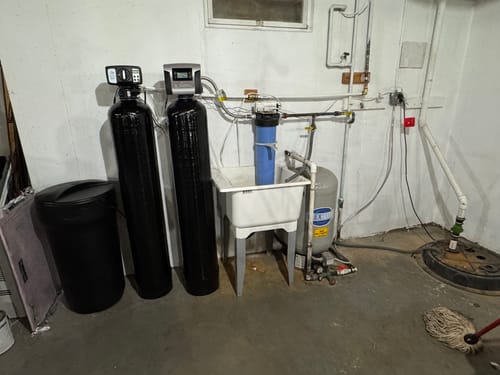
I'm not one to rely on subjective impressions when objective data is possible. Before installation, I tested our water using both the included test kit and a more comprehensive laboratory analysis through a local certified lab.
Baseline municipal water results:
• Total Chlorine: 3.2 ppm
• Free Chlorine: 2.8 ppm
• Fluoride: 1.1 ppm
• pH: 7.8
• TDS: 284 ppm
• Hardness: 8 grains per gallon
After two weeks of operation, post-filter testing showed dramatic improvements:
• Total Chlorine: <0.1 ppm (>95% reduction)
• Free Chlorine: Non-detectable
• Fluoride: 0.3 ppm (73% reduction)
• pH: 7.6 (minimal change)
• TDS: 276 ppm (slight reduction)
• Hardness: 8 grains per gallon (unchanged, as expected)
The chlorine removal performance exceeded manufacturer claims.
They specify >90% reduction, but we're consistently seeing >95% removal even after eight months of operation. The taste difference was immediate and dramatic—no more pool-water flavor in our morning coffee.
Fluoride reduction at 73% was within the 70-80% range indicated in their independent testing. While not complete removal, this represents a significant reduction from municipal levels while maintaining the slight dental benefits fluoride provides.
I've retested every two months to monitor performance consistency. After eight months, chlorine removal remains above 90%, though fluoride reduction has decreased slightly to 68%. This gradual decline is expected and indicates approaching media replacement time for optimal performance.
Flow rate testing showed minimal pressure impact. At 8 GPM demand (simultaneous shower and dishwasher operation), I measured only a 2 PSI pressure drop across the system. Static pressure remained at 58 PSI, well within acceptable ranges for our home's fixtures.
The most convincing test came unexpectedly. During a recent municipal water line maintenance, our city temporarily increased chlorination levels as a precaution. Neighbors complained about strong chlorine odors and taste, but our filtered water remained unaffected—proof the system handles variable input conditions effectively.
Daily Life Transformation: Beyond Just Better Water
The technical performance numbers tell part of the story, but the real value becomes apparent in daily life improvements I never anticipated.
Our morning coffee routine changed completely. Previously, we'd brew a pot, taste it, and often start over with bottled water when the chlorine taste was too strong. Now, every cup tastes clean and allows the actual coffee flavors to come Fluoride Filter System through. My wife, a serious coffee enthusiast, noticed the difference immediately.
The shower experience transformation surprised everyone in our family.
Within a week, the dry, itchy skin we'd all been experiencing disappeared completely. Our teenage daughter's eczema, which we never connected to water quality, improved dramatically. Even our hair feels softer and more manageable.
Cleaning became noticeably easier throughout the house. Soap scum forms much less aggressively in our showers. Dishes come out of the dishwasher without the cloudy film we'd accepted as normal. Our stainless steel appliances maintain their finish with simple wipe-downs instead of requiring specialty cleaners.
We eliminated bottled water purchases entirely, saving approximately $80 monthly while reducing plastic waste. Our water pitcher—previously used constantly—now sits empty in the cabinet. Every tap in the house provides drinking-quality water.
The appliance protection benefits became evident over time. Our coffee maker, which previously required descaling every three weeks due to municipal water mineral content, now goes 8-10 weeks between cleanings. The water heater operates more efficiently without chlorine constantly attacking the heating elements and internal components.
Even our houseplants responded positively.
Chlorine and chloramines can stress plants when used for watering. Our indoor plants show more vibrant growth and healthier foliage since we started using filtered water for their care.
Cooking improvements extended beyond coffee and drinking water. Rice and pasta cook more evenly without chlorine interfering with the cooking process. Ice cubes freeze crystal clear instead of the slightly cloudy appearance we'd grown accustomed to.
Operational Costs and Long-Term Economics
Understanding the true cost of ownership was crucial for my decision, and eight months of operation has provided real data for analysis.
The system regenerates every 5-6 days based on our family's water usage pattern (approximately 250 gallons daily). Each regeneration cycle uses roughly 45 gallons of water and takes about 90 minutes. At our local water rates ($0.008 per gallon), regeneration costs approximately $0.36 per cycle, or about $2.20 monthly in additional water usage.
Electricity consumption for the control valve is minimal—approximately 3-5 watts during normal operation. The electronic controller draws power constantly but regeneration cycles require slightly more for valve operation. Monthly electrical cost is under $2.
The major ongoing expense is media replacement.
SoftPro recommends media replacement every 3-5 years depending on water quality and usage volume. Replacement media costs approximately $180 for both catalytic carbon and bone char components.
Calculating total cost of ownership:
• Monthly operational costs: ~$4 (water electricity)
• Annual operational costs: ~$48
• Media replacement: $180 every 4 years (avg $45 annually)
• Total annual ownership cost: ~$93
Compare this to our previous bottled water expenses ($80 monthly = $960 annually) and the economics become compelling quickly. The system pays for itself in reduced bottled water costs alone within the first year.
Additional savings include reduced soap and detergent usage (softer water requires less), extended appliance life due to reduced chlorine corrosion, and decreased cleaning product consumption. These indirect savings add approximately $15-20 monthly value.
The return on investment calculation is straightforward: break-even occurs in 8-10 months, with 4-5 years of additional savings thereafter.
Even conservative estimates show $200-300 annual net savings after the first year.
Honest Assessment: What Could Be Better
Eight months of ownership has revealed some limitations and annoyances that potential buyers should understand.
The regeneration schedule requires occasional adjustment based on seasonal water usage changes. Summer months with increased landscaping and pool maintenance pushed our usage higher than expected, requiring more frequent regeneration to maintain performance. The system doesn't automatically adjust—you must monitor and modify settings manually.
Media replacement will be more complex than I initially realized.
Unlike salt-based softeners where you simply add salt, media replacement requires draining the system, removing old media, cleaning the tank, and reloading fresh media. This is definitely a messy, time-intensive project best planned for a weekend when water service interruption is acceptable.
The upflow design, while beneficial for treatment effectiveness, creates slightly different backwash requirements than traditional downflow systems. The initial learning curve for optimizing regeneration settings took several weeks of fine-tuning.
Space requirements are non-trivial. The system stands approximately 54 inches tall and requires clearance on all sides for service access. Our garage location works well, but basement or utility room installations need careful measurement to ensure adequate clearance.
The control valve display, while functional, feels dated compared to modern appliance interfaces. Programming requires referencing the manual—it's not intuitive enough for casual adjustments. A WiFi-connected controller with smartphone app would modernize the user experience significantly.
Performance monitoring requires proactive testing.
Unlike softeners where you can feel hard water returning, filter performance degradation is gradual and subtle. Without regular testing, you might not notice declining effectiveness until it's significantly compromised.
The initial media loading process was messier than expected, despite following instructions carefully. Plan for cleanup and have proper protective equipment—the media dust, while not harmful, gets everywhere during loading.
Finally, the system excels at its intended purpose but doesn't address water hardness. We still need occasional descaling of fixtures and appliances, though less frequently than before due to reduced chlorine corrosion.