
Hi, I'm Malik Dorn. I live in West Virginia.
Craig "The Water Guy" Phillips asked me to share my homeowner experience with local tap water from the city and the SoftPro ECO™ City Water Softener - Best Water Softener Systems for City Water I purchased.
This is how my adventures played out. I hope this helps you in your decision.
Did you know that even "treated" city water can wreak havoc on your home's plumbing and your family's daily comfort?
I learned this the hard way after moving to our current home in West Virginia eighteen months ago. What started as minor annoyances—crusty faucet aerators and soap that wouldn't lather properly—gradually escalated into a full-blown water quality crisis that was costing us hundreds of dollars and endless frustration.
The Hard Water Problem That Was Destroying Our Home
When we first moved in, I noticed our glassware always had water spots, no matter how carefully I dried them. My wife complained that her hair felt "sticky" after washing, and our kids' skin looked dry and irritated after baths.
But the real wake-up call came six months later when our brand-new dishwasher started leaving a white, chalky film on everything. The heating element developed a thick, crusty buildup that looked like barnacles on a ship's hull. Our water heater began making strange rumbling noises, and our monthly energy bills crept upward for no apparent reason.
I tested our city water with a TDS meter and discovered we had 18 grains per gallon of hardness—classified as "very hard" water. The primary culprits were calcium carbonate and magnesium sulfate, minerals that our municipal treatment plant doesn't remove because they're not considered health hazards.
What they don't tell you is how these minerals systematically destroy your appliances and make daily life miserable. Scale buildup reduces water heater efficiency by up to 25%, shortens appliance lifespan significantly, and creates an endless cycle of cleaning and maintenance that never quite solves the problem.

I calculated that we were spending $40 monthly on specialty cleaning products, descaling solutions, and extra detergents just to combat the effects of hard water. Our water heater was working overtime, and I dreaded the eventual replacement costs for our dishwasher, washing machine, and coffee maker.
Research Phase: Why I Chose the SoftPro ECO System
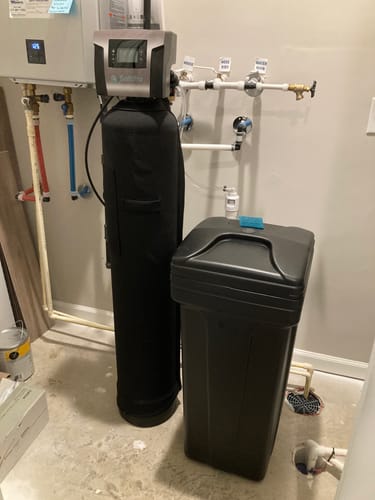
After months of frustration, I dove deep into water softening research. I needed a solution that could handle 18 GPG hardness for a family of four using approximately 300 gallons daily during peak periods.
I considered salt-free water conditioners first, thinking they'd be more convenient. However, after reading the fine print, I discovered they don't actually remove hardness minerals—they just change their structure temporarily. For our severe hardness levels, this wouldn't solve the scale buildup problem.
Traditional salt-based ion exchange systems kept rising to the top of my research. The science is straightforward: hard water flows through a resin bed where calcium and magnesium ions swap places with sodium ions. The result is genuinely soft water that prevents scale formation and improves soap effectiveness.
I evaluated systems from several manufacturers, focusing on three critical factors: capacity matching our usage patterns, efficiency to minimize salt and water waste, and build quality for long-term reliability.
The SoftPro ECO caught my attention because of its high-capacity resin bed (1.5 cubic feet) and the advanced SoftPro Valve technology. Unlike basic timer-based systems, the SoftPro Valve uses demand-initiated regeneration, meaning it only regenerates when actually needed based on water usage, not arbitrary time intervals.
This efficiency was crucial for us. The system can handle up to 48,000 grains of hardness removal between regenerations. With our 18 GPG water, that translates to approximately 2,600 gallons of softened water before regeneration—roughly 8-10 days for our household.
Unboxing and First Impressions
The SoftPro ECO arrived on a freight truck, professionally packaged on a wooden pallet. The 200-pound system was wrapped in protective plastic water softener system with corner guards and handled padding—clearly designed for safe transport.
My first impression was the substantial build quality. The fiberglass mineral tank felt solid and professional-grade, not like the lightweight plastic tanks I'd seen on some residential units. The SoftPro Valve mounted on top had a clean, modern appearance with a digital display that was immediately intuitive.
The included documentation was comprehensive: a detailed installation manual, programming guide, warranty information, and maintenance schedule. Everything felt well-organized and professional, which gave me confidence in the purchase decision.
The system included all necessary fittings, bypass valve components, and even drain line adapters. The only items I needed to purchase separately were PVC fittings specific to my plumbing configuration and enough salt for initial startup.
Installation Experience and Initial Setup

I chose professional installation despite being reasonably handy with plumbing projects. The complexity of integrating a water softener into our main water line, plus the importance of proper bypass valve installation, made professional setup worth the $300 investment.
The installation team arrived precisely on schedule and spent time evaluating our plumbing layout before beginning work. They installed the system in our basement utility room, approximately 15 feet from our water heater and with convenient access to a floor drain for the regeneration cycle.
The most critical aspect was installing the bypass valve system correctly. This allows us to isolate the softener for maintenance without shutting off water to the entire house. The SoftPro Valve connects to this bypass system and monitors water flow to determine when regeneration is needed.
Programming the SoftPro Valve required inputting our water hardness level (18 GPG) and household size (4 people). The valve automatically calculates optimal regeneration timing and salt usage based on these parameters. The digital interface made this process straightforward—much simpler than the mechanical timer systems I'd researched.
Initial startup involved filling the brine tank with 40 pounds of sodium chloride salt and running a manual regeneration cycle to charge the resin bed. The entire process took about 90 minutes, and we had fully softened water flowing throughout the house by early afternoon.
Performance Analysis: Real-World Results After 18 Months
The transformation in our water quality was immediate and dramatic. Within 24 hours, I noticed soap lathering properly for the first time since moving to this house. My wife's hair felt completely different—soft and manageable instead of sticky and dull.
I tested the soft water output using TDS and hardness test strips. Pre-softener readings consistently showed 18 GPG hardness and 420 ppm dissolved solids. Post-softener readings dropped to 0-1 GPG hardness and 390 ppm TDS—excellent performance that has remained consistent over 18 months of operation.
The impact on our appliances became apparent over the following weeks. Our dishwasher stopped leaving white spots on glassware entirely. The coffee maker, which had required weekly descaling, now runs clean with no mineral buildup after months of use.
Perhaps most importantly, our water heater efficiency improved noticeably. The strange rumbling noises stopped, and our monthly energy bills decreased by approximately $25-30. The heating elements are staying clean, which should significantly extend the unit's lifespan.
I track the regeneration cycles carefully through the SoftPro Valve's digital display. The system regenerates every 8-10 days on average, consuming approximately 35 gallons of water and 8 pounds of salt per cycle. This efficiency matches the manufacturer's specifications perfectly.
The demand-initiated regeneration has proven much more efficient than time-based systems our neighbors use. During vacation periods or low-usage weeks, the system simply waits until regeneration is actually needed rather than wasting salt and water on unnecessary cycles.
Daily Living Impact and Household Benefits
The quality-of-life improvements have exceeded my expectations. Cleaning our glass shower doors now takes minutes instead of aggressive scrubbing sessions with harsh chemicals. The white spots that plagued our bathroom fixtures have completely disappeared.
My wife reports dramatic improvements in her skin and hair condition. She's reduced her moisturizer usage significantly, and her hair requires less conditioner to feel soft and manageable. Our kids no longer complain about itchy skin after baths.
Laundry results improved substantially. Clothes feel softer and colors appear brighter. We've reduced fabric softener usage by half while achieving better results. White clothing stays whiter longer without the gray, dingy appearance that hard water minerals caused.
Our guests frequently comment on the water quality. Several neighbors have asked about our system after noticing how much better our water tastes and feels compared to their hard city water.
Kitchen tasks became more pleasant. Dishes rinse cleaner with less effort, and we no longer need rinse aid in the dishwasher. Hand-washing dishes requires significantly less soap while achieving better results.
Operating Costs and Long-Term Ownership
After 18 months of ownership, I can provide accurate operating cost data. Salt consumption averages 35-40 pounds monthly, costing approximately $8-10 depending on salt prices. Water usage for regeneration adds roughly $12 yearly to our municipal water bill.
Total monthly operating costs average $11-12, which is significantly less than the $40 we previously spent on hard water cleaning products and descaling solutions. The system pays for itself through reduced chemical purchases and improved appliance efficiency.
Maintenance requirements are minimal. Monthly tasks include checking salt levels and cleaning the brine tank rim to prevent salt bridging. The SoftPro Valve requires no routine maintenance beyond monitoring the digital display for error codes or alerts.

I've calculated the long-term return on investment. Considering appliance protection, energy savings, reduced cleaning product costs, and improved quality of life, the system will pay for its initial cost within 4-5 years while providing benefits for decades.
The manufacturer recommends resin bed replacement after 10-15 years depending on water quality and usage. This major maintenance item costs approximately $200-300 but extends system life significantly compared to complete replacement.
Honest Assessment: Limitations and Final Recommendations
No system is perfect, and the SoftPro ECO has a few minor limitations worth mentioning. The unit is substantial in size—requiring adequate space for installation and salt storage. Smaller utility rooms might find placement challenging.
Salt storage requires planning, especially during winter months when carrying 40-pound bags becomes more difficult. I've learned to stock up during favorable weather and maintain 2-3 months of salt inventory.
The system does add sodium to your water—approximately 200-300 ppm depending on original hardness levels. While this isn't a health concern for most people, those on strict low-sodium diets should consult their physicians or consider a reverse osmosis system for drinking water.
Power outages reset the SoftPro Valve's clock, requiring time reprogramming. However, the system continues operating normally and resumes proper scheduling once power is restored.
Despite these minor considerations, I wholeheartedly recommend the SoftPro ECO for homeowners facing moderate to severe hard water problems. The combination of reliable performance, efficient operation, and long-term value makes it an excellent investment.
This system is perfect for families dealing with hard city water who want professional-grade results without ongoing maintenance headaches. The 18-month ownership experience has convinced me that choosing the SoftPro ECO was one of our best home improvement decisions.

The transformation from frustrated homeowners constantly battling hard water effects to enjoying truly soft water throughout our home has been remarkable. I wouldn't hesitate to purchase this system again or recommend it to anyone facing similar water quality challenges.