
Hi, I'm Bryan I. I live in Maryland.
Craig "The Water Guy" Phillips asked me to share my homeowner experience with local tap water from the city and the SoftPro ECO™ City Water Softener - Best Water Softener Systems for City Water I purchased.

When Your Trusted Water Softener Finally Gives Up
Did you know that the average lifespan of a quality water softener is typically 10-15 years?
Well, my previous unit had served me faithfully for 12 solid years. It was one of those workhorses that you don't really think about until something goes wrong. The system had been quietly doing its job, transforming our moderately hard city water into something much more pleasant for daily use.
But last spring, I started noticing the telltale signs of a failing system. The regeneration cycles were becoming erratic, making unusual grinding noises during the backwash process. My morning coffee started tasting different – that slight metallic edge that I hadn't experienced in over a decade was creeping back. The white spots on my glassware were returning, and my wife mentioned that her hair felt different after washing.
When I finally called a service technician to diagnose the issue, the news wasn't surprising but was certainly disappointing from a financial standpoint. The control valve had developed internal leaks, the resin bed was severely depleted, and the mineral tank showed signs of corrosion near the bottom. The repair estimate was staggering – nearly 75% of what a brand-new system would cost.
That's when I realized it was time to start fresh rather than pour money into a system that had already exceeded its expected lifespan.
A Friend's Recommendation Changes Everything
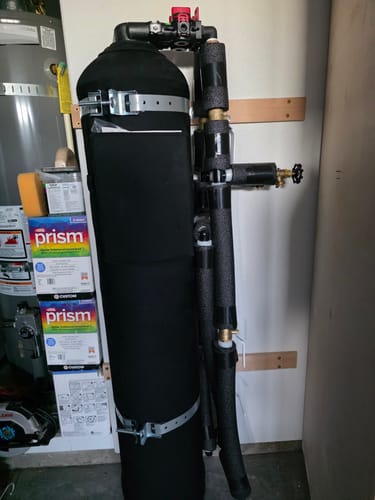
Fortunately, I wasn't flying blind in my search for a replacement. My neighbor and longtime friend had faced a similar situation about eight months earlier. He'd done extensive research into modern water softening technology and had settled on the SoftPro ECO system.
What convinced me to seriously consider his recommendation wasn't just his enthusiasm – it was the specific improvements he described.
He mentioned that his new system was noticeably more efficient with salt usage compared to his old unit. The regeneration cycles were quieter and seemed to happen less frequently, even though his family's water usage hadn't decreased. Most importantly, he said the water quality was superior to what he'd experienced with his previous system.
As someone who had lived with hard water problems before my first softener installation, I understood exactly what he meant. The difference between hard and properly softened water isn't just about taste – it affects everything from how your skin feels after showering to how efficiently your appliances operate.
His genuine satisfaction with the SoftPro ECO, combined with my urgent need for a replacement, motivated me to dig deeper into this particular brand and model.
Understanding What Makes City Water Challenging
Did you know that city water presents unique challenges that well water users don't face?
Before diving into my experience with the SoftPro ECO, it's worth explaining why I needed a water softener specifically designed for municipal water supplies.
Our city water arrives pre-treated with chlorine for disinfection, which creates a distinct taste and odor that many people find objectionable. The water also travels through miles of aging infrastructure, potentially picking up additional minerals and sediments along the way. In our area, the municipal water typically measures around 8-12 grains per gallon of hardness – not the worst I've heard of, but definitely enough to cause problems over time.
The hardness minerals – primarily calcium and magnesium carbonates – were leaving deposits throughout our home. Scale buildup in our water heater was reducing its efficiency, and I was constantly battling mineral stains in the shower and on faucets. Our dishwasher, despite regular cleaning, wasn't performing as well as it should have.
Beyond the hardness issues, I wanted a system that would also address the chlorine taste and odor without requiring a separate filtration system. The SoftPro ECO's integrated approach to handling both hardness and taste/odor issues made it particularly appealing for city water applications.
First Impressions and Installation Experience

When the SoftPro ECO arrived, I was immediately impressed by the packaging and component quality. The mineral tank felt substantial – clearly built from high-grade fiberglass-reinforced polymer rather than the cheaper plastic alternatives I'd seen. The control head appeared more sophisticated best water softener than my old system, with a digital display and multiple programming options.
What surprised me most was how compact the entire system was compared to my aging unit.

Modern engineering had clearly improved space efficiency without compromising performance. The unit would fit comfortably in the same corner of my utility room where the old system had been located, with room to spare for easier access during maintenance.
I chose to have the system professionally installed, primarily because I wanted to ensure the electrical connections and programming were handled correctly. The installation took about four hours, including removal of the old system and proper disposal of the depleted resin.
The technician walked me through the initial programming, explaining how the ECO's demand-initiated regeneration system learns household water usage patterns. Unlike my old timer-based system that regenerated on a fixed schedule regardless of actual water consumption, this one would only regenerate when necessary based on actual usage.
Within 24 hours of installation, I could already taste the difference in our water.
Daily Performance and Water Quality Transformation
How dramatic can the difference be between properly softened water and what you're used to?
The improvement was immediate and noticeable across multiple aspects of daily life. The most obvious change was in water taste – the chlorine flavor that had gradually returned with my failing system disappeared completely. The water felt softer and more pleasant to drink straight from the tap.
My morning shower routine became noticeably more enjoyable. Soap lathered more easily and rinsed away completely, leaving my skin feeling softer rather than tight and dry. My wife, who has sensitive skin that reacts poorly to hard water, noticed improvements within the first week.
The kitchen benefits were equally impressive. Coffee and tea preparation showed marked improvement in flavor clarity. Ice cubes from our refrigerator dispenser became crystal clear rather than cloudy. Our dishwasher began performing like new again, with glasses coming out spot-free and dishes feeling cleaner to the touch.
Perhaps most satisfying was watching the gradual disappearance of existing scale buildup in our shower and on faucets. While the new soft water couldn't instantly remove years of accumulated deposits, it prevented new formation and slowly began dissolving existing mineral crusts.
Within three months, our water heater's efficiency improved noticeably. Our monthly energy bills reflected the improved heat transfer as scale deposits gradually cleared from the heating elements.
Efficiency and Operating Costs in Practice
What does it actually cost to operate a modern water softener on a monthly basis?
One of the most pleasant surprises with the SoftPro ECO has been its operational efficiency compared to my previous system. The demand-initiated regeneration technology has significantly reduced salt consumption compared to the timer-based regeneration of my old unit.
My previous system regenerated every three days regardless of actual water usage, consuming approximately 40 pounds of salt monthly. The ECO system typically regenerates every 5-7 days, using only about 25-30 pounds of salt per month for our household of three adults.
The salt savings translate to meaningful cost reductions over time. Quality water softener salt in our area costs approximately $6-8 per 40-pound bag. The monthly savings of 10-15 pounds of salt might seem modest, but it adds up to $30-50 annually in reduced consumable costs.
Water usage during regeneration cycles is also more efficient. The old system used approximately 50-60 gallons per regeneration cycle, while the ECO uses about 35-40 gallons. With three regenerations weekly versus two, the total water consumption is actually lower despite the more frequent cycling.
Electricity consumption appears minimal. The digital control head draws very little power during normal operation, and the regeneration motor runs only briefly during backwash and rinse cycles.
From a total cost of ownership perspective, the improved efficiency helps justify the initial investment through ongoing operational savings.
Maintenance Reality and Long-Term Ownership
How much ongoing attention does a quality water softener actually require?
Six months into ownership, the maintenance routine has proven refreshingly simple. The most frequent task is monitoring salt levels in the brine tank, which I check monthly when adding salt. The ECO's salt efficiency means I'm adding one 40-pound bag approximately every 6-7 weeks rather than the monthly additions required by my old system.
The digital control head provides helpful diagnostic information that my previous system lacked. It tracks water usage, regeneration frequency, and remaining capacity before the next regeneration cycle. This information helps me understand our household's actual water consumption patterns and verify the system is operating optimally.
Quarterly, I perform basic maintenance: cleaning the brine tank interior, checking salt bridge formation, and ensuring the venturi assembly remains clear. The ECO's design makes these tasks more accessible than my old system – components that require periodic attention are easier to reach and service.
The resin bed quality appears excellent based on continued performance consistency. Water hardness test strips confirm that treated water consistently measures less than 1 grain per gallon, indicating the ion exchange process remains highly effective.
I haven't required any professional service since installation. The system's self-diagnostic capabilities and straightforward maintenance requirements suggest that ongoing service costs should remain minimal for the foreseeable future.
Final Assessment and Honest Recommendation
Would I choose the SoftPro ECO again, knowing what I know now after months of daily use?
Absolutely. The combination of performance, efficiency, and reliability has exceeded my expectations. The water quality improvement was immediate and has remained consistent. The operational cost savings, while not dramatic, are measurable and appreciated.
The system handles our household's water demands without any performance compromises, even during high-usage periods like holiday visits when we might have six adults showering and doing multiple loads of laundry in a single day.
My friend's recommendation proved accurate – this is a well-engineered system that delivers on its promises. The build quality suggests it should provide many years of reliable service, potentially matching or exceeding the 12-year lifespan of my previous unit.

For homeowners dealing with moderately hard city water who want a single system to address both hardness and chlorine taste/odor issues, the SoftPro ECO represents excellent value. The efficiency features help offset the initial investment through reduced ongoing costs, and the performance consistently delivers the water quality improvements that make the investment worthwhile.
The peace of mind that comes from having clean, soft water throughout your home – and knowing your appliances are protected from scale damage – makes this one of the better home improvements I've made in recent years.