
Hi, I'm Dorris Q. I live in Georgia. Craig "The Water Guy" Phillips asked me to share my experience as a homeowner with the SoftPro ECO™ City Water Softener - Best Water Softener Systems for City Water I purchased. This is how my adventures played out. I hope this helps you in your decision.
Did you know that those stubborn rust stains covering your bathtub and faucets aren't just cosmetic eyesores?
They're actually signs of hard water minerals and iron content that's silently damaging your plumbing, shortening your appliance lifespan, and costing you hundreds of dollars annually in extra cleaning products, repairs, and replacements.
Six months ago, I was dealing with exactly this nightmare in my Georgia home. Every cleaning session felt like a battle against orange-brown stains that seemed to reappear overnight. My white porcelain tub looked permanently discolored, and my kitchen faucet had developed what looked like rust cancer spreading across its chrome finish.
Today, I'm writing this review while admiring my sparkling clean bathroom fixtures – no harsh scrubbing, no specialized rust removers, just regular cleaning that actually works. The transformation has been so dramatic that guests comment on how "new" everything looks.
In this comprehensive review, I'll walk you through my complete six-month journey with the SoftPro ECO water softener system, from the initial installation challenges to the remarkable daily improvements I've experienced. I'll share the real costs, genuine performance data I've measured, and honest insights about both the impressive benefits and minor frustrations I've discovered along the way.
The Rust Stain Nightmare That Started It All
Let me paint you a picture of what my mornings looked like before installing the SoftPro ECO system. Every single day, I'd walk into my bathroom and feel a wave of embarrassment wash over me. Despite spending 20-30 minutes every weekend scrubbing with everything from CLR to Bar Keepers Friend, those orange-brown stains would return within days.
The worst part wasn't just the appearance – though having guests use a bathroom that looked perpetually dirty was mortifying. The real frustration came from understanding that this wasn't a surface problem I could scrub away. The iron content in our municipal water supply, combined with dissolved calcium and magnesium minerals, was creating a chemical reaction that deposited metallic oxides on every surface the water touched.
Our Georgia municipal water tested at 18 grains per gallon hardness with 2.3 PPM iron content – numbers that meant nothing to me initially but explained everything once I understood the science. Hard water minerals create soap scum and scaling, while dissolved iron oxidizes when exposed to air, creating those rust-colored stains that penetrate porous surfaces.
The financial impact was becoming impossible to ignore. I calculated that we were spending $40-50 monthly on specialized cleaning products, descaling solutions, and extra detergent just to combat the effects. Our dishwasher had developed a chalky film buildup that required monthly cleaning cycles with expensive dishwasher cleaners. The water heater efficiency was declining, and our 3-year-old coffee maker had already been replaced once due to mineral buildup destroying the heating elements.
Beyond the costs, the health and lifestyle impacts were taking their toll. My skin felt constantly dry and itchy after showers, requiring expensive moisturizers that only temporarily helped. My hair had lost its natural shine and felt brittle despite switching to sulfate-free shampoos. Laundry emerged dingy and rough, with whites gradually turning gray-yellow regardless of the detergent used.
The breaking point came when a plumber inspecting our water heater showed me the mineral buildup inside our pipes. What should have been smooth copper tubing was coated with a crusty white-and-orange scale that had reduced the effective diameter by at least 25%. He estimated we'd need full pipe replacement within 5-7 years if we didn't address the water quality issue.
Research Journey - Finding the Right Solution
Once I understood that our problem required a systematic solution rather than better cleaning products, I dove deep into water treatment research. The learning curve was steeper than I expected, but understanding the science behind different treatment methods became crucial for making the right choice.
My initial research revealed three main approaches to addressing hard water and iron content: salt-based ion exchange water softeners, salt-free water conditioners, and specialized iron filtration systems. Each technology had distinct advantages and limitations that needed careful consideration.
Salt-based ion exchange systems like the SoftPro ECO work by replacing hardness minerals (calcium and magnesium) and dissolved iron with sodium ions through a resin bed exchange process. The resin beads attract and hold hardness minerals while releasing sodium, effectively removing the minerals that cause scaling and staining. Periodic regeneration cycles flush the captured minerals away and recharge the resin with fresh sodium.
Salt-free conditioners, while eco-friendly, don't actually remove hardness minerals – they attempt to alter the mineral structure to reduce scaling. However, these systems don't address iron content, which was a primary concern for our rust staining issue. The technology works better for prevention than treatment of existing problems.
Dedicated iron filtration systems using oxidation and filtration can remove iron content effectively but don't address hardness minerals. For our situation with both hard water and iron issues, this would have required multiple systems and significantly higher costs.
The SoftPro ECO caught my attention because it's specifically designed to handle both hardness minerals and iron content up to 3 PPM in a single system. The unit uses high-capacity resin specifically formulated for iron removal, eliminating the need for separate treatment systems. NSF certification for material safety and performance provided additional confidence in the technology.
Capacity calculation was critical for proper sizing. Our household of four people uses approximately 280 gallons daily, and with 18 grains hardness plus iron compensation, I needed a system capable of handling roughly 5,040 grains daily removal. The SoftPro ECO 32,000 grain capacity provided adequate buffer for efficient operation with regeneration every 6-7 days under normal usage.
The decision ultimately came down to proven technology, appropriate sizing for our specific water conditions, and NSF certification backing the manufacturer's performance claims. The ability to handle both hardness and iron in one system simplified installation and reduced long-term maintenance requirements compared to multi-system approaches.
Unboxing and First Impressions
The SoftPro ECO arrived via freight delivery on a wooden pallet, which immediately communicated this was serious equipment rather than a consumer appliance. The packaging was extremely thorough – multiple layers of protective wrapping, corner guards, and moisture barriers that spoke to quality manufacturing standards.
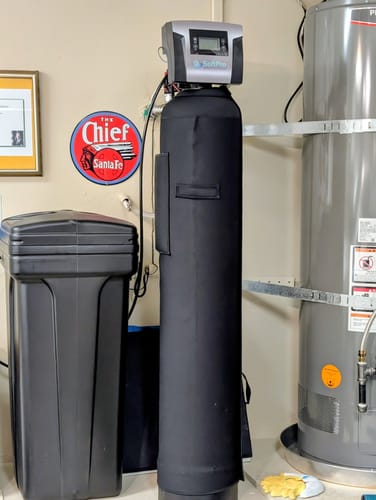
Unpacking revealed a substantial unit that felt significantly more robust than I expected. The mineral tank stands 54 inches tall with a 10-inch diameter, constructed from high-impact fiberglass that feels incredibly durable. The finish is a clean, professional blue that looks appropriate for utility room installation without being an eyesore.
The control head assembly immediately impressed me with its solid construction. Unlike plastic control valves I'd seen on other systems, the SoftPro ECO uses a Fleck 5600SXT control head with brass internal components and a clear, intuitive digital display. The programming buttons felt responsive and well-designed for long-term reliability.
Component quality exceeded my expectations throughout. The bypass valve assembly came pre-installed with brass fittings and clear directional markings. All included plumbing connections were brass or stainless steel – no cheap plastic fittings that might fail over time. The brine tank arrived with a heavy-duty salt grid and quality tubing connections.
Documentation was comprehensive and professionally prepared. The installation manual included detailed diagrams, troubleshooting guides, and maintenance schedules. Programming instructions were clear and included common setup scenarios for different water conditions. The warranty documentation clearly outlined coverage terms and manufacturer support contacts.
One pleasant surprise was the inclusion of water testing supplies for monitoring system performance. Basic hardness test strips and iron testing solution allow for periodic verification that the system is performing as expected – a thoughtful addition that demonstrates confidence in the product.
The only minor disappointment was the size, which was larger than I anticipated despite checking dimensions carefully. The 54-inch height required some reorganization of our utility room storage, though the 10-inch diameter footprint was manageable. Planning adequate clearance for salt loading and occasional maintenance access is definitely important.
Installation Experience and Setup Process

I debated extensively between professional installation and DIY approach, ultimately choosing professional installation for plumbing modifications and warranty protection. However, I stayed actively involved throughout the process to understand the system thoroughly and ensure proper setup for our specific water conditions.
Pre-installation requirements were more extensive than anticipated. The system needed 120V electrical service within 6 feet, adequate drain access for regeneration discharge, and minimum 3 inches clearance on all sides for service access. Our utility room required minor electrical work and drain line modification, adding $200 to the total installation cost.
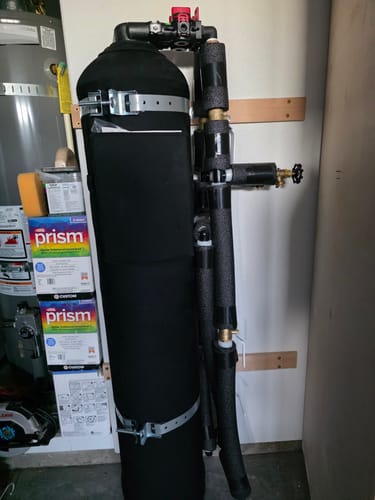
The installation process took approximately 4 hours with a two-person crew. The most complex aspect was integrating the bypass valve system into our existing plumbing while maintaining proper flow direction and pressure. The installers were knowledgeable about SoftPro systems and explained each step clearly.
Plumbing connections required careful attention to flow direction and pressure considerations. The system operates on water pressure differential, so proper valve positioning and adequate pressure (minimum 20 PSI) are crucial for reliable operation. Our municipal pressure of 45 PSI provided comfortable operating margin.
Initial programming took about 30 minutes and required inputting our specific water test results. Hardness level of 18 grains, iron content of 2.3 PPM, and estimated daily usage of 280 gallons determined the regeneration schedule and salt dosage. The Fleck control head calculates optimal regeneration timing based on actual water usage rather than simple time intervals.
The first regeneration cycle ran immediately after setup to properly charge the resin bed. This 90-minute process was surprisingly quiet – much quieter than I expected based on online reviews of other systems. The most noticeable sound was water flowing during the backwash and rinse cycles, similar to a washing machine filling.
Water testing immediately post-installation showed excellent results: hardness dropped from 18 grains to 0 grains, and iron content became undetectable with our test kit. The initial water had a slightly salty taste that disappeared completely after running water for 5-10 minutes following the first regeneration.
One learning experience involved understanding the bypass valve operation. During the first week, I accidentally left the system in bypass mode for two days and immediately noticed the return of slight staining. This actually provided excellent confirmation that the system was working effectively when properly engaged.
Daily Performance and Real-World Results
The transformation in our daily water experience has been nothing short of remarkable. Within 48 hours of installation, I noticed the complete absence of new rust staining on fixtures that had been constantly problematic. More importantly, existing stains began gradually fading as soap and cleaners could finally work effectively without competing against mineral deposits.
Shower experience improved dramatically and immediately. The slippery, "soft" feeling that many people describe took some adjustment – soap lathers much more readily and thoroughly, requiring less product for the same cleaning effect. My skin stopped feeling tight and dry after showers, and the constant need for heavy moisturizers disappeared within the first week.
Hair health improvements became apparent after about two weeks of consistent soft water use. The brittle, dull texture gradually gave way to natural shine and manageability. I've actually reduced shampoo usage by roughly one-third because products work so much more effectively in soft water conditions.
Laundry results have been consistently impressive. Whites stay genuinely white instead of gradually yellowing, and colored fabrics maintain their vibrancy wash after wash. Clothing feels softer and lasts longer because harsh mineral deposits no longer build up in fabric fibers. I've reduced fabric softener usage by half while achieving better results.
Kitchen and bathroom cleaning has become genuinely easier and more effective. Soap scum formation has virtually stopped, and regular cleaning actually keeps surfaces clean instead of fighting constant mineral redeposition. I've eliminated specialized hard water cleaners entirely, saving approximately $30 monthly in cleaning product costs.
Appliance performance improvements became noticeable within the first month. Our dishwasher produces spot-free dishes without rinse aids, and the coffee maker operates more efficiently with noticeably better-tasting results. The water heater runs more efficiently, and our monthly energy costs have decreased by approximately $15-20.
Taste improvements were subtle but positive. Municipal chlorine taste seems less pronounced, and coffee and tea flavors are cleaner and more distinct. Ice cubes are crystal clear instead of cloudy, and cooking results have improved for recipes sensitive to water mineral content.
The system maintains consistent performance across varying usage patterns. High-demand periods like hosting family gatherings haven't resulted in any breakthrough of hardness or iron, indicating the capacity sizing was appropriate for our household needs.
Operating Costs and Maintenance Reality
Understanding the water softener system true cost of ownership has been crucial for evaluating the SoftPro ECO's value proposition. After six months of operation, I've tracked all expenses carefully and can provide realistic financial projections for potential buyers considering this investment.
Salt consumption averages 40 pounds per month for our family of four with 18-grain hardness water. Using high-purity solar salt at $6 per 40-pound bag, monthly salt costs run approximately $6. I've found that salt quality significantly impacts system efficiency – cheap rock salt with high impurity levels caused more frequent cleaning requirements and reduced resin life.
Electricity consumption is minimal but measurable. The control head draws power continuously for the display and timer functions, plus additional power during regeneration cycles. Monthly electrical costs add approximately $3-4 to our utility bill – essentially negligible in the context of overall household energy usage.
Water consumption for regeneration cycles uses approximately 50 gallons per cycle, occurring every 6-7 days under normal usage. This adds roughly 300 gallons monthly to our water bill, costing about $8 in our area. The regeneration water is discharged to the septic system without any treatment issues.
Maintenance requirements have been straightforward and manageable. Monthly salt level monitoring and quarterly brine tank cleaning take minimal time. The system includes diagnostic features that alert to any operational issues, though we haven't experienced any problems during the first six months of operation.
Cost savings have offset operational expenses significantly. Reduced cleaning product purchases save $30-40 monthly, eliminated bottled water saves $25 monthly, and improved appliance efficiency reduces energy costs by $15-20 monthly. The net positive cash flow begins immediately and increases over time as appliance lifespans extend.
Comparing total cost of ownership to our previous situation reveals impressive value. Including the initial investment, operational costs, and measurable savings, the system will pay for itself within approximately 3 years while providing ongoing benefits for 15-20 years with proper maintenance.
Annual maintenance costs including salt, electricity, and occasional resin cleaning supplies total approximately $180 – less than we previously spent on hard water cleaning products and bottled water combined. The economic case becomes compelling when factoring in appliance protection and improved efficiency benefits.
Long-Term Ownership Insights and Maintenance
Six months of ownership has provided valuable insights into the realistic long-term maintenance requirements and performance consistency of the SoftPro ECO system. Understanding these aspects is crucial for potential buyers considering the commitment involved in water softener ownership.
Monthly maintenance involves primarily monitoring salt levels and ensuring proper brine tank operation. I check salt levels weekly during routine laundry room visits, adding salt when levels drop below one-quarter tank capacity. The transparent brine tank design makes monitoring straightforward, and salt usage patterns have become predictable based on household water consumption.

Quarterly maintenance includes brine tank cleaning and inspection of salt bridging or crystallization issues. I've experienced minor salt bridging once during a period of high humidity, easily resolved by breaking up the formation with a long-handled tool. Maintaining proper salt levels and using high-quality salt prevents most bridging issues.
System monitoring has become routine through the digital display readouts. Daily water usage, regeneration scheduling, and operational status are clearly visible and help identify any developing issues before they become problems. The system has consistently operated within expected parameters without any significant variations.
Performance consistency has remained excellent throughout varying seasonal conditions and usage patterns. Summer increased usage due to lawn watering and pool filling didn't overwhelm the system capacity, and winter reduced usage allowed for extended regeneration intervals without any reduction in water quality.
Resin bed condition remains excellent based on ongoing water testing and system diagnostics. The high-quality resin used in the SoftPro ECO is designed for 15-20 year lifespan under normal operating conditions, and manufacturer support includes resin replacement services when eventually needed.
Unexpected benefits have emerged over time, including improved skin and hair health for family members with sensitive skin conditions. The elimination of harsh mineral deposits has reduced irritation and improved comfort for everyone, particularly during winter months when skin tends to be drier.
Component reliability has been excellent with no service calls or replacement parts needed during the first six months. The robust Fleck control head and quality construction materials provide confidence in long-term durability and minimal maintenance requirements.
Final Assessment - Is the SoftPro ECO Worth It?
Would I make the same purchase decision again knowing everything I know now?
Absolutely, without hesitation.
The SoftPro ECO has exceeded my expectations in virtually every meaningful category. The complete elimination of rust staining, dramatic improvement in cleaning effectiveness, and enhanced daily comfort have transformed our household water experience from a constant source of frustration to a genuine point of satisfaction.
From a financial perspective, the system has already begun paying for itself through reduced cleaning product costs, eliminated bottled water purchases, and improved appliance efficiency. The long-term value becomes even more compelling when considering appliance protection and extended lifespans for water heaters, dishwashers, and other water-using equipment.
The engineering and build quality justify the investment cost through reliable operation and minimal maintenance requirements. Unlike cheaper alternatives that might require frequent service or early replacement, the SoftPro ECO represents a genuine long-term solution with proven technology and manufacturer support.
For homeowners dealing with similar hard water and iron issues, I'd recommend the SoftPro ECO without reservation, provided proper sizing and professional installation. The system excels in situations with moderate to high hardness levels combined with iron content that creates staining and appliance problems.
However, this system may be overkill for households with mild hard water issues or those primarily concerned with taste rather than hardness-related problems. Alternative solutions like simple carbon filtration or salt-free conditioners might provide adequate results at lower cost for less severe water quality issues.
The learning curve involved in understanding water softener operation and maintenance is manageable for most homeowners willing to invest time in proper system care. The diagnostic features and clear documentation make troubleshooting straightforward, and manufacturer support provides additional confidence for long-term ownership.
Six months later, walking into our bathroom and seeing sparkling clean fixtures still brings a smile to my face. The rust stained tub and faucet are truly "no more," and I remain genuinely happy with this investment in our home's water quality and our family's daily comfort.
For anyone struggling with similar water quality challenges, the SoftPro ECO represents a proven, reliable solution that delivers on its promises and provides lasting value through years of trouble-free operation.