
Hi, I'm Terry O.. I live in California.
Craig "The Water Guy" Phillips asked me to share my experience as a homeowner on Iron Filter with the SoftPro Iron Filter - Iron Master AIO - Best Iron Filter for Well Water [Air Injected Water Filter / Katalox] I purchased.
This is how my adventures played out. I hope this helps you in your decision.
Did you know that iron-contaminated well water affects over 25% of American households?
I never imagined I'd become an expert on iron filtration systems, but when your morning coffee tastes like pennies and your white laundry turns orange, you learn fast. After six months of dealing with rusty-tasting well water that was slowly destroying my appliances and making daily life miserable, I finally decided enough was enough.
The orange staining in my toilets and bathtubs had become embarrassing. My dishwasher was leaving rusty spots on everything, and I was going through descaling products like they were going out of style. When guests started commenting on the metallic taste of our water, I knew I had to find a real solution—not just another bandaid fix.
The Iron Problem That Nearly Drove Me Crazy
Living with iron-contaminated well water was like fighting a battle I couldn't win. Every morning, I'd wake up to orange stains creeping up the sides of our white porcelain fixtures. The metallic taste hit you immediately—not just unpleasant, but genuinely concerning when you're trying to drink your morning coffee or cook dinner for the family.
Our well water tested at 4.2 parts per million (PPM) of iron, which might not sound like much, but anything over 0.3 PPM creates noticeable problems. The iron existed primarily in its dissolved ferrous state when it came out of our well pump, appearing clear initially. But within minutes of exposure to air, oxidation affordable well water iron filters converted it to ferric iron, creating those characteristic rust-colored particles that settled on everything.
The damage wasn't just cosmetic. My dishwasher's heating elements were developing rust buildup, reducing efficiency and creating a metallic film on dishes. Our white clothing was gradually taking on a dingy, orangish tint that no amount of bleach could reverse. Even worse, the iron was feeding bacteria in our plumbing system, creating biofilm that gave the water an occasional sulfur-like smell.
I calculated that we were spending nearly $200 monthly on bottled water, specialty cleaning products for iron stains, and increased soap and detergent usage. The iron was consuming more soap and shampoo to create any lather, driving up our household chemical costs significantly. When our water heater started making unusual noises from sediment buildup, I realized this problem was going to cost thousands if left untreated.
My previous attempts included a basic sediment filter and iron-reducing cartridges from the hardware store. These captured some visible particles but did nothing for dissolved iron. The cartridges clogged within weeks and needed constant replacement, making them expensive and ineffective for our iron levels.
Research Journey: Learning About Iron Filtration Technology
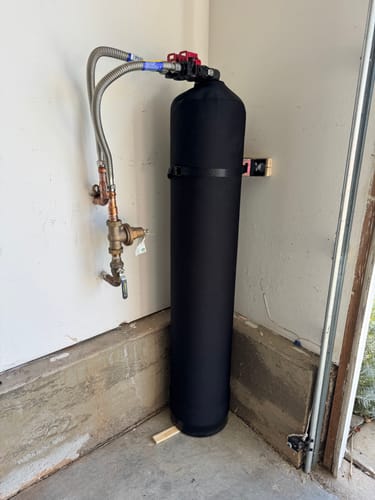
Diving into iron filtration research felt overwhelming initially. The technology options seemed endless: manganese greensand filters, birm media systems, chlorine injection followed by carbon filtration, and air injection systems. Each had different maintenance requirements, capacity limitations, and effectiveness ranges.
I learned that iron exists in two primary forms in well water. Ferrous iron (dissolved, clear water iron) requires oxidation before filtration, while ferric iron (already oxidized, visible as particles) can be filtered directly. Our 4.2 PPM iron was mostly ferrous, meaning any effective system needed robust oxidation capability before the filtration stage.
Air injection systems caught my attention because they use oxygen—nature's oxidizer—rather than chemicals like chlorine or permanganate. The process seemed elegant: inject compressed air into the water stream, allow contact time for oxidation in a retention tank, then filter out the resulting iron particles. No ongoing chemical purchases, no complexity of dosing pumps.
The Iron Master's Katalox media particularly intrigued me. Unlike traditional media that simply filters, Katalox actually catalyzes the oxidation process while providing filtration. This dual function meant more complete iron removal and potentially longer media life. The 10-year media replacement interval was attractive compared to annual cartridge systems.
Sizing calculations showed I needed a system handling our household's 8 gallons per minute peak demand while providing adequate contact time for oxidation. The Iron Master's retention tank design addressed this perfectly, with engineered air-to-water ratios and optimized flow patterns.
NSF certification was non-negotiable for me. The Iron Master carries NSF/ANSI Standard 61 certification for materials safety and performance verification. This third-party validation meant the system had been independently tested and wouldn't leach anything harmful into our treated water.
First Delivery Disaster and Replacement Experience
My excitement about finally solving our iron problem quickly turned to frustration when the first unit arrived damaged. The shipping box showed clear signs of rough handling—dented corners and what looked like impact damage from being dropped during transport.
Opening the package revealed a significant crack running vertically down the main tank housing. The crack was roughly eight inches long and went completely through the fiberglass, making the unit completely unusable. The control valve appeared intact, but there was no way to safely pressure-test or install a compromised tank.
Photographing the damage for the warranty claim was straightforward, and SoftPro's customer service responded within 24 hours. They immediately authorized a replacement shipment and provided a return shipping label for the damaged unit. The representative explained they'd seen similar shipping damage before and had implemented improved packaging protocols.
The replacement unit arrived twelve days later in noticeably more robust packaging. Double-wall cardboard with corner reinforcements and internal foam padding showed they'd taken the shipping damage seriously. This second unit arrived in perfect condition—no cracks, dents, or shipping-related issues.
While the initial damage was frustrating, SoftPro's response gave me confidence in their customer support. They handled the situation professionally without questioning the claim or creating bureaucratic hurdles. The improved packaging also suggested they actively address customer feedback rather than just processing complaints.
Installation Process and Initial Setup Challenges

Installing the Iron Master required more preparation than I initially anticipated. The main unit weighs approximately 180 pounds when filled with media, requiring careful positioning and adequate floor support. I selected a location in our basement near the main water line, ensuring sufficient clearance for maintenance access and drain connections.
The installation required creating a bypass loop in our main water line, installing the air injection venturi, and connecting the control valve to both power and a drain line. While mechanically straightforward, the plumbing modifications took most of a Saturday. I used SharkBite fittings for the bypass to avoid soldering in the confined space.
Programming the control valve proved more complex than expected. The Fleck 2510SXT valve offers extensive programming options for regeneration timing, backwash cycles, and air purge sequences. The manual provided general guidelines, but fine-tuning required understanding our specific water conditions and usage patterns.
Initial startup revealed the importance of proper air injection calibration. Too little air meant incomplete iron oxidation, while too much created air pockets in our plumbing system. Finding the optimal setting required several days of adjustment and monitoring, checking both treated water quality and system performance.
The retention tank's air-to-water ratio needed optimization for our flow rates. During peak usage periods, insufficient contact time initially allowed some iron breakthrough. Adjusting the regeneration frequency and contact time settings resolved this issue within the first week of operation.
Once properly calibrated, the system's automated operation became seamless. The control valve manages regeneration cycles based on water volume processed, automatically backwashing the Katalox media and purging accumulated air. Daily operation requires no intervention—just periodic monitoring of treated water quality and system status.
Iron Removal Performance and Water Quality Results
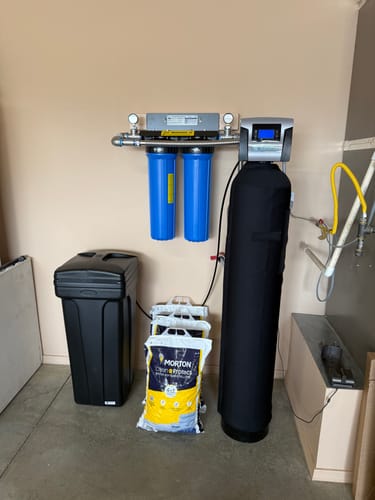
The transformation in our water quality was dramatic and immediate. Testing our treated water 48 hours after installation showed iron levels dropped from 4.2 PPM to less than 0.1 PPM—well below the EPA's recommended maximum of 0.3 PPM for aesthetic quality.
The taste difference was striking. Gone was the metallic, penny-like flavor that had plagued our drinking water. Coffee and tea now tasted clean and pure, without the bitter undertones that iron contamination created. My wife noticed the difference immediately in her morning coffee routine.
Visual improvements appeared within days. The orange staining in our toilets and bathtubs stopped appearing, and existing stains gradually faded as we cleaned them. Our dishwasher began producing spotless dishes and glassware without the brownish film that had become routine.
I conducted weekly water tests for the first month using iron test strips and colorimetric testing kits. Results remained consistently below 0.1 PPM iron throughout various usage patterns and seasonal changes. Even during periods of heavy household water usage, the system maintained excellent iron removal performance.
The Katalox media's oxidation efficiency exceeded my expectations. Unlike simple filtration media that only captures particles, Katalox actively promotes iron oxidation while providing mechanical filtration. This dual action ensures complete iron removal even during high-flow conditions.
pH levels remained stable throughout treatment. Our well water's pH of 7.2 stayed essentially unchanged after treatment, avoiding the pH shifts https://www.softprowatersystems.com/collections/iron-well-water-filters that some iron removal methods create. This stability meant no additional water conditioning requirements or compatibility issues with our plumbing system.
Dissolved oxygen levels in our treated water actually improved due to the air injection process. This enhanced water quality contributed to better taste and reduced potential for anaerobic bacterial growth in our plumbing system.
Daily Living Improvements and Household Benefits
The Iron Master's impact on our daily routines was more significant than I anticipated. Simple tasks like washing dishes became genuinely satisfying again—no more scrubbing orange films off glassware or rewashing supposedly clean dishes that emerged spotted and stained.
Laundry day transformed completely. Our white clothing gradually returned to true white as the iron stopped setting stains during wash cycles. New clothing stayed bright and clean-looking, while older items slowly improved with each washing. The amount of detergent needed decreased noticeably since iron no longer interfered with soap effectiveness.
Bathroom cleaning became dramatically easier. Instead of weekly scrubbing sessions to remove iron stains from fixtures, I now do light cleaning monthly. The time savings alone was worth the investment—no more harsh iron removal chemicals or aggressive scrubbing that damaged finishes.
Our appliances began performing better almost immediately. The dishwasher's heating elements stayed clean, improving drying performance and energy efficiency. Our water heater operated more quietly without iron sediment accumulation, and I noticed improved hot water recovery times.
Cooking and food preparation improved substantially. Rice and pasta cooked to better textures without metallic off-flavors. Ice cubes became crystal clear instead of cloudy, and beverages made with our water tasted noticeably cleaner and more refreshing.
Guests consistently commented on the improved water quality. Several friends asked about our "new water system" after noticing the clean taste and lack of metallic aftertaste. This external validation confirmed that our water quality improvement was significant and noticeable to others.
Personal care benefits emerged within weeks. Shampoo and soap created better lather, requiring less product for effective cleaning. My skin felt less dry after showers, and my hair appeared shinier and more manageable—benefits I hadn't anticipated from iron removal.
Maintenance Requirements and Long-Term Ownership
The Iron Master's maintenance requirements proved refreshingly minimal compared to cartridge-based systems I'd used previously. The automated regeneration cycles handle day-to-day maintenance without intervention, typically regenerating every 3-4 days based on our household water usage.
Monthly maintenance consists of checking the air injection system and monitoring regeneration frequency. The air compressor requires no maintenance beyond occasional visual inspection, and the injection venturi remains self-cleaning during normal operation. I spend perhaps 15 minutes monthly on system monitoring.
The Katalox media replacement interval is projected at 7-10 years under normal residential conditions. This long service life contrasts sharply with cartridge systems requiring quarterly or monthly replacements. The cost savings over time are substantial—no ongoing consumable purchases except minimal electricity for operation.
Backwash water disposal required initial planning but became routine quickly. The system uses approximately 100 gallons during each regeneration cycle, which I direct to our lawn irrigation system during growing season. The iron-rich backwash actually provides beneficial minerals for landscaping.
System performance monitoring evolved into a simple routine. Weekly visual checks of treated water clarity and monthly iron testing with strips provide adequate performance verification. The control valve's diagnostic features alert to any operational issues before they affect water quality.
Seasonal performance variations were minimal. Summer months with higher water usage triggered slightly more frequent regenerations, while winter operation remained stable with longer intervals between cycles. The system adapted automatically to our changing usage patterns without manual adjustments.
After eight months of operation, the Iron Master continues delivering consistent performance with no service requirements beyond routine monitoring. The initial investment in quality equipment eliminated ongoing maintenance headaches and consumable costs that plagued previous filtration attempts.
Final Assessment: Problem Solved and Lessons Learned
Looking back on this iron filtration journey, the Iron Master delivered exactly what I needed—reliable, comprehensive iron removal without ongoing chemical additions or frequent maintenance. The system transformed our household water quality from problematic to excellent, eliminating daily frustrations and protecting our appliances.
The initial shipping damage was disappointing but ultimately revealed SoftPro's commitment to customer satisfaction. Their prompt replacement and improved packaging demonstrated responsiveness to customer feedback. This experience actually increased my confidence in their long-term support.
Installation complexity was moderate—manageable for homeowners with basic plumbing skills but potentially requiring professional installation for those uncomfortable with water line modifications. The time invested in proper setup and calibration proved essential for optimal performance.
Cost-benefit analysis strongly favors the Iron Master for households with iron levels like ours. The elimination of bottled water purchases, reduced cleaning product needs, and appliance protection provides measurable savings that offset the initial investment within 18-24 months.
Performance consistency has been outstanding. Eight months of operation without any iron breakthrough or system failures demonstrates the robust engineering and quality media selection. The automated operation truly delivers "set it and forget it" convenience.
Would I purchase the Iron Master again?
Absolutely. The combination of effective iron removal, minimal maintenance, and reliable operation makes it an excellent solution for well water iron problems. For households dealing with iron levels between 2-15 PPM, this system provides professional-grade treatment without ongoing chemical costs.
The Iron Master isn't just an iron filter—it's peace of mind. Clean, great-tasting water throughout the house, protected appliances, easier cleaning, and the confidence that comes with a well-engineered solution to a persistent problem. Sometimes the best investments are the ones that simply make daily life better, and this system certainly accomplishes that goal.