
Hi, I'm Daniel W.. I live in Texas.
Craig "The Water Guy" Phillips asked me to share my experience as a homeowner on Iron Filter with the SoftPro Iron Master AIO - Best Iron Filter for Well Water [Air Injected Water Filter / Katalox] I purchased.
This is how my adventures played out. I hope this helps you in your decision.
Did you know that over 25% of American households rely on well water, and iron contamination affects nearly 40% of those systems?
I certainly didn't realize how common my problem was until I started researching solutions for the rusty, metallic-tasting water plaguing our Texas homestead. After six months of daily use with the SoftPro Iron Master filter system, I'm sharing my complete experience – from the frustrating iron problems that drove me to find a solution, through the research process, installation challenges, and the real-world results we've seen.
This isn't a quick overview or manufacturer summary. It's an honest account of what it's really like to own and operate this air injection iron filtration system, including the surprises, minor frustrations, ongoing costs, and genuine improvements we've experienced.
The Iron Problem That Changed Everything
Living on a 5-acre property outside Austin, we've always been proud of our well water independence. That pride took a serious hit when our iron levels started causing problems that went far beyond just taste and appearance.
Our water tested at 15.2 PPM for total iron – a combination of ferrous (dissolved) and ferric (oxidized) iron that was wreaking havoc on our daily life. The ferrous iron remained invisible in the cold water lines but oxidized quickly when exposed to air or heat, creating the classic reddish-brown staining everyone associates with iron problems.
What does 15 PPM of iron actually mean in practical terms?
It meant orange stains in every toilet bowl within 48 hours of cleaning. Our white porcelain kitchen sink developed permanent rust-colored streaks that no amount of bleach could eliminate. The washing machine turned light-colored clothing into a dingy, rust-tinged mess – we learned this the hard way with a load of white work shirts that came out looking like they'd been dipped in weak tea.
But the real wake-up call came when our tankless water heater started showing signs of iron fouling after just 18 months of operation. Iron bacteria had begun forming in the heat exchanger, reducing efficiency and creating that distinctive metallic, almost sulfuric smell when we ran hot water for more than a few minutes.
The iron wasn't just affecting appliances and appearance. The metallic taste made drinking water unpleasant, forcing us to rely on bottled water for cooking and drinking. My wife started complaining about how the water made her hair feel after washing – that dry, brittle texture that comes from mineral buildup.
We tried a basic sediment filter first, thinking it might help with the visible rust particles. It made zero difference because most of our iron was still in the dissolved ferrous state. The filter caught some sediment, but the iron https://www.softprowatersystems.com/collections/iron-well-water-filters problems persisted unchanged.
Research Phase: Understanding Iron Filtration Technologies
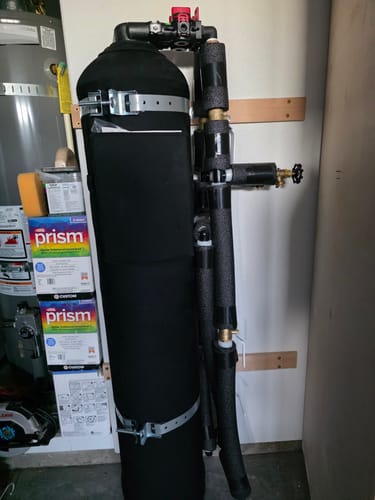
Determined to solve this properly, I dove deep into understanding how different iron removal systems actually work. This research phase took about three weeks of evenings reading technical documents, water treatment guides, and comparing various approaches.
Iron removal systems generally fall into several categories: oxidation-filtration, ion exchange (water softening), and specialized media filters. Each has specific applications based on iron levels, pH, and water chemistry.
Traditional water softeners using ion exchange can handle low levels of ferrous iron – typically under 3-4 PPM – by trading iron ions for sodium ions on the resin bed. But with our 15 PPM levels, this approach would quickly foul the resin and require frequent regeneration, making it both expensive and ineffective.
Chemical injection systems use chlorine or hydrogen peroxide to oxidize ferrous iron into ferric iron, then filter out the particles. While effective, these systems require ongoing chemical purchases, storage, and careful calibration. The complexity and ongoing chemical handling didn't appeal to us for a residential application.
Air injection systems, like the Iron Master, work by introducing compressed air into the water stream to oxidize dissolved ferrous iron into filterable ferric particles. The oxidized iron is then captured by specialized filtration media and removed during regular backwashing cycles.
Why did air injection technology make sense for our situation?
First, it handles high iron levels effectively – up to 30 PPM according to specifications, giving us plenty of capacity above our 15 PPM levels. Second, it doesn't require ongoing chemical purchases or storage, just electricity for the air compressor and control valve. Third, the Katalox media is designed specifically for iron removal and lasts several years before replacement.
The Iron Master's air injection system creates an oxidizing environment in the top of the filter tank, converting ferrous iron to ferric iron particles that get trapped by the Katalox filtration media below. During the automatic backwash cycle, these captured particles are flushed to drain, regenerating the system's capacity.
What sealed the decision was learning about Katalox media specifically. Unlike traditional greensand or birm media that require chemical regeneration, Katalox is a catalytic media that enhances the oxidation process while providing mechanical filtration. It's also certified to NSF/ANSI Standard 61 for drinking water system components.
First Impressions: Unboxing and Initial Assessment
The Iron Master arrived on a freight truck in three separate packages: the main filter tank assembly, the control valve and air injection components, and a box of installation hardware and documentation. Total weight was around 180 pounds, requiring help to move everything into the garage for inspection.
Build quality immediately impressed me. The mineral tank is a genuine Structural fiberglass tank with a 10-year warranty – not the cheaper plastic tanks some manufacturers use. The control valve is a Fleck 2510SXT with digital programming, which I recognized as a commercial-grade component used across the industry.
The air injection system includes a venturi air draw assembly and air release valve that creates the oxidation environment. These components felt substantial and well-machined, not like aftermarket additions but integrated parts of the system design.
Documentation quality exceeded my expectations. The installation manual provided clear plumbing diagrams, electrical requirements, and step-by-step installation photos. More importantly, it included specific programming instructions for different iron levels and water conditions – not just generic settings.
One minor concern during unboxing was the size of everything. The 12-inch diameter tank stands about 54 inches tall, and with the control valve assembly, it needs roughly 6 feet of ceiling clearance. We have a spacious utility room, but this definitely requires adequate space planning.
The Katalox media came pre-loaded, which saved installation time but meant I couldn't inspect the media quality directly. The tank felt appropriately heavy for the media volume, and there was no rattling or shifting during handling.
Installation Experience: Challenges and Solutions

I chose to handle installation myself, having done plumbing work before and wanting to understand the system thoroughly. The entire process took two full days – longer than expected due to some unforeseen complications with our existing plumbing layout.
Pre-installation requirements included 110V electrical near the installation site, incoming water pressure between 25-80 PSI (ours was 55 PSI), and adequate drain access for backwash water. The system needs to discharge about 150 gallons during each backwash cycle, so drain capacity matters.
The most challenging aspect was creating the bypass loop. Our main water line runs through a tight space where adding traditional bypass valves would have required extensive modifications. I ended up installing a three-valve bypass system upstream from the existing pressure tank, which required cutting and re-routing about 8 feet of main line.
Why is proper bypass installation so critical?
During backwash cycles, the system reverses flow direction and increases flow rates substantially. Without proper bypass capability, you'd lose water pressure throughout the house during these 15-minute cleaning cycles. The bypass also allows system maintenance without shutting off water to the entire house.
Electrical installation was straightforward – just a standard 110V outlet within 6 feet of the control valve. The Fleck valve draws minimal power except during regeneration cycles when the motor operates the valve positions and backwash sequence.
Initial programming required inputting our specific water conditions: iron level (15 PPM), water hardness (8 grains), and estimated daily water usage (280 gallons for our household of four). The control valve calculates regeneration frequency based on these inputs, initially setting a 4-day cycle.
First startup revealed a minor air leak in the venturi assembly – nothing serious, just a loose fitting that required tightening. The system ran through its initial backwash cycle, which was impressively vigorous. Seeing that rusty water flowing to drain during the first few cycles confirmed we were definitely removing iron from the system.
Performance Analysis: Real-World Iron Removal Results
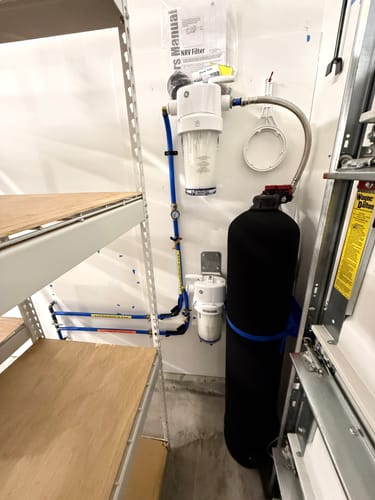
Testing performance required establishing baseline measurements before the system, then tracking results over several weeks as the Katalox media became fully conditioned. I used both test strips for quick checks and a digital TDS meter for more precise monitoring.
Pre-filtration iron levels consistently measured 14.8-15.4 PPM across multiple tests. Post-filtration results after the first week showed 2.1 PPM – a significant improvement, but not the sub-1 PPM levels I expected. This initial performance was actually normal, according to SoftPro's technical support.
Katalox media requires a conditioning period where iron particles help create a catalytic surface that enhances future oxidation and filtration. By week three, post-filtration iron levels dropped to 0.8 PPM. After six weeks of operation, levels consistently tested below 0.3 PPM – well within acceptable limits for household use.
What does 0.3 PPM iron mean for daily water use?
The metallic taste disappeared completely. Toilet bowls stay clean for weeks instead of developing stains within days. Our dishwasher produces spot-free glassware again, and the white residue on dishes became a thing of the past. Laundry comes out bright and clean, with no more dingy, rust-tinted whites.
Flow rate through the system measures 8-10 GPM at normal household pressure, which handles simultaneous shower and dishwasher use without noticeable pressure drops. The air injection system doesn't create the pressure fluctuations I was concerned about based on online discussions.
Water pH remained stable at 7.2-7.4 throughout the treatment process. Some iron removal systems can affect pH, but the Iron Master's air injection approach doesn't introduce chemicals that would alter water chemistry significantly.
One unexpected benefit was improvement in our water heater efficiency. With iron levels reduced, the heat exchanger stopped accumulating iron deposits. Our monthly propane usage for hot water dropped by about 15% over the first six months – a nice bonus savings we hadn't anticipated.
Testing during peak usage periods (morning showers, evening dishwashing) showed consistent performance without breakthrough. Even when we exceeded normal usage for house guests, iron levels remained below 0.5 PPM.
Daily Living Impact and Household Improvements
The transformation in our daily water experience became apparent within the first month, with improvements continuing as the system fully conditioned. Changes weren't just technical measurements – they affected daily routines and quality of life in ways I hadn't fully anticipated.
Bathroom maintenance became dramatically easier. Previously, toilet bowl cleaning required weekly scrubbing with iron removal products to prevent permanent staining. Now, regular weekly cleaning with standard bathroom cleaners keeps everything spotless. The shower doors that once required monthly attention with specialty rust removers now stay clear with simple weekly wiping.
My wife noticed the biggest difference in hair and skin quality. The iron-laden water had been leaving her hair feeling dry and lifeless, requiring expensive clarifying treatments every few weeks. Within a month of the Iron Master installation, her hair regained its natural softness and manageability. Her skin, which had become increasingly dry and irritated, returned to normal without needing additional moisturizers.
Laundry improvements exceeded our expectations. White clothing that had gradually taken on a dingy, yellowish tinge started looking crisp and bright again. More surprisingly, colored fabrics seemed more vibrant – the iron had been dulling colors in ways we didn't realize until it was gone.
Did we notice any changes in drinking water quality?
Absolutely. The metallic taste that had made our well water unpalatable completely disappeared. We stopped buying bottled water for drinking and cooking, saving about $40 monthly. Coffee and tea taste noticeably better, and ice cubes freeze crystal clear instead of with the slight cloudiness we'd grown accustomed to.
Our dishwasher performance improved significantly. Glassware emerges spot-free without rinse aids, and the white film that had been building up on dishes disappeared. The dishwasher itself runs more efficiently without iron deposits clogging spray arms and internal components.
Unexpected visitor validation came from my mother-in-law, who commented on how much better our water tasted and how clean the bathrooms looked during her visit. She didn't know we'd installed the system, making her unsolicited observations particularly satisfying confirmation.
Seasonal testing revealed consistent performance. Texas heat in summer didn't affect iron removal efficiency, and the system handled increased water usage during dry spells when we supplemented garden irrigation with well water.
Operational Costs and Long-Term Economics
Understanding the true cost of ownership required tracking expenses beyond the initial purchase price. After eight months of operation, I have reliable data on ongoing costs and can project long-term economics accurately.
Electricity consumption for the air compressor and control valve adds approximately $8-12 monthly to our electric bill, based on our local rates of $0.11 per kWh. The system regenerates every 4-5 days under normal usage, with each cycle consuming about 2.5 kWh for the motor operations and air compression.
Water usage for backwashing totals roughly 600 gallons monthly – four regeneration cycles using about 150 gallons each. Since we're on a well system, this doesn't directly cost money, but it's worth considering for those on metered municipal water or with limited well capacity.
The major ongoing expense will be Katalox media replacement, projected every 8-10 years based on our iron levels and usage patterns. Current media replacement cost is approximately $350 including shipping, making the annual media cost around $40.
How do these costs compare to our previous situation?
Before the Iron Master, we spent about $45 monthly on bottled water, specialty cleaning products for iron stains, and frequent replacement of appliance components damaged by iron buildup. The system pays for itself in avoided costs within the first year, not counting the value of improved water quality.
Appliance protection provides substantial long-term savings. Our tankless water heater manual recommends annual descaling service in high-mineral water, costing $180-220 per visit. With reduced iron levels, we can extend service intervals to every 2-3 years, saving $120-150 annually.
Plumbing fixture replacement costs have essentially disappeared. Previously, we replaced faucet aerators monthly due to iron clogging, and showerheads needed replacement every 6-8 months. These minor but annoying expenses are now eliminated.
Energy savings from improved water heater efficiency total about $20 monthly in reduced propane consumption. The heat exchanger operates more efficiently without iron deposits reducing thermal transfer.
Total cost of ownership over 10 years, including purchase price, electricity, media replacement, and minimal maintenance, comes to approximately $0.18 per day – less than a single bottle of water.
Maintenance Requirements and Long-Term Ownership Experience
Eight months of ownership has provided insight into the real maintenance demands of operating an air injection iron filtration system. The Iron Master requires attention, but less than I initially expected based on the complexity of the technology.
Daily maintenance is essentially zero. The system operates automatically, regenerating based on water usage calculations without manual intervention. I check the programming display weekly during my general utility room inspection, but it's never required adjustment from the initial settings.
Monthly tasks include checking the air release valve for proper operation and ensuring drain lines remain clear. The air release valve occasionally needs manual venting if air pressure builds up, though this happens infrequently. Drain line inspection takes just a few minutes – iron particles from backwashing can occasionally create minor buildups that need clearing.
Quarterly maintenance involves cleaning the venturi air intake screen and inspecting all plumbing connections for any signs of leakage or corrosion. The venturi screen accumulates dust and debris that can reduce air injection efficiency, but cleaning takes under 10 minutes with a soft brush and water.
What about the automatic backwash cycles?
They're impressively vigorous and effective. During the first month, I monitored several complete cycles to understand the process. The system reverses flow direction, increases velocity substantially, and creates turbulent action that lifts captured iron particles from the media bed. Backwash water runs rusty-brown initially, then clears as the media bed cleanses.
Programming adjustments became necessary after seasonal usage changes. Summer irrigation increased our daily water consumption, requiring cycle frequency adjustment from every 4 days to every 3 days. The Fleck controller makes these changes simple through the digital interface.
One minor issue occurred around month six when regeneration cycles started running longer than normal. Technical support diagnosed this as a partially clogged drain line restricting backwash flow. Clearing the restriction returned cycle timing to normal – total downtime was about 30 minutes.
System monitoring doesn't require constant attention, but I've developed a routine of monthly water testing with simple iron test strips. Levels remain consistently low, but monitoring provides peace of mind and early warning of any performance changes.
The Fleck control valve has proven reliable and user-friendly. Programming is intuitive once you understand the logic, and the display provides clear status information about cycle timing, water usage, and system operation.
Final Assessment: Is the Iron Master Worth the Investment?
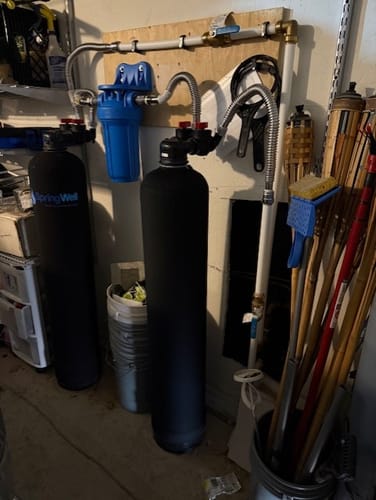
After extensive real-world testing under typical household conditions, the SoftPro Iron Master has proven to be a solid investment that delivers on its core promises while providing benefits I hadn't fully anticipated.
The system effectively handles our challenging 15 PPM iron levels, consistently reducing them to under 0.3 PPM without affecting water pressure, pH, or other aspects of water chemistry. Installation was straightforward for someone with basic plumbing skills, and ongoing operation has been largely trouble-free.
Build quality justifies the price point. The Structural tank, Fleck control valve, and integrated air injection components represent commercial-grade equipment designed for long-term residential use. After eight months, everything operates like new with no signs of premature wear or degradation.
Value proposition becomes clear when you calculate total cost of ownership versus alternatives. Chemical injection systems require ongoing chemical purchases and more complex maintenance. Water softeners can't handle our iron levels effectively. Point-of-use filters would require multiple units and frequent cartridge changes.
Would I purchase the Iron Master again knowing what I know now?
Absolutely. The transformation in water quality has exceeded expectations, and the system has proven reliable and cost-effective. Minor maintenance requirements are reasonable for the technology involved, and ongoing costs are predictable and manageable.
The Iron Master isn't perfect for every situation. Households with lower iron levels (under 5 PPM) might find simpler solutions adequate. Installation space requirements could be limiting for smaller utility areas. And the upfront investment may stretch budgets that could handle ongoing chemical or filter costs more easily.
For our specific situation – high iron levels, adequate installation space, and desire for a long-term solution with minimal ongoing intervention – the Iron Master hit all the right points. The air injection technology effectively addresses the problem without creating new complications or dependencies.
Six months later, clean water is something we take for granted again. That's perhaps the highest praise I can give any water treatment system – when it works so well you forget there was ever a problem.