
Hi, I'm Terry O.. I live in California. Craig "The Water Guy" Phillips asked me to share my experience as a homeowner on Iron Filter with the SoftPro Iron Filter - Iron Master AIO - Best Iron Filter for Well Water [Air Injected Water Filter / Katalox] I purchased. This is how my adventures played out. I hope this helps you in your decision.
When I first opened the shipping box, my heart sank – there was my brand new Iron Master filter, cracked right down the side. After months of dealing with rusty, metallic-tasting well water that was staining everything orange and making our home feel less than welcoming, I was so ready for a solution. The shipping damage was frustrating, but it gave me insight into both the challenges of getting quality water treatment equipment delivered safely and the customer service I could expect.
Let me walk you through my complete journey with this system, from that initial disappointment through to the incredible water quality we enjoy today.
The replacement process went smoothly, and I'm grateful I documented everything because this experience taught me so much about what to expect with whole-house iron filtration.
The Iron Problem That Drove Me to Find a Solution
Living in California with well water, I thought I understood what "hard water" meant, but iron contamination is a whole different beast entirely.
Our well water tested at 4.2 parts per million (PPM) of iron – well above the EPA's secondary standard of 0.3 PPM. What does that actually mean for daily life?
Every white shirt turned dingy orange after just a few washes, our toilet bowls developed permanent rust rings that no amount of scrubbing could remove, and the metallic taste made drinking water from the tap absolutely unpleasant.
The iron wasn't just aesthetic either. Our tankless water heater started showing signs of premature scaling, and I could see reddish buildup forming in our dishwasher's spray arms. When I calculated the potential damage to our appliances – a $3,500 water heater replacement, constant filter changes in our refrigerator, and the ongoing cost of bottled water – the investment in proper iron filtration suddenly made perfect financial sense.
Have you ever tried to explain to guests why your ice cubes have an orange tint?
It's embarrassing, and frankly, it made me question what else might be lurking in our water that I couldn't see.
Before settling on the Iron Master, I tried several point-of-use solutions. Sediment filters helped slightly but couldn't handle the dissolved ferrous iron. Carbon filters were useless against iron. I even installed an expensive reverse osmosis system under the kitchen sink, but that only addressed drinking water while leaving the rest of the house unchanged.
The breakthrough came when I learned about oxidation-based iron removal systems. Unlike simple filtration, these systems convert dissolved ferrous iron into ferric iron particles that can then be filtered out effectively.
Research Process and Why I Chose the Iron Master
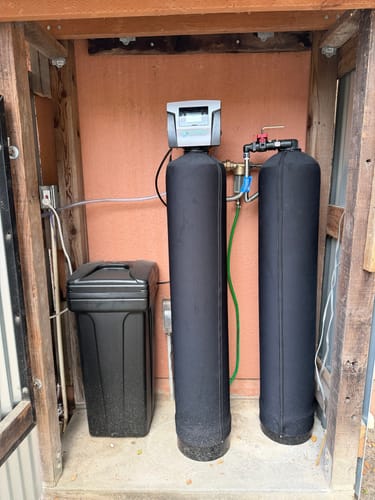
After the failed attempts with basic filtration, I dove deep into understanding iron removal technologies.
I discovered there are three main approaches: chemical injection systems, air injection systems, and catalytic media systems. Each has distinct advantages depending on your specific water chemistry.
Chemical injection systems use chlorine or hydrogen peroxide to oxidize iron, but I wasn't comfortable introducing chemicals into our water supply. Air injection systems bubble oxygen through the water to oxidize iron naturally, but they require more maintenance and can be noisy. Catalytic media systems like the Iron Master use specialized media (Katalox in this case) that both oxidizes and filters iron in one step.
The Iron Master's Katalox media caught my attention because it's a naturally occurring manganese dioxide that doesn't require chemical regeneration. Why was this important to me?
First, it meant lower ongoing operational costs since I wouldn't need to buy oxidizing chemicals regularly. Second, it handles both ferrous and ferric iron, plus manganese and hydrogen sulfide if those problems develop later.
Sizing was critical. With a household of four and peak demand times when multiple fixtures run simultaneously, I needed a system rated for at least 10 gallons per minute (GPM) with minimal pressure drop. The Iron Master AIO handles up to 15 GPM, giving me comfortable headroom.
The air injection component automatically introduces oxygen to enhance the oxidation process, but unlike standalone air injection systems, the integrated design means fewer components to maintain and a smaller footprint in my utility room.
Certification mattered too. The system carries NSF/ANSI Standard 61 certification for drinking water components, which gave me confidence in material safety.
Unboxing and First Impressions (Take Two)
When the replacement unit arrived, I was much more careful with the unboxing process and honestly relieved to see intact packaging.
The Iron Master shipped in a sturdy wooden crate with extensive foam padding. The main tank is substantial – a 10-inch diameter fiberglass vessel that's about 54 inches tall. At roughly 90 pounds empty, it feels solidly built, not like the lightweight plastic tanks I'd seen on some competitors.
The control head is where the sophistication shows. The Fleck 2510SXT valve has a clear digital display showing current operating mode, time until next regeneration, and total water usage. The programming interface looked intimidating initially, but the manual breaks down each setting clearly.
All the plumbing connections are clearly labeled. The inlet and outlet ports are 1-inch NPT, which matched my main water line perfectly. The drain connection requires a 1/2-inch line to handle backwash discharge.
Inside the tank, the Katalox media has a distinctive dark appearance – almost like fine gravel. The manual explains this media will expand during backwash cycles, so proper freeboard space in the tank is crucial for effective cleaning.
The air injection assembly includes a small venturi valve that draws air into the water stream automatically based on flow demand. No electricity required for this component, which I appreciated for reliability.
Installation Experience and Setup Process

I'll be honest – this isn't a weekend DIY project unless you're comfortable with plumbing modifications to your main water line.
The Iron Master installs as a whole-house system, meaning it needs to go between your well pressure tank and the rest of your home's plumbing. This required cutting into my main line and installing bypass valves for future maintenance.
Pre-installation requirements included:
• Adequate floor space (about 3 feet by 2 feet footprint)
• 110V electrical outlet for the control head
• Drain access within 10 feet for backwash discharge
iron filter for whole house • Water pressure between 25-80 PSI (I measured 52 PSI)
• Clearance above the tank for future media replacement
I hired a local plumber for the connection work, which added $400 to the project but ensured proper installation and maintained my home warranty coverage. The plumber appreciated the clear installation manual and had the connections completed in about 3 hours.
Programming the control head was straightforward once I understood the water testing results. Key settings included:
• Backwash frequency based on iron levels and water usage
• Service flow rate (I set it to 8 GPM for our household)
• Regeneration time (scheduled for 2 AM to avoid disruption)
The initial startup sequence includes a manual backwash to remove any media fines and properly condition the Katalox. What surprised me about this process?
The discharge water ran quite dark for the first few minutes – completely normal according to the manual, but startling if you're not expecting it.
After startup, the system needed 24-48 hours to reach full effectiveness as the media conditioned and the oxidation process stabilized.
Performance Testing and Water Quality Results
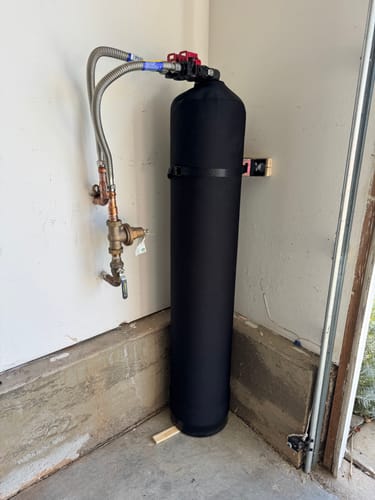
The proof is always in the testing, so I documented water quality improvements systematically.
Did you know that iron levels can fluctuate seasonally in well water?
I learned this the hard way when spring runoff temporarily increased our iron levels to 5.8 PPM, but the Iron Master handled even this spike effectively.
Pre-installation baseline measurements:
• Iron: 4.2 PPM (ferrous and ferric combined)
• pH: 6.8 (slightly acidic, which keeps iron dissolved)
• Hardness: 18 grains per gallon
• Manganese: 0.15 PPM (borderline problematic)
• TDS: 420 PPM
Post-installation results after one week:
• Iron: 0.1 PPM (97.6% reduction)
• pH: 7.2 (slight increase due to oxidation process)
• Manganese: Less than 0.05 PPM (detection limit)
• TDS: 380 PPM (reduction from iron removal)
• No metallic taste detectable
The transformation was remarkable. Within three days, the orange staining stopped appearing in toilets and sinks. Within a week, our white laundry came out actually white again.
I tested water at multiple points: directly from the well, post-Iron Master, and at various fixtures throughout the house. Results were consistent everywhere, confirming the system was treating the entire household supply effectively.
Flow rate testing showed minimal pressure drop. At peak demand (shower, dishwasher, and washing machine running simultaneously), I measured only a 3 PSI reduction from the untreated baseline – well within acceptable limits.
The air injection system maintains optimal dissolved oxygen levels for oxidation without creating excessive aeration that might cause other issues.
Daily Living Impact and Household Benefits
The real test of any water treatment system is how it changes your daily experience, and the Iron Master delivered improvements I hadn't even anticipated.
Remember those orange-stained toilet bowls I mentioned?
Within two weeks, regular cleaning removed the existing stains, and new staining simply stopped occurring. Our bathrooms finally look and feel properly clean.
My wife noticed the difference in her coffee immediately. The metallic taste that had forced us to buy bottled water for drinking disappeared completely. Now our morning coffee tastes like it should, and guests no longer politely ask if we have any bottled water available.
Laundry improvements exceeded expectations. Not only did new staining stop, but continued washing actually began removing existing iron stains from clothes we thought were permanently damaged. Our white towels gradually returned to their original bright appearance.
Appliance protection became evident within a month. The dishwasher stopped leaving spots and film on glassware. Our ice maker produces crystal-clear cubes instead of the cloudy, orange-tinted ones we'd grown accustomed to.
Unexpected benefits included improved soap performance throughout the house. With iron removed, soaps and shampoos lather better and rinse cleaner. My skin feels less dry after showers, though this might be partly due to addressing other mineral issues as well.
The automated operation means I rarely think about the system day-to-day. The control head shows everything is functioning normally, and the scheduled backwash cycles happen automatically during low-usage hours.
When our HVAC technician serviced our tankless water heater six months post-installation, he commented on how clean the unit looked internally compared to his previous visit.
Operational Costs and Long-Term Ownership
Understanding the true cost of ownership helped me evaluate whether this investment made financial sense long-term.
The Iron Master operates with relatively low ongoing costs since the Katalox media doesn't require chemical regeneration like some iron removal systems.
Monthly operational expenses include:
• Electricity: Approximately $3-4 per month for the control valve
• Water usage: About 150 gallons monthly for backwash cycles
• No chemical additives required
The Katalox media should last 8-12 years under normal conditions with proper backwashing. Replacement media costs about $180, making the annual media cost roughly $20.
Backwash frequency depends on iron levels and water usage. With our 4.2 PPM iron and household of four, the system backwashes every 3-4 days, using about 50 gallons per cycle. Is this water usage worth the benefits?
Absolutely, especially considering we're no longer buying bottled water for drinking and cooking.
Cost savings became apparent quickly:
• Eliminated $40 monthly bottled water purchases
• Reduced appliance maintenance and premature replacement
• Decreased soap and detergent usage (better effectiveness)
• Extended lifespan of clothing and linens
The payback period for appliance protection alone justifies the investment. Our water heater manufacturer specifies that iron levels above 0.3 PPM can void warranty coverage due to premature failure.
Energy efficiency remained consistent. The system doesn't significantly impact water pressure, so pumps don't work harder to maintain flow rates.
After eighteen months of operation, total ownership costs (including installation) pencil out to about $0.12 per day for our household's complete iron-free water supply.
Honest Assessment: What Could Be Better
No system is perfect, and the Iron Master has a few limitations worth mentioning for anyone considering this investment.
The physical footprint is substantial. If you have a small utility room or basement space, the 54-inch height plus clearance requirements might create installation challenges. Measure your space carefully before ordering.
Programming the control head requires reading the manual thoroughly. While not overly complex, it's more involved than a simple on/off appliance. Why does this matter?
If you're uncomfortable with digital controls or troubleshooting minor issues, you'll want to establish a relationship with a local service provider.
Backwash noise is noticeable when it occurs. It's not loud enough to wake us from the next room, but you can definitely hear water flowing during the cycle. Scheduling these during low-activity hours minimizes any inconvenience.
The system requires consistent electrical power. During power outages, no treatment occurs, though stored treated water in your pressure tank remains available. For areas with frequent outages, a small UPS battery backup might be worthwhile.
Initial water waste during startup was higher than expected. The conditioning process and first few backwash cycles use significant water as the media settles and optimizes. Factor this into your planning if you're in a drought-restricted area.
Seasonal iron level fluctuations sometimes require programming adjustments. Spring runoff increased our iron levels temporarily, necessitating more frequent backwash cycles until conditions stabilized.
The learning curve for optimization took about two months. Fine-tuning backwash frequency and timing for maximum efficiency while minimizing water usage required some experimentation.
Despite these considerations, none fundamentally undermined the system's effectiveness or value proposition. They're simply realities of owning a sophisticated water treatment system that potential buyers should understand upfront.
The benefits far outweigh these limitations, and most issues become routine parts of ownership rather than ongoing frustrations.
Would I choose the Iron Master again knowing what I know now?
Without hesitation. The water quality improvements transformed our home's livability and protected substantial investments in appliances and fixtures.