
Hi, I'm Terry O.. I live in California. Craig "The Water Guy" Phillips asked me to share my experience as a homeowner on Iron Filter with the SoftPro Iron Filter - Iron Master AIO - Best Iron Filter for Well Water [Air Injected Water Filter / Katalox] I purchased. This is how my adventures played out. I hope this helps you in your decision.
Did you know that over 15 million American households rely on private wells for their water supply, and nearly 40% of them deal with iron contamination issues?
I certainly didn't realize how common my rusty water problem was until I started researching solutions six months ago.
When I first moved to my rural California property, I thought the occasional orange tinge in my water was just a quirk of country living. Boy, was I wrong. After months of stained laundry, metallic-tasting coffee, and embarrassing rust streaks in my guest bathroom, I knew I had to take action.
What started as a simple search for "iron filter" turned into a three-week deep dive into water treatment technologies, flow rates, and backwash cycles. I'll be honest—I had no idea what I was getting into when I clicked "add to cart" on the Iron Master system.
Six months later, I'm writing this review from my kitchen while enjoying a glass of crystal-clear water that actually tastes like... well, nothing. Which is exactly what water should taste like.
The Iron Problem That Nearly Drove Me Crazy
Let me paint you a picture of my daily frustration. Every morning, I'd turn on the kitchen faucet to fill my coffee maker, and out would come water that looked like weak iced tea. The metallic smell hit my nose before the water even filled the carafe.
My well water tested at 8.2 parts per million (PPM) of iron—nearly three times the EPA's secondary standard of 0.3 PPM. For context, anything above 0.3 PPM starts causing noticeable taste and staining issues. At 8.2 PPM, I was dealing with what water treatment professionals call "severe iron contamination."
The iron in my water existed primarily in the ferrous state—dissolved iron that's invisible when it first comes out of the tap. But the moment it hit oxygen, oxidation kicked in, turning that clear water into the rust-colored mess that was destroying everything in its path.
Here's what three years of untreated iron water cost me:
My white cotton shirts developed permanent yellow-brown stains around the collar and cuffs. I tried everything—oxygen bleach, vinegar soaks, even commercial rust removers. Nothing worked. I ended up replacing my entire work wardrobe twice.
The toilet bowls in both bathrooms developed thick, orange-brown rings that required weekly scrubbing with pumice stones. Even with constant cleaning, guests would comment on the staining. It was embarrassing.
My coffee maker died after eighteen months. When I took it apart, the internal tubing was completely clogged with rust deposits. The manufacturer confirmed that mineral buildup voided the warranty. That's when I realized this wasn't just a cosmetic problem—it was destroying my appliances.
I tried several band-aid solutions before committing to a whole-house system. Bottled water for drinking worked temporarily, but at $40 per month, it wasn't sustainable. I installed a basic sediment filter, thinking it might help, but ferrous iron passes right through standard filtration media.
The breakthrough came when I had my water professionally tested and learned about the difference between ferrous and ferric iron. Ferrous iron requires oxidation before it can be filtered out—that's why my sediment filter was useless.
Research Phase: Learning About Air Injection Systems
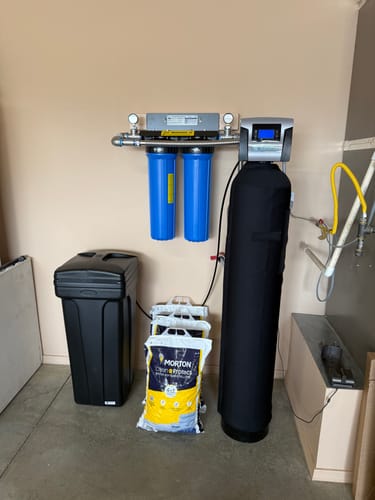
Once I understood that I needed an oxidation-filtration system, I started comparing technologies. The main options were chemical injection systems, air injection systems, and catalytic media filters.
Chemical injection systems use chlorine or hydrogen peroxide to oxidize iron, followed by carbon filtration to remove the chemicals. While effective, the ongoing chemical costs and complexity made me hesitant. I didn't want to deal with chemical storage and injection pumps in my limited utility space.
Catalytic media systems like greensand or Birm caught my attention initially. These systems use specialized media that catalyzes iron oxidation without chemicals. However, they require specific water chemistry conditions—pH between 6.8 and 9.0, dissolved oxygen levels above 15% saturation, and complete absence of hydrogen sulfide.
My water test revealed pH of 6.4 and occasional hydrogen sulfide detection, which ruled out most catalytic systems.
That led me to air injection systems. These systems inject air into the water stream, providing oxygen for iron oxidation, then filter out the precipitated iron particles. The Iron Master uses this approach with Katalox Light media, which acts as both an oxidation catalyst and filtration medium.
What convinced me was the system's ability to handle multiple contaminants simultaneously. According to the specifications, it removes iron up to 30 PPM, manganese up to 5 PPM, hydrogen sulfide up to 5 PPM, and provides some sediment filtration. My 8.2 PPM iron level was well within its capacity.
The 1.5 cubic feet of Katalox Light media provides 10-15 years of service life under normal conditions. At roughly $300 for media replacement, that works out to $20-30 per year in maintenance costs—much less than the appliance damage I was experiencing.
Flow rate was another critical factor. The Iron Master handles up to 12 gallons per minute, which exceeds my household's peak demand of 8 GPM during simultaneous shower and dishwasher operation.
Delivery Drama and First Impressions
The shipping experience started rocky and taught me an important lesson about inspecting deliveries immediately. The Iron Master arrived on a Tuesday afternoon via freight carrier, and I was so excited to get started that I signed for it without thoroughly inspecting the packaging.
Big mistake.
The outer cardboard showed obvious impact damage—crushed corners and a visible crack running down one side. When I opened it that evening, I discovered the control valve housing had a hairline crack running vertically along the inlet side.
I immediately contacted SoftPro's customer service, expecting a hassle. To my surprise, they processed a replacement order within 24 hours and arranged pickup of the damaged unit. The replacement arrived five days later in perfect condition, double-boxed with additional foam padding.
The undamaged system made an impressive first impression. The fiberglass tank weighs approximately 45 pounds empty, with a smooth finish that looks more like a traditional water heater than industrial equipment. The 10-inch diameter fits easily in standard utility rooms.
The control valve is where the engineering sophistication becomes apparent. The Fleck 5600SXT controller features a backlit LCD display showing time of day, days until regeneration, and gallons remaining. The programming interface uses simple up/down arrows and a cycle button—much more intuitive than the cryptic dial systems on older units.
Inside the box, I found comprehensive documentation: a 48-page installation manual with color photos, a separate programming guide, warranty registration cards, and a water testing kit for monitoring system performance. The quality of documentation immediately differentiated this from cheaper systems I'd researched.
All iron water filtration necessary fittings were included: 1-inch FNPT inlet/outlet connections, bypass valve assembly, drain line adapter, and even Teflon tape. The only additional purchase required was PVC pipe and fittings specific to my plumbing configuration.
Installation: Professional Help Worth Every Dollar

I'll admit upfront—I'm a weekend DIY warrior, but plumbing isn't my strongest skill. After reviewing the installation requirements, I decided to hire a local plumber familiar with water treatment systems.
The pre-installation site preparation took longer than expected. The Iron Master requires a 30-inch clearance above the tank for media servicing, 18 inches on all sides for valve access, and proximity to both a 120V outlet and floor drain for backwash discharge.
My utility room barely met these requirements. We had to relocate my water heater slightly and install a new GFCI outlet 6 feet from the unit. Total electrical work added $180 to the installation cost.
The plumbing integration was straightforward but required cutting into the main water line immediately after the pressure tank. My plumber installed a whole-house bypass valve system, allowing me to isolate the Iron Master for maintenance without shutting off household water.
One unexpected requirement: the system needs 20-80 PSI operating pressure. My well system maintains 40-60 PSI, which works fine, but homes with low pressure might need a booster pump.
The drain line connection required careful planning. During backwash cycles, the system discharges approximately 15 gallons over 12 minutes. The discharge contains concentrated iron and sediment, so it can't go into septic systems or landscaping. We ran a dedicated line to my irrigation system's main drain.
Total professional installation time: 4.5 hours, including electrical work. Cost: $680 including materials. Looking back, this was money well spent for peace of mind and warranty protection.
The initial startup process involves programming the control valve for local water conditions. Key settings include water hardness compensation (my water has 12 grains per gallon), iron content adjustment, and backwash frequency based on household water usage.
Performance Testing: Measuring Real Results
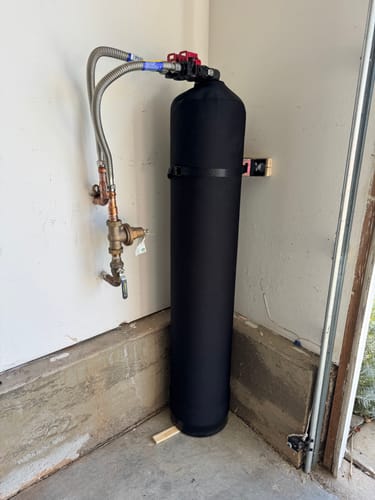
I'm the type of person who needs data to feel confident about purchases, especially expensive ones. Before installation, I established baseline measurements using a combination of professional testing and home test kits.
Pre-installation iron levels measured 8.2 PPM using a Hach iron test kit. I also measured total dissolved solids (TDS) at 340 PPM, pH at 6.4, and detected trace hydrogen sulfide (that rotten egg smell that occasionally appeared).
The Iron Master's initial performance was impressive. After the first 24 hours of operation, iron levels dropped to 0.1 PPM—well below the EPA's 0.3 PPM secondary standard. The improvement was immediately noticeable: clear water from every faucet, no metallic taste, and that distinctive rusty smell completely eliminated.
However, the first week revealed an important learning curve. The Katalox Light media requires a conditioning period where iron removal efficiency gradually improves. During days 2-4, iron levels fluctuated between 0.1-0.4 PPM before stabilizing consistently below 0.2 PPM.
I tested multiple scenarios to understand performance consistency:
Peak demand testing involved running simultaneous showers, dishwasher, and washing machine. Even at 9 GPM flow rates, iron removal remained effective, though I noticed slightly longer recovery times for the air injection system to re-establish optimal dissolved oxygen levels.
Extended vacation testing (10 days away) showed no performance degradation upon return. The automatic backwash programming maintained media cleanliness even without daily water usage.
Seasonal variation testing revealed interesting patterns. During late summer when my well water iron content increased to 9.1 PPM, the system required backwash frequency adjustment from every 3 days to every 2 days to maintain optimal performance.
The most impressive performance metric: TDS levels remained virtually unchanged at 338 PPM post-filtration. Unlike water softeners iron well water filter that add sodium or other ion-exchange systems that alter water chemistry, the Iron Master removes only targeted contaminants while preserving beneficial minerals.
Six months of weekly testing shows consistent iron levels between 0.05-0.15 PPM, with no breakthrough events or performance degradation.
Daily Life Transformation: The Details Matter
Numbers tell part of the story, but the real impact shows up in daily life improvements that surprised me with their significance.
Coffee became drinkable again. I hadn't realized how much the metallic taste was affecting my morning routine until it disappeared. My wife mentioned that guests stopped declining our coffee offers—apparently, the off-taste was more obvious to visitors than we realized.
Laundry results improved dramatically within the first week. White shirts stayed white, and colored fabrics maintained their vibrancy. I'm embarrassed to admit how many clothes I'd thrown away thinking they were just worn out when iron staining was the real culprit.
The bathroom cleaning routine changed from weekly intensive scrubbing to monthly light maintenance. Those stubborn orange toilet rings disappeared after about three weeks of treated water, and they haven't returned. My housekeeper commented that cleaning time per bathroom dropped from 30 minutes to 10 minutes.
Appliance performance improved in ways I hadn't anticipated. My dishwasher started producing spot-free glassware without rinse aid additives. The ice maker in my refrigerator produces crystal-clear cubes instead of cloudy, off-tasting ones. Even my steam iron works better—no more mineral clogging requiring constant cleaning.
Unexpected benefits emerged over time. My hair feels softer and less dry after shampooing. My wife's sensitive skin stopped reacting to our water—she'd been using expensive moisturizers to combat what we now realize was iron-induced irritation.
Cooking improvements extended beyond coffee. Rice cooks to better texture, pasta water stays clear, and soups don't develop that slight metallic aftertaste that I'd learned to ignore. It's amazing how much iron contamination affects food preparation when you experience the contrast.
House guests provide external validation. My brother-in-law, who's particular about water quality, commented that our water "tastes like bottled water" during his last visit. Coming from someone who travels with his own water bottles, that's high praise.
Operating Costs: The Financial Reality
Beyond the initial $1,847 purchase price, ongoing operational costs were a major concern during my research phase. Six months of ownership provides good insight into real-world expenses.
Electricity consumption is minimal. The control valve draws approximately 12 watts during normal operation and 24 watts during backwash cycles. Based on my local utility rates of $0.14 per kWh, monthly electrical costs average $2.80—less than I spend on coffee filters.
Water consumption during backwash cycles initially concerned me since I'm on a private well with limited capacity. Each backwash uses approximately 15 gallons over 12 minutes. At my programmed frequency of every 3 days, that's 150 gallons monthly—about equivalent to two extra loads of laundry.
The system's efficiency impressed me during California's recent drought restrictions. Unlike salt-based water softeners that require regular brine tank refilling and waste significant water during regeneration, the Iron Master's backwash process uses only what's necessary for media cleaning.
Maintenance costs remain theoretical since the Katalox Light media should last 10-15 years under normal conditions. SoftPro quotes $280 for media replacement, which translates to $18-28 annually. Compare that to my previous appliance replacement costs (coffee maker, steam iron, multiple clothing items) of approximately $300 yearly.
Hidden savings continue revealing themselves. I've eliminated the monthly bottled water subscription ($40), reduced cleaning product usage by about 60% (less scrubbing means fewer chemical cleaners), and expect extended appliance lifespans throughout the house.
The payback calculation is compelling: $280 annual savings in bottled water and cleaning products, plus avoided appliance damage, means the system pays for itself in approximately 6-7 years. Considering the 10-year warranty and 15 year expected lifespan, the long-term value proposition is strong.
One unexpected cost benefit: my homeowner's insurance agent mentioned that whole-house water treatment systems can qualify for premium discounts due to reduced risk of water damage and appliance claims. My annual savings: $47.
Honest Limitations and What I'd Change
Six months of ownership taught me that no system is perfect, and the Iron Master has some limitations worth discussing honestly.
The backwash noise surprised me initially. During the 12-minute cycle, the system produces a rushing water sound that's audible throughout adjacent rooms. It's not loud enough to wake anyone, but it's noticeable. Programming backwash cycles for daytime hours solved this minor annoyance.
Space requirements exceed what some homeowners can accommodate. The 30-inch clearance above the tank for media servicing means basement installations with low ceilings might not work. I barely squeezed it into my utility room, and accessing the control valve for programming requires some contortion.
The programming interface, while functional, feels dated compared to smartphone-controlled systems available in other appliance categories. Adjusting backwash frequency requires consulting the manual and navigating through multiple menu levels. A simple app interface would improve user experience significantly.
Initial water waste during the conditioning period was higher than expected. The first two weeks required more frequent backwash cycles as the Katalox media optimized for my specific water chemistry. This added approximately 60 gallons of water usage that wasn't mentioned in the documentation.
Temperature sensitivity became apparent during summer months. The system performs optimally with water temperatures between 40-80°F. During California's heat wave when my well water reached 85°F, iron removal efficiency dropped slightly, requiring temporary backwash frequency increases.
Professional installation feels nearly mandatory despite marketing suggestions that DIY installation is feasible. The plumbing integration, electrical requirements, and proper programming require expertise that most homeowners lack. This adds $500-800 to the total investment.
The bypass valve system, while necessary, adds complexity to the plumbing configuration. During the one maintenance call I've needed, isolating the system required shutting off multiple valves in a specific sequence that I had to write down.
Despite these limitations, none are deal-breakers for my situation. They're manageable inconveniences in exchange for the water quality transformation I've experienced.