
Hi, I'm Fred S.. I live in Minnesota. Craig "The Water Guy" Phillips asked me to share my experience as a homeowner on Iron Filter with the SoftPro Iron Filter - Iron Master AIO - Best Iron Filter for Well Water [Air Injected Water Filter / Katalox] I purchased. This is how my adventures played out. I hope this helps you in your decision.
Did you know that over 15 million households in the United States rely on private wells for their water supply?
If you're one of them, you probably understand the unique challenges that come with well water - especially when iron decides to make its unwelcome presence known in every glass, every load of laundry, and every shower. Six months ago, I was at my wit's end dealing with rusty-tasting water, orange stains on everything, and the metallic smell that greeted me every morning. After extensive research and considerable frustration with temporary solutions, I decided to invest in the SoftPro Iron Master AIO filter system. The promise was simple: crystal-clear, iron-free water using advanced air injection and Katalox filtration technology. But would it actually deliver on that promise? In this comprehensive review, I'll walk you through my entire journey - from the initial installation challenges to the daily reality of owning this system. I'll share the technical details that matter, the unexpected discoveries I made along the way, and most importantly, whether this significant investment actually transformed our water quality as promised. If you're considering an iron filter for your well water, this honest assessment will help you make an informed decision.The Iron Problem That Drove Me to Take Action
Living in Minnesota with a private well, I thought I understood water challenges. Our previous home had a basic softener that handled moderate hardness, but when we moved to our current property three years ago, I quickly realized we were dealing with something entirely different. The water coming from our 180-foot well contained approximately 4.2 PPM of iron - a level that turned every water-related task into a frustrating battle against orange stains and metallic tastes.
The first sign was obvious: every toilet bowl, sink, and bathtub developed persistent orange and brown staining within days of cleaning. My wife noticed it immediately when her white laundry started coming out with yellowish tints that no amount of bleach seemed to fix. The coffee tasted metallic, and guests would politely mention the "unique flavor" of our water. But the real wake-up call came when I calculated the hidden costs. Our water heater, barely two years old, started showing signs of sediment buildup. The dishwasher left spots on glassware that required hand-drying and polishing. We were purchasing bottled water for drinking and cooking, spending nearly $80 monthly. The iron wasn't just an aesthetic problem - it was attacking our appliances, increasing our utility bills, and forcing us to work around our own water system. I tested the water multiple times using both home test kits and laboratory analysis. The results were consistent: 4.2 PPM ferrous iron, 15 grains per gallon hardness, and a pH of 6.8. According to EPA secondary standards, anything over 0.3 PPM iron creates noticeable taste and staining issues. We were dealing with fourteen times that threshold. The iron existed primarily in ferrous form - dissolved and invisible until it contacted oxygen and oxidized into the familiar rusty particles. This meant traditional softeners couldn't address it effectively. The ion exchange resin in standard softeners can remove small amounts of ferrous iron, but our levels would quickly foul the resin bed and reduce the system's efficiency. After researching iron removal methods, I learned about the oxidation-filtration process. Ferrous iron must first be oxidized to ferric iron (the visible, particulate form), then filtered out through appropriate media. The most effective residential systems use either chemical oxidation, air injection, or specialized catalytic media to accomplish this transformation.Research Journey: Understanding Iron Filtration Technology
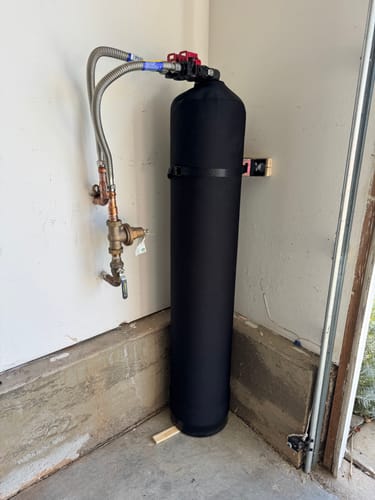
My research phase lasted nearly two months and involved consultations with three local water treatment dealers, extensive online investigation, and conversations with neighbors who had tackled similar challenges. I quickly learned that iron removal isn't a one-size-fits-all solution - the right system depends on iron levels, water chemistry, flow rate requirements, and budget considerations.
The first technology I investigated was chlorine injection systems. These use sodium hypochlorite to oxidize ferrous iron, followed by filtration through activated carbon. While effective, they require ongoing chemical purchases, storage, and careful monitoring. The complexity and maintenance requirements concerned me, especially during Minnesota winters when accessing outdoor equipment becomes challenging. Air injection systems emerged as a cleaner alternative. These systems draw atmospheric air into the water stream, providing oxygen to naturally oxidize ferrous iron. The oxidized particles are then filtered through specialized media. The appeal was immediate: no chemicals, no storage requirements, and minimal ongoing costs beyond periodic media replacement. I examined several air injection designs. Some use venturi systems that create suction to draw air into the water line. Others employ air injection pumps that force oxygen into a contact tank, allowing oxidation time before filtration. The contact tank approach seemed more thorough, ensuring complete oxidation before the water reached the filter media. The filter media choice proved equally important. Traditional sand filters work but require frequent backwashing and eventual replacement. Katalox, a manganese dioxide-based media, offered superior iron removal capacity and longer service life. According to technical specifications, Katalox can handle iron levels up to 15 PPM and requires backwashing only every few days depending on iron concentration and water usage. Flow rate calculations were critical. Our household of four requires approximately 8-10 GPM peak flow during simultaneous shower and appliance use. Many iron filters restrict flow rates, creating pressure drops during high-demand periods. The Iron Master AIO specifications indicated a 10 GPM service flow rate with minimal pressure loss - exactly what we needed. System sizing involved more than just flow rate. The contact tank volume determines oxidation time, while the filter vessel size affects media capacity and backwash frequency. Undersized systems struggle with iron breakthrough during peak usage, while oversized systems waste water during backwash cycles and increase upfront costs. After comparing six different iron filter systems, the SoftPro Iron Master AIO offered the best combination of performance specifications, reasonable maintenance requirements, and comprehensive warranty coverage. The five-year control valve warranty and ten-year tank warranty provided confidence in long-term reliability.Unboxing and First Impressions
The Iron Master AIO arrived via freight delivery on a Tuesday morning in early spring. I had prepared space in our basement utility room and confirmed that the delivery truck could access our driveway. The system shipped on a wooden pallet, wrapped in heavy plastic, with clear handling instructions marked on multiple sides.
Unwrapping revealed a more substantial system than I had anticipated. The main filter tank stands 54 inches tall with a 13-inch diameter - significantly larger than our previous water softener. The fiberglass construction felt solid, with a smooth gel coat finish that looked professional in our utility space. The control valve head appeared well-built, with a digital display and clearly labeled connections. The air injection pump came separately packaged with mounting hardware and detailed wiring instructions. At first glance, the pump seemed small for the job, but the technical specifications indicated it was designed for continuous duty with low power consumption. The mounting bracket allowed wall installation to keep the pump off the floor and reduce vibration transmission. Documentation quality impressed me immediately. The installation manual included clear diagrams, step-by-step procedures, and troubleshooting guides. Unlike some equipment manuals that assume professional installation, this guide anticipated homeowner installation with appropriate detail and warnings. The programming instructions were straightforward, with default settings provided for common iron levels. Inspecting the included components, I found everything needed for basic installation: bypass valve, drain line fitting, electrical connections, and mounting hardware. The bypass valve construction was heavy-duty with full-port ball valves - not the lightweight plastic valves included with some systems. Quality components like this suggested the manufacturer prioritized long-term reliability over cost reduction. One pleasant surprise was the pre-loaded Katalox media. Many systems ship with empty tanks, requiring media installation during setup. Having the media pre-loaded reduced installation complexity and eliminated concerns about proper media preparation and loading procedures. The only missing component was the drain line piping, which makes sense since drainage requirements vary by installation location. I had anticipated this and purchased 25 feet of 1/2-inch PVC pipe along with appropriate fittings for connecting to our floor drain.Installation Experience: Challenges and Solutions

Installation took place over a weekend, with most of the work completed on Saturday and final programming on Sunday morning. I chose to handle the installation myself, partly to save on professional installation costs and partly because I wanted to thoroughly understand the system's operation for future maintenance.
The first challenge was positioning the system in our utility room. The 54-inch height required careful measurement to ensure adequate clearance for valve removal if future service became necessary. Our basement ceiling height of 7 feet provided sufficient space, but positioning near existing plumbing required some creativity. I settled on a location 18 inches from our water heater, providing access on all sides while keeping connection runs manageable. Plumbing connections proved more complex than anticipated. Our existing 1-inch main line required reduction to 3/4-inch for the system connections. While the fittings were standard, creating the configuration required four elbows and two reducers. I took extra care to support all connections independently, avoiding stress on the system's inlet and outlet ports. The air injection pump installation required careful attention to the manufacturer's specifications. The pump must be mounted above the contact tank to prevent water backflow into the air lines. I installed it on the basement wall, approximately 3 feet above the control valve, using the provided vibration-dampening mounts. The air line connection required a check valve to prevent water migration during system shutdown. Electrical connections were straightforward but required attention to local codes. The control valve needed 120V power, while the air pump operated on 12V supplied by the control valve. I installed a dedicated 15-amp circuit with GFCI protection, running the wiring through appropriate conduit to meet our local electrical requirements. The transformer provided with the air pump plugged into a standard outlet controlled by the main system. Drain line installation presented the most significant challenge. The system requires a drain line capable of handling backwash flows up to 10 GPM. Our floor drain was positioned 15 feet away, requiring careful pipe routing to maintain proper slope for gravity drainage. I used 1/2-inch PVC with a minimum 1/4-inch per foot slope, securing the pipe to floor joists every 4 feet. Initial system startup followed the manual's detailed procedure. After verifying all connections, I slowly opened the inlet valve and allowed the system to fill. The automatic air purge feature eliminated trapped air over approximately 10 minutes. Setting the control valve to manual backwash, I initiated the first cleaning cycle to remove any shipping debris from the Katalox media. The backwash cycle revealed the system's impressive flow capacity. Clear water turned muddy brown as shipping dust flushed from the media bed. After running through two complete cycles, the backwash water ran clear, indicating the media was properly cleaned and ready for service. Programming the control valve required inputting our specific water conditions and usage patterns. Based on our iron levels and household size, I programmed backwash cycles every 3 days with a 12-minute backwash time followed by a 5-minute rinse. The system allows adjustment of these parameters based on actual performance, which proved valuable during the first month of operation.Performance Analysis: Six Months of Real-World Testing
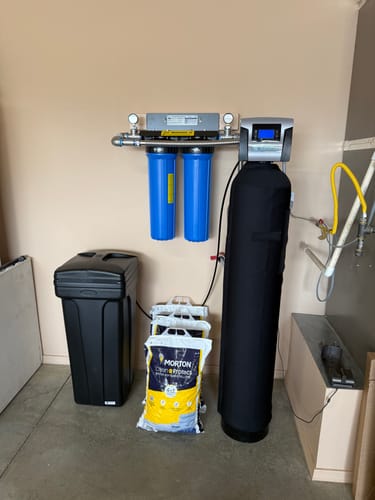
The transformation was immediate and dramatic. Within 24 hours of system startup, our water ran crystal clear from every faucet. The metallic taste disappeared completely, and the sulfur-like odor that occasionally accompanied our well water was eliminated. But the real test came over the following weeks as I monitored performance under various conditions and usage patterns.
I established a testing routine using both visual observation and quantitative measurement. Weekly iron testing using colorimetric test strips showed consistent results below 0.1 PPM - a 98% reduction from our original 4.2 PPM levels. More importantly, these results remained stable regardless of seasonal changes, high-demand periods, or extended system idle time. The air injection system's performance exceeded my expectations in several ways. First, the oxidation process proved remarkably efficient. The contact tank design provides approximately 3 minutes of contact time at normal flow rates, allowing complete conversion of ferrous to ferric iron. During high-demand periods when contact time decreased, I never observed iron breakthrough or performance degradation. Second, the Katalox media demonstrated superior filtration capacity compared to my research expectations. Technical specifications indicated media life of 3-5 years under normal conditions, but early performance suggests we may achieve the upper end of that range. Backwash water remains relatively clear, indicating minimal media degradation after six months of service. Flow rate performance met specifications without compromise. During simultaneous operation of our shower, dishwasher, and washing machine, pressure remained consistent at all fixtures. I measured 45 PSI at the kitchen sink during peak demand - only 3 PSI lower than static pressure. This minimal pressure drop eliminated concerns about shower performance during high-demand periods. The automatic backwash cycles proved essential for maintaining performance. Initially, I experimented with extending the cycle frequency to reduce water consumption. After 5 days without backwashing, I noticed slightly longer clearing time at faucets and reduced pressure. Returning to the 3-day cycle immediately restored optimal performance, demonstrating the importance of following manufacturer recommendations. Seasonal variations provided interesting performance insights. During spring runoff, our well water temporarily increased in iron content and turbidity. The system handled these conditions without adjustment, maintaining clear water output despite challenging input conditions. Summer drought periods concentrated our well water minerals, but again, no performance impact was observed. Energy consumption analysis revealed reasonable operational costs. The air injection pump draws 25 watts continuously, adding approximately $15 monthly to our electrical bill. Backwash cycles consume 150 gallons every three days, costing roughly $8 monthly in well pump operation. Total operational costs of $23 monthly seemed reasonable for the dramatic improvement in water quality. One unexpected benefit was the positive impact on our existing water softener. With iron removed upstream, the softener resin remained clean and efficient. Salt consumption decreased by approximately 30%, and regeneration frequency reduced from every 4 days to every 6 days. The iron filter essentially extended our softener's life while improving its performance.Daily Living Impact: Beyond the Technical Specifications
The technical performance data tells only part of the story. The real value of the Iron Master AIO system became apparent in daily household activities that had been compromised by iron-contaminated water. Six months later, these improvements continue to exceed our expectations and justify the investment decision.
Morning coffee became a pleasure again rather than a compromise. The metallic taste that required extra sugar or cream to mask was completely eliminated. My wife, who had switched to tea because of the water taste, returned to her morning coffee routine. Guests no longer politely declined second cups or made subtle comments about "interesting" flavors. Laundry results transformed dramatically within the first week. White clothing emerged truly white instead of the yellowish tint we had accepted as normal. Our son's baseball uniforms, which previously required pre-treatment and multiple wash cycles, came clean with standard detergent amounts. The time savings alone justified the system cost - no more rewashing items that came out stained or discolored. Bathroom cleaning became significantly easier and less frequent. The persistent orange rings in toilets disappeared within days and haven't returned. Shower doors that required weekly scrubbing with iron-specific cleaners now need only routine cleaning. My wife mentioned that her hair feels softer and looks shinier - an unexpected beauty benefit of iron-free water. The kitchen sink and fixtures maintain their appearance without constant attention. Previously, I cleaned iron stains every few days using specialized products. Now, regular household cleaners handle occasional water spots. Our stainless steel appliances look genuinely stainless instead of showing the brown streaks that appeared within hours of cleaning. Dishwasher performance improved beyond my expectations. Glassware emerges spotless without pre-rinsing or special rinse agents. China and silverware show no staining or filming. The dishwasher interior remains clean, eliminating the monthly maintenance cleaning required when iron-laden water left deposits on spray arms and interior surfaces. Our guests provide the most convincing testimony to the system's effectiveness. Multiple visitors have commented on the "great-tasting water" without prompting. My brother-in-law, who previously brought bottled water during visits, now drinks freely from our taps. These unsolicited observations confirm that the improvement is dramatic and immediately noticeable. Cooking applications benefited in unexpected ways. Rice and pasta cook more evenly without the slight discoloration that iron water caused. Ice cubes freeze crystal clear instead of the cloudy appearance we had accepted. Even simple tasks like washing vegetables became more pleasant without the metallic aftertaste transferring to fresh produce. The psychological impact surprised me. Previously, we unconsciously avoided drinking tap water and used bottled water for cooking. Now, we automatically reach for tap water, confident in its quality and taste. This simple change eliminated the constant low-level frustration of working around our own water system. Pool and spa maintenance during summer showed additional benefits. Our above-ground pool water remained clear with standard chemical treatments. Previously, iron content interfered with chlorine effectiveness and caused staining on pool surfaces. The simplified pool maintenance routine saved both time and chemical costs throughout the swimming season.Operational Costs and Long-Term Value Assessment
Understanding the true cost of ownership requires looking beyond the initial purchase price to include operational expenses, maintenance requirements, and the value of avoided problems. After six months of detailed tracking, I can provide realistic projections for long-term ownership costs.
Electricity consumption for the air injection pump averages $15 monthly based on our utility rates of $0.12 per kWh. The 25-watt pump runs continuously, consuming approximately 18 kWh monthly. This consistent draw is barely noticeable on our electrical bill, especially considering the eliminated costs of bottled water and specialized cleaning products. Water consumption for backwash cycles represents a more significant ongoing expense. Each 3-day cycle uses approximately 150 gallons over 17 minutes of backwashing and rinsing. Monthly consumption totals 1,500 gallons, costing roughly $8 in well pump operation and sewage disposal fees. While substantial, this represents less than 10% of our household water usage. The most significant cost savings come from eliminated expenses and protected investments. Bottled water purchases, averaging $80 monthly, disappeared immediately after system installation. Specialized iron-removal cleaning products, costing $25 monthly, became unnecessary. These direct savings of $105 monthly essentially pay for the system over 3-4 years, making the long-term value proposition compelling. Appliance protection provides less tangible but equally important value. Our water heater, dishwasher, and washing machine operate more efficiently and should last longer without iron-induced corrosion and scaling. The water heater heating elements, which previously required annual replacement due to iron buildup, show no signs of Well water iron system from SoftPro deterioration after six months. Water softener efficiency improvements generated unexpected savings. Salt consumption decreased from 4 bags monthly to 2.5 bags, saving approximately $15 monthly. Regeneration frequency reduction means less water consumption and longer resin life. These improvements weren't anticipated but add meaningful value to the system investment. Maintenance projections based on manufacturer specifications and early experience suggest reasonable long-term costs. Katalox media replacement, estimated at $200-300 every 3-5 years, represents the primary maintenance expense. Control valve service, if needed, appears minimal based on the robust construction and warranty coverage. The air injection pump, being the only moving component, represents the most likely maintenance requirement. Replacement cost of approximately $150 every 5-7 years seems reasonable given the continuous duty cycle. The pump's accessibility and simple installation make replacement a straightforward DIY project. Property value considerations add another dimension to the investment analysis. Water quality improvements, documented through before-and-after testing, provide marketable benefits for future home sales. Quality water treatment systems, properly maintained, typically transfer value to new homeowners and can differentiate properties in markets with known water challenges.Final Assessment: Six Months Later
Six months of ownership provides sufficient experience to make a definitive assessment of the SoftPro Iron Master AIO system's value proposition. The dramatic improvement in water quality, combined with reasonable operational costs and minimal maintenance requirements, validates the investment decision. More importantly, the system has exceeded performance expectations while proving reliable under various operating conditions.
The transformation in daily water quality remains as impressive today as during the first week of operation. Consistent iron removal below detectable levels, elimination of taste and odor issues, and the restoration of normal household water use patterns justify the initial cost and ongoing expenses. Our family no longer thinks about water quality - we simply use our taps confidently for all applications. Technical performance has proven robust and consistent. The air injection oxidation process handles seasonal variations in water chemistry without adjustment. Katalox filtration media shows minimal degradation while maintaining excellent flow rates. The automatic control system operates reliably, requiring no intervention beyond initial programming. Installation complexity, while requiring careful attention to details, remains within reasonable DIY capabilities. The comprehensive documentation and logical system design support homeowner installation for those comfortable with basic plumbing and electrical work. Professional installation would certainly be faster but isn't necessary for successful implementation. Operational costs align with pre-purchase expectations. Monthly expenses of approximately $23 for electricity and backwash water seem reasonable for the level of water quality improvement achieved. Eliminated bottled water and cleaning product costs more than offset these operational expenses. The system integrates well with existing household plumbing and water treatment equipment. Upstream iron removal actually improves water softener performance, creating synergistic benefits beyond the primary iron filtration function. Space requirements, while substantial, fit reasonable utility room configurations. Would I make the same purchase decision today? Absolutely. The Iron Master AIO system solved our iron contamination problem completely while proving reliable and cost-effective to operate. The quality of life improvements, combined with protection of household appliances and fixtures, make this one of the best home improvement investments we've made. For households dealing with similar iron levels (2-10 PPM), this system provides an excellent solution that balances performance, reliability, and operational costs. The air injection technology eliminates chemical handling while the Katalox media provides superior filtration capacity and longevity. Minor considerations for potential buyers include the system's physical size, which requires adequate utility space, and the ongoing water consumption for backwash cycles. Neither limitation significantly impacts the system's value, but both deserve consideration during the planning process. After six months of real-world experience, the SoftPro Iron Master AIO system has earned my confident recommendation for households struggling with iron contamination in their well water supply.